



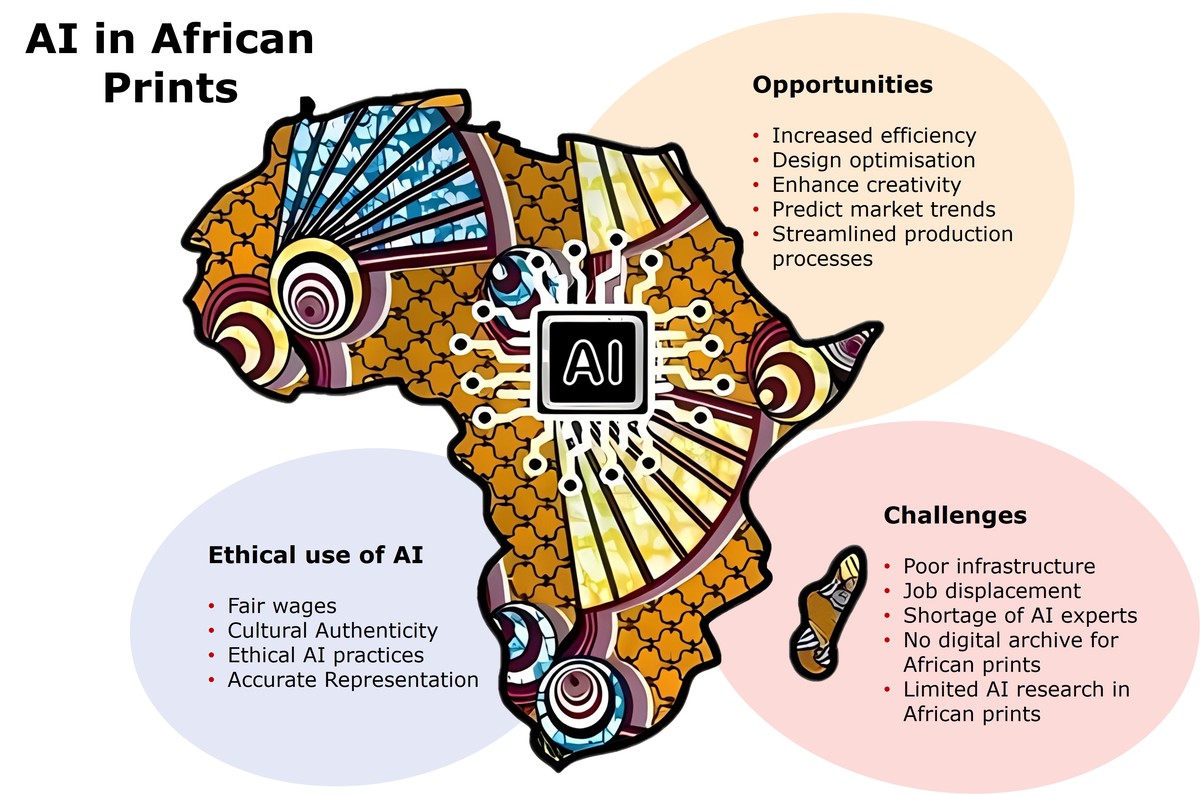
1 | INTRODUCTION
African print fabrics are known for their identifiable position within the continent’s cultural and aesthetic traditions. According to Adeloye et al. (2023), African print fabrics are vibrantly coloured, machine-printed textiles that are widely worn across Africa. Although these fabrics have their origin in the Dutch wax-resist dyeing technique, they were accepted by African communities and became an essential part of their cultural expression (Sawyerr et al., 2023; Adeloye et al., 2023). African communities adopted these imported methods over time and also modified the motifs to reflect local mythology, symbols, and practices, resulting in the creation of African patterns that are now representative of African cultural reflection..
African prints serve as an important conveyor of cultural identity and heritage beyond their cultural aesthetic appeal. They are visual chronicles preserving collective memory, tradition, and social values, making them a significant cultural piece (Acquaye et al., 2024; Boamah et al., 2024; Seidu et al., 2022). Adeloye et al. (2023) affirmed that African prints represent identity, cultural pride and also act as a medium of resistance. Their use is seen as a type of "style activism" that reclaims cultural narratives and upholds identity. African prints, made either by hand weaving or printing, have been handed down to generations by utilising complex techniques. Because of their colour vibrancy and the rich tradition attached to African prints, these classic patterns have come back in today's fashion market. However, the production, distribution and usage of these fabrics are being redefined due to globalisation and technology. Artificial intelligence (AI) has become a disruptive feature in a number of creative industries, including textiles and fashion. Artificial Intelligence (AI) technologies are changing narratives on how fabrics are used, created, and consumed, from trend prediction and generative design tools to digital twin simulations and virtual fitting systems (Rizzi & Casciani, 2025). The use of AI in African print design, however, remains underexplored both technologically and culturally, despite its global momentum. This gap raises important questions about how AI can support ethical integration of cultural heritage, the preservation of artisanal identities, and the avoidance of cultural appropriation, in addition to design efficiency and commercial innovation (Mohiuddin Babu et al., 2024). This study evaluates the opportunities and challenges of integrating AI into African print designs by conducting a systematic review of the literature from 2014 to 2024. The review critically aims to analyse how AI might be used in African prints to foster creative innovation, advance sustainability, and protect cultural integrity by using empirical research, theoretical viewpoints and technological trends.
2 | METHODOLOGY
2.1| Review Method
Envisioning the AI-powered future of African print designs, a systematic review of opportunities and challenges was done using the Preferred Reporting Items for Systematic Reviews and Meta-Analysis (PRISMA) technique, developed by Liberia et al in 2009, according to
Badaru (2024). This method was used to ensure a clear and well-organised procedure for locating, assessing, and gathering relevant information. Identification, screening, eligibility verification, and inclusion of relevant research are the four capital components of a systematic review process. Google Scholar and Scopus databases were used to perform this systematic review. The idea behind selecting these databases for the study is that they offer an extensive selection of peer-reviewed journal articles, conference papers, and book chapters on artificial intelligence, AI in textiles, African prints, and cultural studies that are accessible on these platforms. The usage of Scopus was very helpful in that it assures that only relevant and high-quality research is included with its enormous collection of citation data from major academic publishers. Google Scholar also provided more coverage, which Scopus might not have covered, including grey literature.
2.2| Search strategy
The transdisciplinary nature of the AI-powered future of African print designs was captured by carefully selecting the appropriate search terms and keywords. These were “AI in design”, “machine learning”, “artificial Intelligence”, “African prints”, “AI in the textile/fashion industry", "cultural studies in AI”, along with "computational creativity." Abbreviations such as "AI" and "ML" were included with their full versions to provide comprehensive coverage. The three main search blocks used to locate pertinent papers on the subject of this study are displayed in Table 1.
Table 1. Search Blocks and Keywords
Effectively combining these search blocks involved the use of the Boolean operators "AND" and "OR". The Scopus and Google Scholar databases were searched using this thorough approach. The first search produced 271 documents, which included review papers, conferences, research articles, and books written in a variety of languages and covered a wide range of academic subjects from 2014 to 2024. After that, these materials were vetted for relevance to the goals of the study. Publications that empirically looked at AI's impact on design with a particular focus on African cultural patterns were selected for screening.
2.3| Eligibility and Exclusion Criteria
Publications in English only were used, and the period was limited to 2014-2024. The ten (10) year gap was selected to gain control for both theoretical studies and new practical applications of AI in African print design. This period enabled the analysis of AI’s gradual impact, from its early developments to its current innovations in textile and fashion technology. Additionally, limiting the timeline guaranteed that only the most relevant and current research which reflects the latest developments in AI-driven textile design is reviewed. Understanding the wider context of AI's impact on African print design is very important; therefore, a combination of pertinent foundational theoretical studies in design and practical research was included. As shown in this instance, where 71 duplicate articles were eliminated, it is vital to eliminate duplicate data following the first search to reduce the overall number of possible sources for screening, as shown in Figure 1. The total number of studies was reduced for further review after duplicates were eliminated. To make sure they matched the goals of the study, titles and abstracts were vetted. Records unrelated to the intersection of cultural heritage, textile design, and artificial intelligence were excluded from the study. 41 out of 200 studies were left for eligibility evaluation, and 159 were eliminated for being irrelevant. To keep the study's emphasis on real-world AI applications in the textile sector, the eligibility criteria at this point are essential. This stage made sure that only papers that satisfied certain requirements, only articles that contained textile/fashion design and artificial intelligence, were taken into account. A total of 21 studies were considered, offering thorough insights into how AI affects African print design while striking a balance between technical innovation and cultural preservation.
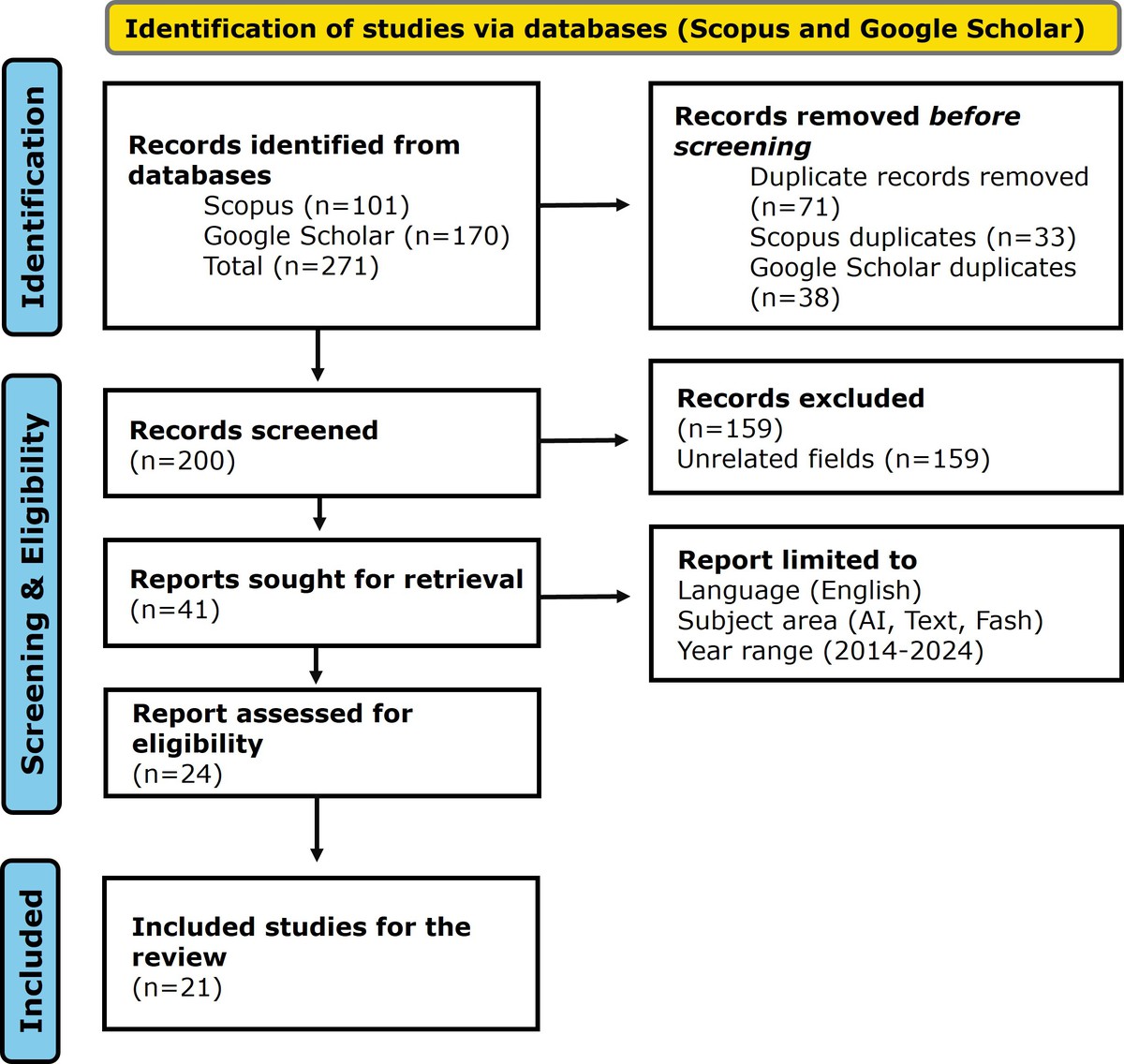
Figure 1. PRISMA flowchart showing the selection process.
3 | RESULTS AND DISCUSSION
Table 2 shows the summary of findings from the articles included in this study featuring AI-powered technology applications in textile design and some instances, fashion design with their sustainability contributions, and related challenges.
3.1| AI-powered design in textiles and fashion
Artificial intelligence (AI) is revolutionising the textile and apparel industries because it increases creative originality, boosts production efficiency, and allows for the customisation of customer experiences. Deep Convolution GANs (DC-GANs) and Generative Adversarial Networks (GANs) are two of the most influential AI technologies capable of analysing and imitating complex patterns to enable the automatic creation of creative output. For instance, they are frequently used to create original textile designs and reinvent cultural elements such as African prints. This method promotes co-creation between designers and AI through pattern-making. With the use of machine learning algorithms, designers can forecast colour and pattern trends to stay ahead of their customers’ needs. This improves product development precision and avoids overproduction. However, the deployment of such sophisticated AI systems necessitates large datasets and a strong computational infrastructure (Rahman, 2021). Another AI essential tool called Multimodal Unsupervised Image-to-Image Translation (MUNIT) with pattern recognition software automates the recognition and replication of traditional and cultural themes that can mimic and modify complex designs (Anuyah et al., 2023). Deng and Chen (2023) affirm that MUNIT has been used to create a variety of fashionable designs, enhancing the uniqueness of ethnic clothing by fusing traditional artisan techniques with contemporary technical advancements. This facilitates the production of varied and culturally rich fabrics while also speeding up the design process. However, there are issues with cultural sensitivity because AI systems might not completely comprehend the symbolic meanings of patterns, which could result in oversimplifications or misinterpretations (Anuyah et al., 2023). AI has also opened up opportunities for customisable textiles and fashion by enabling the creation of customised apparel (Mohiuddin Babu et al., 2024; Rathore, 2023) through machine learning algorithms. AI makes it possible to create fitted clothing, including clothing with African prints, on demand by evaluating customer preferences and dimensions. This method improves customer satisfaction, encourages sustainability, and decreases inventory waste. Even while AI systems offer many advantages, their high implementation costs make them difficult to deploy widely, especially in small and medium-sized enterprises (Mohiuddin Babu et al., 2024; Deng and Chen, 2023). Table 2 summarises some typical studies of AI-powered creative design processes in textiles and fashion.
Table 2. AI-powered design in textile and fashion
3.2|
Sustainability and AI in textile design
Artificial Intelligence (AI) technologies are making a substantial contribution to textile design sustainability through process-optimised performance, waste reduction, and energy efficiency promotion (Kumar et al., 2024). To reduce the number of design iterations needed throughout the creative process, GANs are essential. Fabric and materials wastage is reduced, especially in the initial stage of design and production, because designers can build a virtual version of clothing and fabrics by utilising AI tools like digital twin technology, which does away with the necessity for actual samples at the prototyping stage. By reducing physical prototypes, carbon emissions are reduced, and the design process becomes more sustainable. However, the environmental benefits of GAN models are somewhat negated by the resource-intensive nature of their development and training, which frequently calls for significant amounts of energy and computing capacity (Lee, 2022). Moreover, additive manufacturing, which layers materials precisely without cutting or throwing away extra fabric, promotes resource-efficient production. However, the textile industry still faces barriers to implementation, particularly for small and medium-sized enterprises, due to limited scalability and high costs (Kistamah, 2024; Mohiuddin Babu et al., 2024; Deng & Chen, 2023).
Table 3. Sustainability and AI in textile design
3.3|
AI-driven digitalisation of print designs
AI-driven digitalisation is revolutionising textile print design processes by increasing productivity, sustainability, and innovation (Kumar et al., 2024; Sikka et al., 2024; Rahman, 2021). This change is mostly due to technologies like AI-powered 3D printing, machine learning, and digital twins (DT). According to Lee (2022), digital twins reduce material waste and eliminate the need for physical samples of fabric by producing lifelike virtual prototypes. This supports customisation and helps prevent overproduction (Rathore, 2023; Nayak & Padhye, 2018). Deng and Chen (2023) state that design variations produced by machine learning algorithms enable the automation of the creation of designs with cultural inspiration. These algorithms reduce manual labour, promote creativity, and preserve cultural elements while producing a large number of textile patterns, which expedites the design process (Deng & Chen, 2023; Rahman, 2021). Furthermore, on-demand manufacturing is made possible by AI-powered 3D printing, which minimises overproduction and permits contemporary modifications of classical prints (Kistamah, 2024). Notwithstanding these advantages, barriers to broad adoption still exist, including restricted access to cutting-edge technology and maintaining cultural sensitivity. A further summary of AI-driven digitalisation of print design is shown in Table 4.
Table 4. AI-driven digitalisation of print designs
3.4|
Artificial Intelligence in Cultural Textile Design
The incorporation of Artificial Intelligence (AI) in African print design is a key factor in the transformation of the fashion and textile industries. Despite the scarcity of research in this area, early contributions by scholars like Nayak and Padhye (2018) laid the foundation for AI in textile systems. Other researchers, such as Lee (2022), Rathore (2019) and Zhong et al. (2021) investigated digital customisation and the preservation of African Textile heritage. Research activity became intensified between 2022 and 2024, focusing on AI’s role in cultural design and customisation. Sikka et al. (2024) and Rathore (2023) elaborated on AI-driven user experiences, whereas Anuyah et al. (2023) and Mohiuddin Babu et al. (2024) highlighted AI's potential in reinterpreting indigenous patterns. Acquaye et al. (2024) looked into how traditional West African textile designs can be digitally reimagined for contemporary commercial use while addressing authenticity concerns and appropriation.
Table 5. Publication trends in 2017 and 2024.