
 ,

1 | INTRODUCTION
Clothing practices reflect personal standards and social recognition, and the perception of body image significantly influences consumer behaviour, including fashion (Shetty & Kotian, 2023; Apeagyei, 2008). Clothing or garment fit is highly subjective in every individual and appears as an indicator of the feelings of love and comfort that arise when consumers choose a particular outfit (Wiyantoro et al., 2017; Shin, 2013). To the garment consumer, the use of garments or clothes serves as psychological need as a component of the self; as a means through which the self is established and validated; as a symbol of one's identity, mood, or attitude; as an expression of self-worth, and seen as an element of an effective response to self-evaluation as well as body cathexis among others (Sontag & Lee, 2004; Shetty & Kotian, 2023). Ready-to-wear, informally called "off-the-rack" or "off-the-peg", is created to be worn without extensive modification and is mass-produced clothing sold in standard sizes, as it accommodates the majority of individuals (Honu et al., 2020; Pandarum & Yu, 2015; Ashdown, 2014). In recent decades, the ready-to-wear apparel business has encountered heightened examination about its size systems and their effects on consumers' self-image and shopping experiences (Jeon & Lee, 2024). Studies have shown that the size of a garment influences the perception of body size variably, contingent upon the wearer's actual body dimensions. The influence of garment fit on body image perception differs based on gender, body size, and shape (Li et al., 2025). For instance, with a garment ease of 2-3 cm, it effectively minimises perceived body size in obese individuals (Liu et al., 2006). However, larger garments generally enhance the perceived body size of thin and medium-built individuals, whereas they may produce a slimming effect for obese individuals (Liu et al., 2006; Fan et al., 2004). Anecdotally, fit and size systems appear to be an issue among Ghanaian fashion stakeholders. Fashion trends, cultural influences, age, gender, body shape, comfort, aesthetics, and lifestyle all have an impact on people's clothing fitness choices throughout their lives (Wiyantoro et al., 2017; Shan et al., 2012). However, the consumer exposure to a wide range of designs, sizes, colours, and materials from local clothing stores as well as the media has made clothes choices more difficult (Nkambule, 2010).
However, the perception of body image significantly influences consumer behaviour in the ready-to-wear apparel sector (Makhanya & Mabuza, 2020). The intricate connection between body perception and clothing selection illustrates the psychological and sociological aspects of consumer decision-making (Monge, 2023). Psychologically, the effects of garment sizing surpass simple fit preferences, influencing consumer self-esteem and purchasing behaviour (Monge, 2023; Brooks et al., 2020; Makhanya & Mabuza, 2020). Studies have shown that negative body image perceptions can lead to avoidance behaviours in shopping, size label anxiety, and altered consumption patterns (Lou & Tse, 2020; Dittmar, 2007). This phenomenon is particularly significant in the modern retail landscape, where the proliferation of internet purchasing has eradicated the conventional fitting room experience, simultaneously presenting new challenges in size selection and fit satisfaction (Merino et al., 2024). Studies show that customers' impressions of their body image frequently differ from their actual physical dimensions, resulting in diverse emotional reactions during the clothing selection process. This gap can profoundly affect purchasing decisions, brand loyalty, and overall pleasure with ready-to-wear apparel. The fashion industry's standardised sizing procedures, which frequently neglect to accommodate varied body shapes and sizes, exacerbate this link.
Body image is a complex concept comprising various facets, including perceptual, affective, and cognitive elements affecting self-esteem and quality of life (Alleva et al., 2023; Monge, 2023; Shetty & Kotian, 2023). Body image perception and garment size preferences are closely interrelated, influencing fashion choices and self-esteem (Dewayanti & Andhini, 2023; Shetty & Kotian, 2023). In the Ghanaian context, the nuances existing between how the concept of self-body-image or self-satisfaction interrelates with the choice and purchase patterns of RTW garments remain underexplored. Also, a key strategy for sustainability is producing clothing based on accurate sizes to avoid overproduction and material waste. Research indicates a complex relationship between body image perception and preferences for garment size (Merino et al., 2024; Shetty & Kotian, 2023). However, in emerging markets like Ghana, sizing is often overlooked, leading to consumer dissatisfaction and unsustainable fashion practices. According to Makhanya and Mabuza (2020), whereas body size shows a positive correlation with these preferences, understanding the intricate relationship between body image and preferences in clothing is crucial for both retailers and manufacturers, as well as the Ghanaian fashion industry as a whole, as they work to address consumer needs and expectations in the evolving fashion marketplace. To this end, this study attempts to fill this gap by examining how body image perception influences consumers’ preferences for ready-to-wear garments in relation to size selection, while assessing the sizing and fit-related challenges experienced by the Ghanaian consumers when purchasing RTW garments.
2 | LITERATURE REVIEW
2.1| Body Image Perception, Psychological Factors
Body image refers to an individual’s perception of their physical appearance, encompassing their thoughts, feelings and attitude towards their body (Shetty & Kotian, 2023). Body image perception is a multifaceted construct influenced by individual cognition, emotional responses, sociocultural factors, and these dynamics are essential for developing effective interventions at improving self-satisfaction (Stein et al., 2023; Mahdifar et al., 2024; Merino et al., 2024; Kumar et al., 2023). According to Shetty and Kotian (2023), the individual's behavioural intention is shaped by attitudes, norms, and perceived control. Moreover, everyone in society has different expectations, and one’s image can be expressed using fashion products. Shetty and Kotian (2023) cited that culture, religion, economic status and social identity can be proven through fashionable products. Social identity possesses a considerable standard which can influence purchasing intentions. Self-individuality significantly influences attitude and behavioural control; thus, Individuals act in accordance with social acceptance, and self-identity significantly influences customers' sentiments, reflecting their societal position (Shetty & Kotian, 2023). Psychological traits such as anxiety about one’s body profoundly affect body image and the choice of ready-to-wear (RTW) apparel, especially in teens (Shetty & Kotian, 2023). Studies have shown that persons with body image dissatisfaction are at a heightened risk of developing anxiety disorders, such as generalised anxiety disorder and social anxiety disorder (Mental Health UK, 2022; Vannucci & Ohannessian, 2018; Halliwell & Dittmar, 2005).
2.2| Consumer Perception and Behaviour on Garment Preferences
Fashion has evolved from tailor-fitted garments to mass-produced garments (Honu et al., 2020). Ready-to-wear (RTW), informally called "off-the-rack" / "off-the-peg“, is created to be worn without extensive modification, mass-produced and sold in standard sizes to accommodate the majority of individuals (Wang & Zakaria, 2024; Pandarum & Yu, 2015; Ashdown, 2014). Fashion signifies social status and is frequently utilised to convey an individual's image and social standing, with the wearer playing a crucial role in the whole fashion ecosystem (Shetty & Kotian, 2023). Consumers who purchase from the same company may hold favourable sentiments toward it, and customer loyalty can manifest as heart, mind, and hand loyalty (Long & Nasiry, 2022). According to Shetty and Kotian (2023), brand identification in fashion trends fosters recurrent purchasing behaviour and consumer loyalty. Clothing preferences were influenced by cultural and religious factors (Shetty & Kotian, 2023; Nurani & Adinugraha, 2022). Studies have noted a significant association between body image, body cathexis, body size, and clothing preferences (Chattaraman & Rudd, 2006). According to Czekala et al. (2019), an individual's buying behaviour depends on social factors, which may influence garment fit, a highly subjective attribute that is often taken as an indicator of comfort. Hence, it is critical to the consumer experience because it helps style, complement, and flatter any body shape (Wiyantoro et al., 2017; Shin, 2013; Dinye & Nyaba, 2001). Fit and size systems appear to be an issue among fashion stakeholders because they serve numerous purposes, including psychological needs, self-establishment and identity validation, mood and attitude regulation, self-worth, self-evaluation, and body cathexis (Stolovy, 2021; Sontag & Lee, 2004). Based on the relevant review, the Clothing Comfort Model (CCM) is adopted as the theoretical base in understanding the consumption pattern of the Ghanaian market in terms of how the body image can influence our size preference of RTW garments.
2.3| Theoretical Framework
The research applies the Clothing Comfort Model (CCM). This theory helps unravel the intricate relationship between social influences and individual psychological factors in shaping consumer behaviour. It sheds light on how external societal forces and internal psychological processes jointly impact consumption choices. The Social Psychological Dimension Theory by Branson and Sweeney (1991), delves into consumer behaviour from social and psychological viewpoints. The theory asserts that consumer behaviour is multifaceted, encompassing individual traits, motivations, the social environment, and psychological factors. Matté and Broega (2017) described the attributes of the Social Psychological Dimension Theory, categorised within the clothing comfort triad (person, clothing, and environment). Person Attributes include aspects like “state of being,” “self-concept,” “personality,” “cathexis/body image,” and “values.” Clothing Attributes encompass “fabric and clothing system,” “aesthetics,” “style,” and “fashionability,” while Environment Attributes involve “occasion/situation of wear,” “significant other,” and “social norms.” In essence, this theory highlights that individuals often align purchase decisions with their desired self-image or social group. It recognises the impact of social comparison and the influence of social class and socioeconomic status on consumption behaviours.
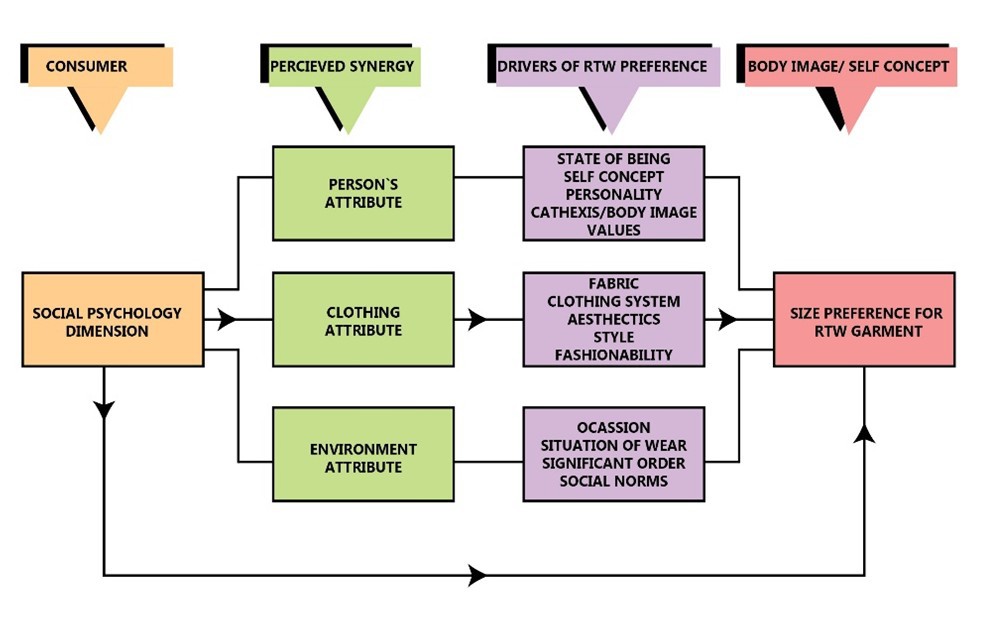
Figure 1. The Clothing Comfort Model (CCM), Adapted from Sontag (1985); Branson and Sweeney (1991)
2.4| Hypotheses
The study tested the following hypotheses at the 0.05 level of significance,
H 0 : There is no significant relationship between gender and the choice of RTW garments, whether locally made or imported.
H 1 : There is a significant difference in the gendered perception of self-satisfaction of consumers of RTW garments and their clothing choices.
H 0 : There is no significant relationship between body satisfaction (Body Cathexis) and the choice of RTW garments, whether locally made or imported.
H
1
: There is a significant relationship between body satisfaction (Body Cathexis) and the choice of RTW garments, whether locally made or imported.
2.5| Conceptual Framework
The relationship between body image perception and clothing selections is a complex interplay of psychological, consumption, and purchase factors. This conceptual framework provides a comprehensive examination of the relationships between body image perception and clothing preferences, and how these factors influence consumer behaviour in the ready-to-wear (RTW) clothing industry.
↓
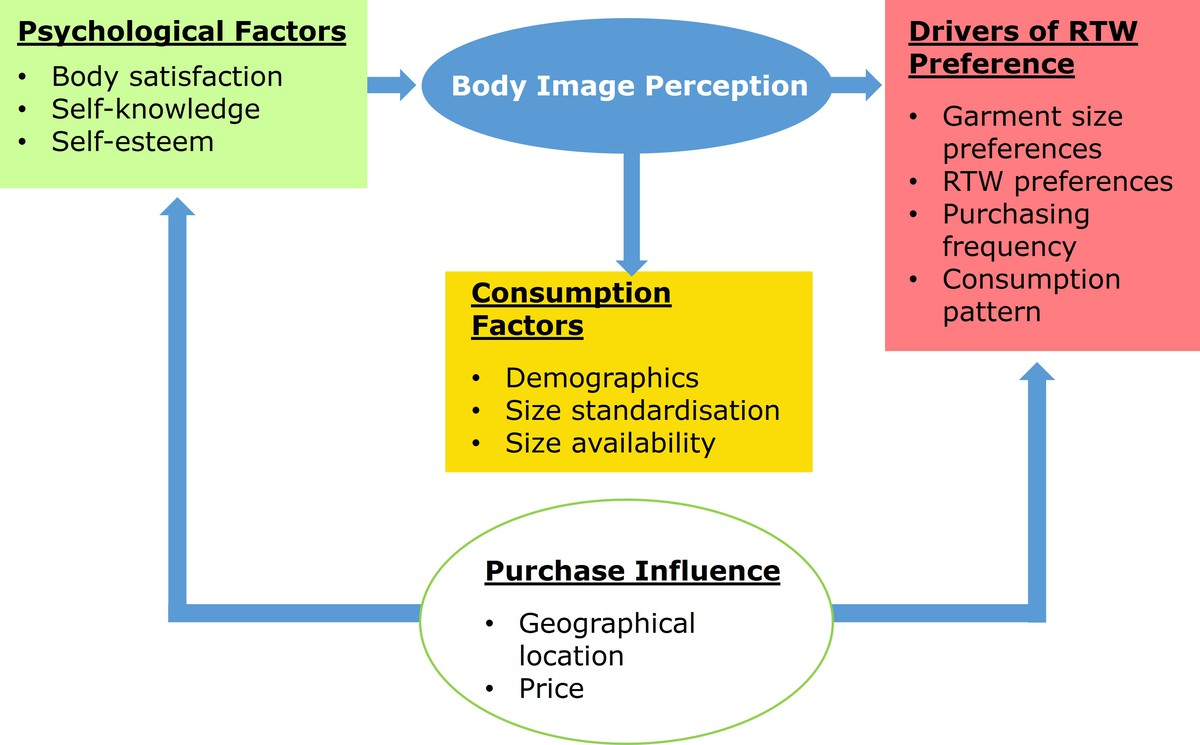
Figure 2.
Conceptual framework of body image perception on garment size preferences.
Source: Authors own construct, 2025
2.5.1| Psychological Factors
Perceptions of body image are primarily shaped by psychological factors such as body satisfaction, self-awareness, and self-esteem (Grogan, 2016). Body image refers to an individual's perception of their physique, which is associated with self-perceptions, self-attitudes, self-esteem, interpersonal confidence, and emotional stability, among other factors (Yadav, 2024; Shetty & Kotian, 2023). These psychological constructs underpin consumers' self-evaluation and, hence, their clothing requirements. Studies indicate that people with greater body satisfaction prioritise clothing selection differently than those with lower satisfaction levels (Tiggemann & Lacey, 2009). Consumer body perception directly affects clothing size preferences and overall ready-to-wear consumption habits (Kim & Damhorst, 2010). This association underscores the necessity of perceiving body image not solely as a psychological construct but as a crucial influence on consumer behaviour. According to Magwaza (2015), individuals who are content with their bodies tend to explore various clothing styles, colours, and designs more freely without feeling restricted by body-related insecurities. This highlights that higher body satisfaction can simplify the process of choosing well-fitting garments.
2.5.2| Consumption Factors
Demographics, size standardisation, and size availability are critical consumer factors that affect the correlation between body image perception and apparel preferences
(Alexander et al., 2005). The inconsistency in sizing standards among brands and the presence of varied size ranges can profoundly influence consumer satisfaction and purchase choices, especially for those whose body types diverge from industry norms. Clothing size selection is influenced by both physical and psychological factors, necessitating tailored sizing methods and fit technologies
(Hossain et al., 2025;
Suganya et al., 2024;
Joshi & Sawant, 2024).
2.5.3| Purchase Influence
Geographic location and price appear as significant purchasing influence variables, influencing both psychological aspects and RTW preferences (Easey, 2009). Regional differences in beauty standards and economic factors result in varied consumer landscapes across markets, necessitating personalised approaches by clothes sellers. Individuals categorise themselves into distinct purchase patterns based on physical satisfaction levels, leading to market segmentation. Consumer behaviour, according to Hossain et al. (2025), is influenced by psychological self-perception, with garment purchases reflecting body satisfaction (Kowald, 2024; Suganya et al., 2024).
2.5.4| Drivers of RTW Preference
According to Workman and Lentz (2000), the framework identifies a number of important factors that influence RTW preference, such as preferences for clothing sizes, RTW preferences, frequency of purchases, and consumption habits. These preferences are influenced by the intricate interaction of the previously listed components and ultimately dictate consumer purchase behaviour. Opinions regarding the ease of purchasing RTW garments, the availability of sizes and styles, and hassle-free shopping experiences contribute to heightened purchasing trends (Joshi & Sawant, 2024). Hence, body satisfaction influences clothing exploration, reflecting self-esteem and influencing design and retail strategies; therefore, effective products and retail experiences must fulfil psychological needs in addition to physical ones.
3 | METHODOLOGY
This study is quantitative in nature and employed descriptive statistics to systematically capture the characteristics, behaviours, and preferences of the selected population
(Creswell, 2009). The research aimed to investigate body image perception regarding size selection, size preference, and the overall shopping experience, as well as the influence of size inclusion initiatives on these behaviours in Ghana. It also examined the link among four variables: psychological factors, drivers of RTW preference, consumption factors, and purchase influence, while testing two hypotheses based on contemporary scientific literature. Each variable comprises 3 to 5 items, derived from a demographic questionnaire designed to collect background information about participants, thereby contextualising the data gathered. Additionally, a scale measuring perceptions is employed, utilising a Likert scale that ranges from 1 to 20 items, rated on a scale of 1 to 5 points, where 1 signifies "Very Dissatisfied" and 5 denotes "Very Satisfied," along with gradations from "Not Very Well" to "Very Well" and from "Not Useful at All" to "Very Useful." The identical range of values was employed to evaluate all latent factors related to body satisfaction, garment preference, RTW perception, purchase frequency, and associated challenges
(García-Salirrosas et al., 2022).
3.1| Validation of the Instrument
The authors developed a self-formulated instrument, drawing on existing literature for each variable, to create a concise, user-friendly questionnaire that minimises the number of items while incorporating essential elements for measuring body image perception in relation to RTW preference. The items were verified through expert panel assessment of the methodology and instruments, as well as through pilot testing of the survey instruments, with a focus on construct and question clarity. The content was presented to two distinct groups for evaluation. The initial assessment was conducted with experts and a specialised panel via conference calls and in-person meetings to evaluate the comprehension and appropriateness of each item collectively. Subsequently, the study considered the recommendations for enhancement and validated the content of the constructs. The second group comprised 15 respondents from the senior members within the study area, who received a copy through face-to-face interactions and the WhatsApp platform, to ascertain that consumers from the three study areas comprehended the true meaning of the statements, considering the technicalities of certain items.
3.2| Method of Data Collection and the Instruments
Data collection was a cross-sectional survey using questionnaires as the main instrument. Cross-sectional studies are more common nowadays because they provide an opportunity to quantify the level of prevalence of the variables and their relationships at one point in time without longitudinal limitations
(Levin, 2006). This method of research is particularly useful in trying to understand sift dynamics and the orientation of the sample population. Data was collected by combining both online and paper-based surveys. The participant survey instrument contained closed-ended questions and structured Likert items intended to yield quantitative data on the study variables. Online surveys are sent via participants' institutional email and WhatsApp groups, while the personalised paper surveys are given to respondents with limited access to technology.
3.3| Population and Sampling
The target population for this study comprised university workers from three universities in Kumasi, Ghana, with an estimated population of about 2495. This group includes academic and non-academic staff, offering a diverse perspective on the topic under investigation. The selection of university workers as the population ensures the relevance of findings within the context of an educated and professional demographic
(Etikan et al., 2016). The study employed a combination of purposive and simple random sampling techniques. Purposive sampling was used to select the three universities to ensure the representation of institutions, while the simple random sampling was conducted to choose individual respondents within each university in order to reduce sampling errors and ensure that all members of the population have the same opportunity to be sampled
(Taherdoost, 2016;
Palinkas et al., 2015). The data was gathered from March 2023 to July 2023. At the end of the data collection period, 278 respondents had responded to the questionnaires’ items.
3.4| Data Analysis
Data collected was analysed using descriptive and correlational analysis in order to meet the research goals. Descriptive analysis of the data was done through the use of frequencies, percents, means, and standard deviations
(Kaur, Stoltzfus, & Yellapu, 2018). The relationships between the variables were determined by correlational analysis using the chi-square and Pearson’s correlation coefficient, where appropriate. The SPSS software was utilised in performing the statistical analysis, which is a popular quantitative research software because of its effectiveness and dependability with big data sets
(Pallant, 2020).
3.5| Ethical Considerations
In this study, ethical approval was obtained from the Akenten Appiah Menka University of Skills Training and Entrepreneurial Development (AMMUSTED) Ethical Approval Board to ensure adherence to all guidelines and the protection of participants' rights. Important ethical principles, including ensuring anonymity, voluntary participation, confidentiality, and informed consent, were maintained during all phases of the research process (Resnik, 2015). During the execution of the research, participants were always made aware of their opportunity to discontinue their participation at any point and at no detriment to them.
4 | RESULTS AND DISCUSSION
4.1| Socio-Demographic Background
The demographic analysis revealed that the study had an equal representation of males and females, with 238 participants in total. Most respondents (68%) were within the age range of 28 to 47 years. Specifically, 37% fell within the 38-47 age bracket, 31% were aged 28-37, 19% were between 18-27, 11% were aged 48-57, and only 2% were 58 years and above. Notably, the majority of both male and female participants were within the 28-47 age group. Additionally, at least 90% of respondents identified as Christians. Table 1 summarises the demographic characteristics of the participants.
Table 1. Demographic Characteristics/Profile
4.2| Self-Knowledge
A notable finding was that a significant portion of respondents, at least 40% were either unaware of or uncertain about their specific body shape. Among those who identified their body shape, 5% described themselves as V-shaped, 7% as Apple-shaped, 13% as Triangle-shaped, 9% as Hourglass-shaped, 11% as Rectangle-shaped, 3% as Square-shaped, 3% as Oval-shaped, and 4% as Banana-shaped. Knowledge of specific body measurements varied widely. For the shoulder-to-waist ratio, 32% had limited understanding, 23% exhibited very poor knowledge, 26% had good knowledge, and 19% demonstrated a very high level of understanding. Regarding waist measurements, 27% and 29% showed poor and limited knowledge, respectively, while 31% and 14% displayed good and very high knowledge levels, respectively. Respondents had better knowledge of across-the-back measurements, with 46% demonstrating good understanding and 30% exhibiting very high knowledge. However, 15% and 10% showed limited and poor knowledge, respectively. Thigh measurement knowledge was also limited, with 39% and 25% showing poor and limited understanding, respectively, while 24% had good knowledge, and 13% exhibited a very high level of understanding. Similarly, knowledge of hip girth was limited for 31% and 25% of respondents, while 25% and 19% showed good and very high levels of understanding, respectively. Female respondents reported challenges with specific body areas, including the waist/midsection, bust/chest, hips, opening/fastening sections, and general fit issues. Overall, 48% of participants were categorised as having lower self-awareness of their bodies, while the remaining 52% demonstrated higher body knowledge. In the shoulder-to-bust dimension, over half (55%) of respondents lacked a high level of knowledge, 19% were poorly informed, 17% had a good understanding, and 9% exhibited very high knowledge.
4.3| Body / Self-Satisfaction
The results revealed that 73% of respondents reported a high level of body satisfaction, while 27% expressed low satisfaction. Notably, 45% of participants never experience body anxiety, while 18% report regular occurrences. However, 30% of respondents expressed a desire for a different body type, with many uncertain about their specific body shape, indicating a mix of satisfaction and dissatisfaction across various body parts. Anxiety and insecurity about body image remain prevalent among some respondents. Specific findings showed that 48% of participants are very satisfied with their skin, while satisfaction with their buttocks is lower, with only 39% expressing very high satisfaction. Gender disparities are evident, with males generally reporting higher satisfaction across most body parts, whereas females exhibit greater dissatisfaction, particularly with their skin and stomach. Among those with low body satisfaction, 55% are female, compared to 45% male. Conversely, 52% of individuals with high body satisfaction are male, while 48% are female. Age also plays a role, with 40% of those with low body satisfaction falling within the 38 to 47-year age group. In contrast, th