



1 | INTRODUCTION
Society and culture have a great impact on the fashion and lifestyle of an individual (Fathimi & Kumar, 2022). In Ghana, the nature of one’s dress or fashion can indicate the person’s identity and social status (Acquaah et al., 2017; Nkrumah-Abraham et al., 2025). However, Amankwah et al. (2012) and Fathimi and Kumar (2022), in agreement with the claim, clarify that other internal and external factors such as philosophies, globalisation, modernisation, technical development, and creative movements also influence socio-cultural fashion trends, thereby making fashion dynamic. Botchway (2018) posits that hairstyles are an element of fashion; hence, hairstyling is fashion-driven. Quagrainie et al. (2021) in congruity established a strong linkage between hairstyle and fashion by exploring how fashion consciousness interacts with the choice of hairstyles. Botchway (2018) further elaborates that the way one wears the hair on the head may also reflect one’s identity and status, and can serve as a medium of communication. In African history and culture, hairstyle is symbolic information of an individual’s cultural identity, such as tradition, ethnicity, spirituality, and marital status, among others. The locked or dreadlocks hairstyle, synonymously known to many Ghanaians as ‘Rasta’, has been used by individuals and groups in historical and contemporary times to convey symbolic socio-cultural messages and philosophical stands (Essel, 2023; Botchway, 2018). In contemporary times, it is also regarded by others as fashion or an artistic expression, especially as seen worn by several male celebrities or public figures in the entertainment and sports industries.
The notion that one’s hairstyle is a reflection of their moral character and self-control is a baseless conception that sprang from colonial indoctrination (Oppong-Wadie, 2021). A typical scenario of this is the ‘Rastafari’ and the wearing of dreadlocks (Alhassan, 2020). Therefore, criminalising based on a hairstyle is equivalent to criminalising an art, a whole socio-cultural group, belief, tradition or heritage. Johnson and Bankhead, as cited in Oppong-Wadie (2021), trace the detestation of African hairstyling to the colonial era, where European colonial masters shaved the hair of enslaved Africans in a conscious effort to dehumanise, break the African spirit, and erase their African culture and identity. Ironically, some Ghanaian state institutions like the Ghana Education Service in the ‘Nkrabea vs Achimota School and GES et al. saga, are still perpetuating this colonial legacy against other Afro-centric Ghanaians in the name of ‘rules and regulations’, while the Ghana Police Service does the same in the name of ‘security intelligence’. Meanwhile, Europeans or Caucasians in Ghana are exempted from these ‘rules’ or ‘policies’ (Essel, 2023; Oppong-Wadie, 2021). It is also evident that the section of Ghanaians who consider dreadlocks and other afro-centric hairstyling as a foreign culture is rather brainwashed on the agenda of ‘self-hate’ and an inferiority complex. This has resulted in the deep repugnance of their true indigenous self and indigenous arts, but rather have a strong desire and admiration for foreign-inspired or imposed hairstyling and fashion.
“A respondent revealed that ‘I have also realised that if you are a Rasta with gainful employment or have your own car, people do not associate you w
“The respondents pointed to miseducation/brainwashing on the part of the populace about the Rasta hairstyle stemming from Ghana’s colonial past, Euro-Christian and Islamic religious infiltration, indigenous spiritual connection to the hairstyle, and individualistic branding as the factors leading to the negative perception of the Rasta hairstyle. About miseducation/brainwashing on the part of the populace, a respondent’s voice reflected the consensus reached in the focus group discussion. He vehemently put forward that: People have come to accept that anything African, traditional or indigenous is negative, fetish … inferior. So, going that way looks like you are deviating from accepted standards. Because of the miseducation, people think that rasta is a foreign culture. They don’t know that is … part of the indigenous arts. They think it is something somebody is trying to copy (Respondent Q)”
(Essel, 2023, p.5).
Many scholars
(Alhassan, 2020;
White, 2010;
Savishinsky, 1994, as cited in
Essel, 2023) have exposed the consequences associated with the wearing of dreadlocks, synonymously called ‘Rasta’ in Ghana, especially among male adults.
Essel (2023) and
Nkrumah-Abraham et al. (2025) have also confirmed the still-existing stigmatisation and crime profiling of male dreadlock wearers by Ghanaian society and security services, respectively. Asante, K., WhatsApp direct message, December 11, 2024, an executive member of the Education and Advocacy Committee of the Rastafari Council of Ghana, publicised that this negative or ill reception by the public against dreadlock wearers stems from a long history of consistent harassment of dreadlock wearers by the police. He clarifies that if a dreadlock wearer on public transport is singled out and frisked in the full glare of other passengers and commuters, it creates the impression that he is a conduit for crime. This encourages the public to also be on the lookout anytime they encounter a dreadlock wearer. Though, on 2019 May 30, a communiqué from the Police Authorities (signed by Ken Yeboah, Compol) directed police personnel to refrain from harassing and intimidating people with dreadlocks and, rather, be professional, circumspect and treat all manner of people with respect and dignity.
Essel's (2023) study revealed that, contrary to the directive, the practice of harassment and intimidation of dreadlock wearers by the police is still ongoing in Ghana, meaning some personnel still do not comply with the directive. It was also revealed that the association of male dreadlock wearers with criminals, deviants and other negative tagging is also dependent on the person’s economic status.
“A respondent revealed that ‘I have also realised that if you are a Rasta with gainful employment or have your own car, people do not associate you with evil’ (Respondent M). Impliedly, the perception some Ghanaians have about the male rasta population as criminals is strongly influenced by their economic net worth. The male rasta population with low economic background or who were unemployed were usually labelled as criminals irrespective of the reason that informed their choice of rasta hairstyle, according to the respondents” (Essel, 2023. p.7).
It was further posited in the study by Essel (2023) that in Ghana, the presence of dreadlocks on a man’s head has warranted the ill-treatment of dreadlock-wearing male students in tertiary institutions by some staff members of the institutions. Other respondents accounted for how it has affected their chances of securing jobs both in the private and formal sectors despite their abilities, having the requisite skills, qualifications and positive attitudes towards work. ‘Bellyful’ means ‘having more than enough of something’ while ‘Ghetto’ refers to a ‘part of a city, especially a slum area, occupied by a minority group’ (Oxford Learner’s Dictionary, n.d). In the context of the study, dreadlock wearers perceived to have a good economic standing or higher standard of living are termed “Bellyful Rastas”, and those of perceived low standard of living or economic standing as “Ghetto Rastas”. As indicated in the key findings of a previous study, Essel (2023) claims that crime tagging, stereotyping and discrimination of male Ghanaian dreadlock wearers are significantly influenced by their economic status, social class and fashion style or appearance. These findings triggered the interest in probing and accessing the experiences of the few other male dreadlock wearers in Ghana who are gainfully employed as well as the opinions of security personnel on what informs the alleged biases in suspicion, crime tagging and profiling of a selected group of dreadlock wearers. Essel (2023) gave an account of dreadlock wearers in general with no economic classification. Also, the opinions and reactions of the security personnel were not sourced. Therefore, the gap this study intends to fill is to explore the perspective of the said exempted socio-economic class of dreadlock wearers and that of the security personnel.
2 | METHODOLOGY
The study, being a qualitative strategy, adopted a descriptive case study and library search as the designs. It is also backed by the theory of social constructivism, which opines that knowledge and understanding of the world and things in general are socially constructed through subjective experiences or shared assumptions (Creswell, 2014). It also implies that the mindset and behavioural patterns of people are influenced by the society they find themselves in. In relating this to the study, it can be said that the attitude of the security personnel and then the general public towards the dreadlock wearers stems from societal Ghanaian templates and that it may differ in a different jurisdiction.
The study employed purposive and snowball sampling techniques. Purposive sampling involves selecting participants based on a clear criterion, or their known status, experience or knowledge on the subject of interest
(Cohen et al., 2007;
Taherdoost, 2016;
Hassan, 2024). So, the purposive sampling technique was used in selecting high-ranking security personnel classified as ‘officers’ in their respective forces. This is because of their professional status, experience and knowledge in their operations, which is relevant to the study. It was further used in selecting the category of dreadlock wearers due to their financial status, which meets the criteria intended for the study. Reaching these aforementioned participants, especially each officer, required going through certain persons or subordinates to gain access to them. That is the chain-referral sampling, where researchers are further redirected to other people who can best or further contribute to the study
(Mack et al., 2005). Primary data was sourced through a semi-structured interview with male dreadlock wearers and the security officers/personnel in Ghana. In the context of the study, the criteria for selecting the ‘Bellyful’ are those who are gainfully employed for at least a decade and posses certain socio-economic assets like a private car, at least a parcel of land, a monthly income of over three-thousand Ghana cedis (Gh₵ 3000.00), and a family. While ‘Ghetto Rastas’ consisted of those who do not possess all the socio-economic status and assets stated. The ‘bellyful’ was represented by three (3) participants: one in academia as a lecturer, another in the media as a journalist, and the third being self-employed/entrepreneur. Also, three (3) security personnel were sampled from the Ghana Police Service, Ghana Immigration Service and Ghana Army: a Deputy Superintendent of Police (DSP), a Deputy Superintendent of Immigration and Lieutenant Colonel, respectively, resulting in a total sample size of six (6). Visual data by way of photographs was gathered from the members of the ‘bellyful’ through the WhatsApp application and internet facility to give a visual representation of their fashion statement and appearance. Through a phone-call interview and the phone’s recording application, all interviews were recorded in audio format and were later transcribed into text. Interpretation of responses was not needed because the interviews and interactions were conducted in English and transcribed in English. Data gathered from interviews and interactions were thematically analysed and further juxtaposed with previous findings and assertions to explore the security intelligence that goes into selecting suspects based on their fashion sense and appearance.
Table 1. Distribution table of participants
| Participant | Description | Total Number |
| Male dreadlock wearers above 18 years |
‘Bellyful’ Lecturer (academia) =1 Journalist (media) = 1 Entrepreneur (manufacturer) = 1 |
3 |
| Security Personnel in Ghana |
Deputy Superintendent of Police(Ghana Police Service) = 1 Deputy Superintendent of Immigration(Ghana Immigration Service) = 1 Lieutenant Colonel (Ghana Army) = 1 |
3 |
| Total Sample Size |
|
6 |
2.1 | Ethical Considerations
Per the regulating policy of the World Health Organization (2013), research involving human participants must be conducted in a manner that will not expose participants to any form of danger, abuse or stigma, nor must it compromise the dignity and rights of participants. In adherence to this regulation, the identities of the dreadlocks-wearing participants were concealed by blurring their faces in all photographs for ethical reasons. Some other guiding principles, norms and behaviours considered in research ethics (Davis & Lachlan, 2017) were also considered in the fieldwork. To that effect, the purpose of the study was explained to participants before the commencement of all interviews. Secondly, verbal consent of interviewees was further sought before recording interviews. Participants were at liberty to withdraw consent at any given point in the course of the interview. Secondly, participants were assured of confidentiality, and with the aid of a semi-structured interview guide, interviews were granted through conference phone calls at participants’ given convenience time. All interviews were conducted in oral English and later transcribed into text without the aid of an interpreter. Finally, the identities in terms of the names of all participants interviewed were omitted from the study to avoid possible targeting and compromising their safety or dignity.
3 | RESULTS AND DISCUSSION
Responses from the participants perceived to be of good economic background or net-worth, as well as the security personnel, were gathered through interactions and paraphrased themes. The two groups of participants were taken into consideration. Themes were developed distinctively for both the dreadlock-wearing participants (Bellyful Rastas) and the security personnel.
3.1 | Responses from participants perceived as ‘Bellyful Rastas’
This section gives an account of the data gathered through interactions with participants. Questions asked and responses gathered are paraphrased and categorised into three themes and their corresponding sub-theme(s).
3.1.1 | Theme 1: Occupational detail of participant and their fashion orientation
Sub-Theme 1 (Question 1):A brief information about your sector of work (job description and years of working experience) and what informs your fashion sense or dress code on a regular day.
“I’ve been in Academia as a Lecturer for ten (10) years. About my fashion, I believe in personalization, so I customize everything. My kind of trousers is not the kind anybody will wear; the design is inspired by indigenous clothing in the northern part of Ghana (Figure 1). But the top is the regular shirt everyone wears” (Participant 1).
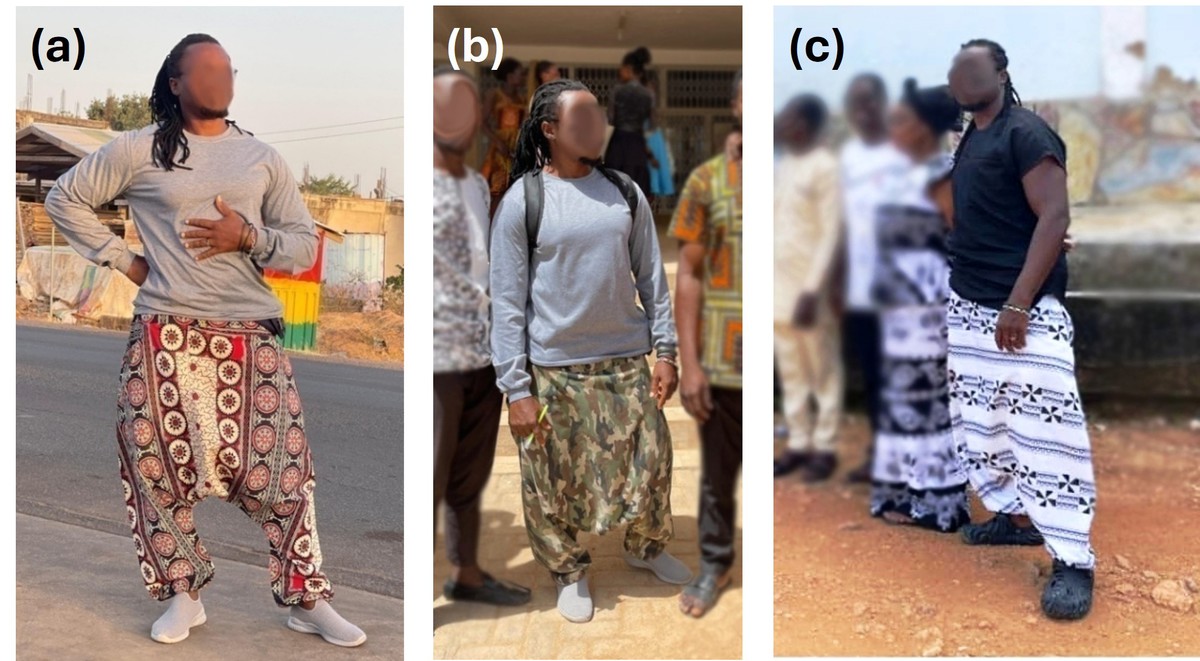
Figure 1. (a-c) Dress code and general appearance of Participant 1 on regular days. (Source: Fieldwork, 2024).
Fathimi and Kumar (2022) explain that the fashion and lifestyle trends of today are impacted by a wide range of social and cultural events. In furtherance, fashion is an art form which can influence or impart on someone’s personal life. It is the most popular mode of expression. Therefore, wearers’ choice has become designers, apparel manufacturers and brand merchandisers’ priority (Fathimi & Kumar, 2022). It, therefore, comes as no surprise that Participant 1 holds the philosophy of customising his fashion. Figure 1, depicting the regular fashion statement or appearance of Participant 1, confirms his use of conventional western-styled shirts, but a customised ‘harem pant’ trouser style which, according to him, was inspired by a traditional ‘dance-trouser’ from the northern sector of Ghana called Kurilaan’ne/Kurilan in the Kusaal language. Acquaah et al. (2017) also describe the traditional dance-trouser as Ginjamlani/gingalene (hernia trousers) and further highlight that they are also worn as casual wear by royals when attending less important calls.
“I’m a journalist, and I’ve been in the media (Journalist) for 30 years. I appear in a formal dress code on a regular day (Figure 2). Just as any other person in the formal or corporate sector dresses. The regular but varied trousers and shirts” (Participant 2).
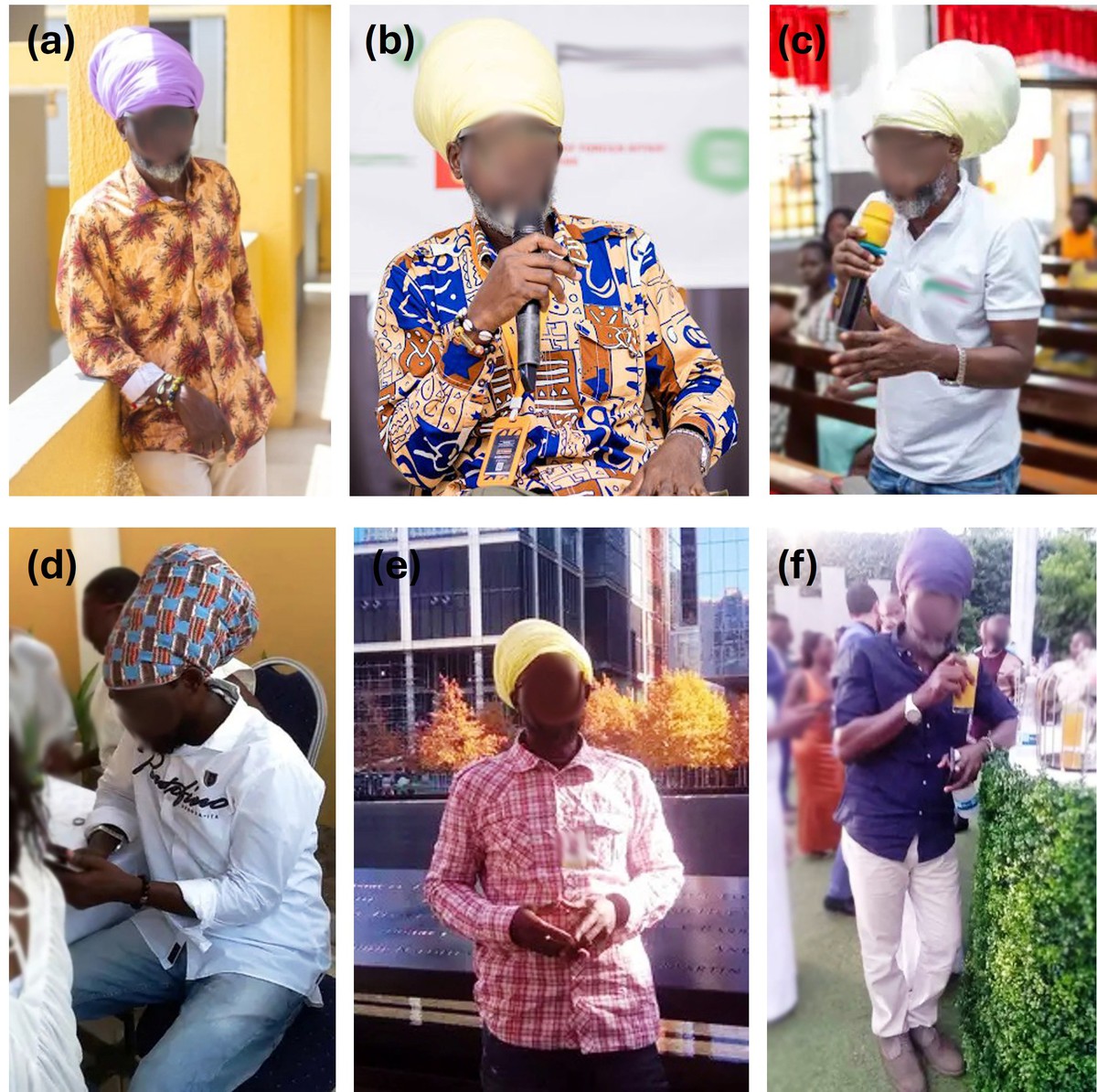
Figure 2.
Dress code and general appearance of Participant 2 on regular days. (Source: Fieldwork, 2024).
Figure 2 portrays the formal or conventional fashion statement or appearance of Participant 2 on a regular day and at varied social events. Formal wear, as defined by Sarpong (2016), is clothing officially accepted, suitable and conservative for social functions (like weddings, formal garden parties or dinners, débutante cotillion, dance, or race). It also includes job-related events like interviews or work. Formal clothing or attire has well-designed features that cover sensitive parts of the body. Such business, formal or corporate attire includes a pair of slacks or trousers and a shirt with a collar (Sarpong, 2016). Figure 2 confirms that the dress code of Participant 2, which is a Western-style shirt and trousers, falls within what has been described as formal and is motivated by his career path. Also, prominent about the participant’s fashion is the constant presence of his dreadlocks kept under tightly wrapped turbans, a common dressing component among the Bobos/Boboshanti (Botchway, 2018). Amankwah et al. (2012) opine that the formal Ghanaian clothing style has become an adaptation of Western fashion trends, specifically from Europe and America; therefore, characterised by the use of local fabrics in Western-style garments, as showcased in Figure 2 (a & b).
“I’ve been an Entrepreneur (Manufacturer of hair products) for 22 years. My fashion is influenced by my love for my African roots and Ghanaian identity. So, I always want my appearance to represent that. My dress code is always styled from African fabric/prints or designs. I’m always in African wear; top and down and mostly a head gear made from African colours; Red, Yellow, Green, with Black or white” (Participant 3).
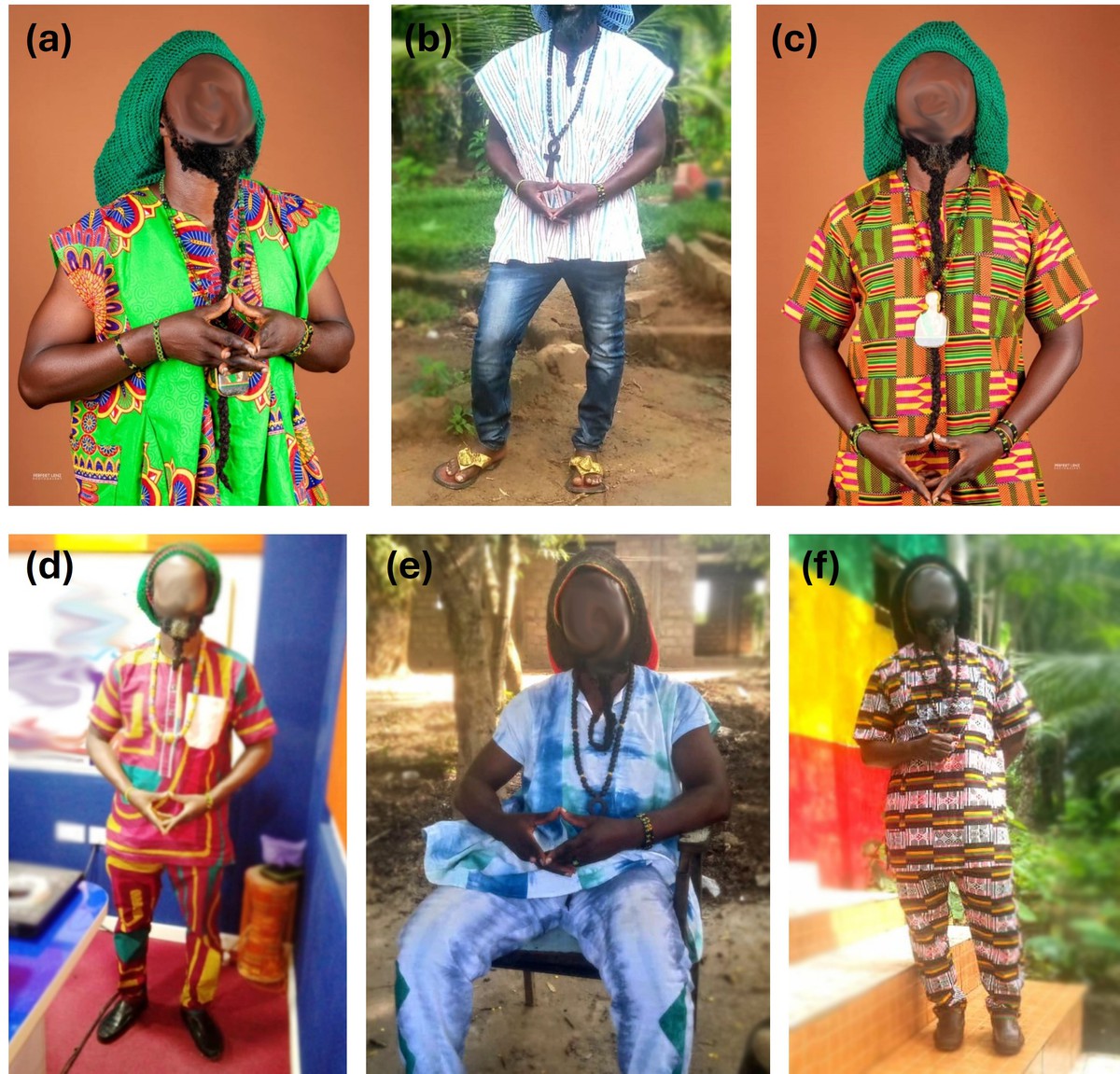
Figure 3.
(a-f) Dress code and general appearance of Participant 3 on regular days. (Source: Fieldwork, 2024).
Participant 3 opines that his fashion is inspired by his strong connection with African cultural heritage, philosophies and identity. As a result, his choices of textiles are mostly indigenous Ghanaian clothes and other wax prints commonly termed ‘African Prints’. Essel (2017) argues that not all wax prints are ‘African prints’ because the waxy venial effect and patchy designs of wax prints are mostly nature-based design motifs and not from African traditions. He specifies that authentic African prints are those of African origin, such as the African ethnic cloth prints technology like Egyptian fabric printing culture and adinkra printing of Ghana, among others. The batakarior fugu (smock), which traces its origin to the Northern regions of Ghana, is one of the most cherished traditional apparel exclusive to Ghana (Abdulai et al., 2016). The type of smock (shirt)worn by Participant 3 (Figure 3b) is the DasenkaorYensichi/densikyi, which is the most commonly designed type of smock (Asare et al., 2019; Acquaah et al., 2017). Figures 3a and 3e are wax prints sewn in the style of the Dasenka batakari/fugu.The textile material for Figure 3a is Dashaki, a loose-fitting t-shaped shirt worn by people of East and West African countries and Diaspora as an ethnic fashion (Lynch & Strauss, 2024); while Figure 3(e, f) are tie-dye fabric and geometric motifs designed wax prints respectively (Mayusoh, 2015). The rest of Figures 3c and 3d are Kente fabric sewn in Western style. Figure 3in totality confirms the afro-centric appearance of Participant 3 by way of his fashion statement.
In analysing the experiences and appearance of all the participants, there is evidence that clothing and fashion in Ghana are influenced by internal and external factors. Some of the external factors include the exposure to indigenous, foreign and contemporary trends. This has made a fusion of cultures in fashion a common phenomenon in Ghana (Amankwah et al., 2012). This is evidenced in participants’ fashion sense. All participants’ fashion as shown in Figures 1, 2 and 3 is influenced by a blend of Western culture and indigenous culture. Other factors that influence one’s choice of attire (Sarpong, 2016) include political, technological, economical, educational, and occupational orientation, among others.
3.1.2 | Theme 2: Socio-cultural experiences of participants
This theme examines participants’ subjective experiences of treatments from their immediate environments concerning their looks, grooming, dreadlocks and dress code. It focuses on the reactions towards the participant from people in the participant’s working environment and community of residence, and the security personnel. The narrations or ordeals of this theme are based on the account of the participant.
Sub-Theme 1 (Question 1): How do people in your community and workplace react to your appearance?
“The kinds of reaction are rather positive. Except for a few people who are not too comfortable with my trousers. Even those, there is still some admiration” (Participant 1).
“The reactions vary. It depends on whether the person you are meeting is enlightened or not. If the person is not enlightened, he/she sees you as being ‘out of the ordinary’ with the dreadlocks. However, people who are exposed to global cultures will not have any issue with appearance or dreadlocks. People in my community and workplace are used to me because they’ve seen me countless times. Perhaps they probably saw me as a strange or an unconventional person upon seeing me for the first time” (Participant 2).
“They have embraced the way I look and appear. I’m admired by people of all ages and statuses, including traditional leaders. People love my appearance, and some even want to do the same, so it’s a privilege. Sometimes the receptions make me feel like a King. My appearance or looks are admired not only in my community but anywhere I go; in and even outside Ghana” (Participant 3).
Participant 1 is of the view that the appearance, which includes personal hygiene and physical grooming, will determine how society will relate or react towards such a person. Participant 1’s assertion is justified in Wilson (2008) that clothing plays a role in stereotyping because; it makes visible social assumptions, social codes and collective understandings. Participants 2 and 3 disagree but contend that it is rather the mindset of people or social activities of the dreadlock wearer respectively that determine the label, and not the appearance. From the interactions with Participants, they all assert that the presence of dreadlocks draws some level of attention to the wearer because it makes the person stand out. It is gathered that contrary to Participant 1’s assertion, irrespective of one’s appearance/fashion statement or physical grooming, one can still be mistreated if the person you are encountering is unenlightened or has a prejudicial mindset. Essel (2023) explains that the negative perceptions about Afro-centric hair stem from miseducation, brainwashing, self-hate and disorientation through the slave trade and doctrines of Euro-Christian religion and Islam. It can be cited that, despite the conventional fashion standard of Participant 2, he still gets a cold reception from some audience members who are either not familiar with him or are ignorant of the origin, philosophy and cultural symbolism of dreadlocks.
Sub-Theme 2 (Question 2):How do Ghanaian security personnel react towards you as you go about your daily routine?
“I work closely with the military, and they all love it (dreadlocks). On the contrary, you become their (police) friend” (Participant 1).
Though his style of dressing, which is an integration of indigenous and western styles, is perceived as non-conventional by a section of Ghanaians who are not familiar with the origin or inspiration behind his unique trousers. Nonetheless, it still does not result in crime tagging or ill-treatment by both security personnel and people within his residential and working community.
“This is dependent on the level of enlightenment or exposure of the personnel. Security personnel, especially police, have a stereotypical mindset about people with dreadlocks, so once they see you, they radically profile or scrutinise you with the hope of finding marijuana on you. In the geographical jurisdiction where I work, I’m known (personality-wise), so I don’t go through that kind of prejudicial profiling, but once I step beyond that jurisdiction (travelling), I’m often asked to pull over and scrutinised beyond the ordinary on a regular basis” (Participant 2).
“Oh, I can say the majority of my friends are police officers. They also constitute a greater percentage of my client base. They even come home to buy my product and also recommend it to others. You see, the police don’t like bad people, so when they see you are good, you support the community, they become your friend. They know who I am, and they are good with me. I’m always with them. We have a good relationship. We have ‘Highway police’ and police in our communities. It is not because of appearance or dressing but the marijuana tag associated with dreadlock wearers. They also feel that anyone who smokes is a criminal. So you can wear a suit and even drive a limousine and the ‘Highway police’ will still search you thoroughly” (Participant 3).
Inferring from the interactions and experiences of Participants 2 and 3, the presence of the dreadlocks alone makes some police personnel overlook the formal and conventional fashion statement/appearance of ‘Bellyful Rastas’ because they perceive dreadlocks as marijuana paraphernalia. As a result, they get unfairly profiled or often scrutinised in areas outside their regular jurisdictions where their good persona and pedigree are widely known by the security personnel there. The attribution of dreadlocks to marijuana usage or possession, according to Essel (2023), can be traced to the lifestyle of some Reggae legends like Bob Marley, who popularised smoking in public. This has created a deep false perception that all dreadlock wearers smoke marijuana. And because marijuana usage and possession without a license from the Ministry of Health are criminalised in Ghana (Ghana’s Narcotics Control Commission, 2020), some security personnel operate on such prejudice or stereotypes. This accounts for the experiences of Participant 2 being profiled upon being sighted. Participant 3 adds that the unfair scrutiny or profiling does not bother him much because, once his law-abiding and responsible nature is established over time through the regular checks, he does not face such routine checks by the same personnel again next time. Participant 3’s unbothered mood about the profiling and scrutiny can also be viewed from the angle that he has got accustomed to the practice.
3.1.3 | Theme 3: Opinions of Participants on the claim of previous findings
This theme delves into the issue of sub-segregation and preferential treatment of dreadlock wearers. It enquires about the participant’s agreement or otherwise with the claim and further probes into other possible experiences concerning the claim.
Sub-Theme 1 (Question 1): Dreadlock wearers of your economic background are said to be exempted from crime tagging. What is your response?
“I don’t go through that (crime tagging). Definitely, how you carry yourself. Because, one might not even know your economic background upon seeing you, but what you wear, how you speak and how you present yourself matters” (Participant 1).
“It is not generally the case. It depends on the situation and milieu you find yourself in. Regardless of your economic status and conventional appearance, you can still be treated unfairly or crime-tagged just for having dreadlocks. It is so because people already have some negative mindset about dreadlocks in general as a result of miseducation and ignorance. The media also fuels this stereotyping. E.g. In most cases, when one is apprehended for a crime, their religious denomination or social affiliation will not be mentioned (that’s the right thing), but when the person has dreadlocks, the adjective ‘Rasta’ is attached to the reportage/headline. Meanwhile, the person might not even be a member of the Rastafari levity. Hence, a very unintelligent description that breeds socio-cultural segregation and crime tagging of an entire affiliation/social group” (Participant 2).
“No! Basically, irrespective of your economic background, once people know you are of good character, they will like you. It is the same with the security personnel in general. Community-wise, too, being a Ghetto Rasta is not the issue. But, per common knowledge, lots of criminal activities go on in slums or ghettos. The police are there for specific tasks (to check criminal activity and protect the community), so they observe and monitor everybody. But with dreadlocks, you are easily identified, so when they observe you closely and realize you are law-abiding, no one will harass you. When you are good, they will do you good. So, they like me because they know I’m responsible and contribute to the community” (Participant 3).
All three participants agree that economic background does not play any role when it comes to the crime tagging of dreadlocks wearers. Participants 2 and 3 repeated that the motivation for the humiliating profiling by police is the mindset that all dreadlock wearers are users of cannabis/marijuana, an act considered illegal in Ghana. Participant 3 reiterates that having your car and looking ‘good’ can even make you the target of highway police. He alleges that some unprofessional police personnel go to the extent of plotting marijuana in such people’s cars as they search, and use that to blackmail and extort huge sums of money from these unsuspecting victims. And because the victim has dreadlocks, everyone is likely to believe that the dreadlock wearer indeed possessed the marijuana. According to Owusu (2023), a Member of Parliament and a retired police officer who served as an Executive secretary to the former Inspector General of Police (David Asante Apeatu), was cited on 3news.com confirming this unlawful practice by some police personnel. Some cases involving some Ghana police personnel planting marijuana on people have been reported in a series of news reports (The Herald Ghana, 2024; Modern Ghana, 2024; Ansah, 2022; Adogla-Bessa, 2022).
Participant 2 raised the awareness that the prejudice against dreadlock wearers is also fuelled by the Ghanaian media through their deliberate style of captioning crime suspects having dreadlocks. An example of such reportage includes a publication by Daily Graphic (2007) and GhanaWeb (2007) headlined “Police Bungle Arrest of Rastafarian” and “Rastafarian arrested in Aflao not Tei”, respectively. The lead of these two news publications read:
“The police at Aflao have said the Rastafarian arrested at Aflao on Tuesday was not Ebenezer Tei who was wanted in connection with the murder of Emmanuel Appiah Kubi, an ex-policeman, at Akosombo.”
“The Rastafarian who gave his name as Kwame Boateng from Nsawam, has, accordingly, been freed after the police had apologised to him. Police sources told the Ghana News Agency that a police team from Akosombo was at Aflao on Tuesday evening to ascertain the identity of the Rastafarian before he was released.”
Based on the details of the above report, the alleged suspect was wrongfully arrested on suspicion of murder. And despite the person having a name, the media decided to repeatedly use ‘Rastafarian’ as an adjective for the arrested person in custody. Others include “Rasta man busted for possessing cannabis” and “Unemployed Rastafarian jailed 25 years for robbery”, published by Modern Ghana (2011) and GhanaWeb (2015), respectively. Also “Rastaman arrested for murder in Tema” (GhanaWeb, 2019), “Rastaman and others charged with murder” (The Herald Ghana, 2023), “Rasta Man Arrested for kidnapping” (Insight Ghana, 2024), “Rastaman remanded for possessing ‘wee’- Accra” (Nana, 2019) from Graphic Online, “Rasta man busted for possessing cannabis” (Yankson, 2011), and “Wanted Rasta man grabbed by police” (Awiah, 2014). This peculiar style of headline is often used when the suspect has dreadlocks, which (Essel, 2023) is synonymously called ‘Rasta hair’ or ‘Rasta’ in Ghana. Also, the use of ‘Rastafarian’ about all dreadlock wearers is because people of the Rastafari philosophy and ‘livity’ are commonly identified with dreadlocks (Botchway, 2018), meanwhile, not all dreadlock wearers align with the Rastafari livity, therefore tagging every dreadlock wearer as a Rastafarian, is out or order. Again, since the practice of using hairstyles or the philosophical affiliation of arrested persons is not a general practice, the motivation behind this stereotypical act by some media outlets remains a mystery, especially when the hairstyle or philosophical affiliation played no significant role in the alleged criminal act. It is akin to maligning the entire social group.
Sub-Theme 2 (Question 2):In your opinion, what accounts for the prejudice and crime tagging of the other section of dreadlock wearers?
“Some keep them (dreadlocks) unkempt. Another factor is because of some past experiences involving some criminals having dreadlocks. But basically, it stems from indoctrination against our indigenous self. However, those who wear locks as a religious act are very honest people” (Participant 1).
“Sociologically, people give preferential treatment to others based on anything; E.g. Complexion, ethnic belonging and even by the type of mobile phone you hold. Judging people’s social status based on appearance can be very misleading. So, the segregation is a result of the low level of enlightenment of the law enforcer or the one doing the profiling. Also, a lack of education and awareness about dreadlocks in general. Crime is committed by all classes of people who belong to various forms of religion or philosophical affiliations. So, crime should not be profiled based on social groupings or religious denominations. Besides, dreadlocks for religious/spiritual purposes are, and look, different from dreadlocks for fashion purposes” (Participant 2).
“It is not that the police in our communities regard ‘rich’ people. They just want to see you doing something meaningful. When they find you idle, that’s when they keep tracking you. So the advice I normally give other dreadlock wearers is to be more responsible in their community and people will respect you and not criminalize you” (Participant 3).
Participant 1 reiterates that it is not necessarily the economic background but how one presents himself. He cited a scenario where there was a time in Ghanaian history when auto mechanics were encouraged to put on wristwatches to enable people to easily distinguish between them and ‘madmen’ due to how the nature of their job can get them very dirty in the course of executing their duty. Impliedly, regardless of the similarities, certain things set some dreadlock wearers apart from others, and that is one’s physical appearance. Participant 3, to some extent, agrees but points out that what contributes to the exemption is the fact that the dreadlock wearer is seen as being a responsible citizen in their respective communities. Specifically, having a known legal source of income, no matter how small, saves dreadlocks wearers from harassment and criminalisation. Inversely, when one is well exposed and enlightened, he/she will treat people fairly, equally and with respect for people’s dignity regardless of their economic status perceived through their appearance or possession. Participant 2 still disagrees with Participant 1 that it is the way some dreadlock wearers present themselves that warrants certain ill-treatments. Participant 3, who seems to align with Participant 1, clarifies that it is not the appearance of the ‘Ghetto Rastas’ that attracts crime tagging but their social activities, whether he idles around or gets himself busy with some legalised work.
Participant 2 reaffirmed that the problem is the mindset from which a person rates others. To him, appearance is deceptive, so criminalising based on appearance, affiliations, or social class is a violation of people’s fundamental human rights, that is, their freedom of association and expression, which can escalate into social unrest. In the same vein, Botchway (2018) agrees with Participant 3 that dreadlocked Rasta people have consistently upheld African culture and identity for ages. Without their existence, most of our Ghanaian arts and culture would have gone extinct because the masses are fond of heading in the direction of foreign cultures. Juxtaposing all the responses, one thing that is established in unison is that some level of exclusion from segregation, crime tagging, and radical scrutiny is guaranteed once people, including the security personnel, get to know the dreadlock wearer on a personal level and build regular coexistence or casual rapport with them.
3.2 | Opinions of Ghanaian Security Personnel
The study hereby delves into the views of the security personnel on what accounts for some security intel or operations concerning appearance or fashion. Three themes and corresponding sub-theme(s) capture personnel’s career details and working experiences about social groups and their potentiality to commit certain crimes.
3.2.1 | Theme 1: Career details and geographical experiences
Sub-Theme 1 (Question 1):Years in active service, current rank, and Regions served in Ghana, including current region?
Security Personnel Participant 1: Ghana Police Service 30 years in service. Current Rank: Deputy Superintendent of Police (DSP). The regions served are Greater Accra and the Eastern Region.
Security Personnel Participant 2: Ghana Immigration Service from 2018 to date (6 years).Current Rank: Deputy Superintendent of Immigration (DSI). Regions served are the Volta and Western Region”.
Security Personnel Participant 3: Ghana Army from 2008 till date (16 years in active service). Current Rank: Lieutenant Colonel. The regions served are Western, Ashanti, and Greater Accra.
3.2.2 | Theme 2: Correlation between fashion/appearance and crime
Sub-Theme 1 (Question 2): How do you draw intelligence or suspicion based on people’s appearance or fashion sense?
“The appearance of a person raises our suspicions as police officers, making us suspect whether that particular person could be liable to commit a crime. In the Ghana Police Service or policing in general, when you dress shabbily with your hair unkempt and are found in areas like a Ghetto, we normally take a serious look at you and even put surveillance on you to ascertain your activities in the area. E.g. In a quiet residential area, when you see two people, one nicely dressed in, say suit with hair well-kempt, and another person with unkempt hair who looks like someone who smokes, the latter heightens our suspicion. So we normally suspect people whose appearance look like criminals more than those who are well and neatly dressed, with their hair kempt. Appearances are very, very, very necessary in our work. It serves as a lead to someone’s criminal activity” (Security Personnel Participant 1).
It can be analysed that shabby dressing and unkempt hair are key factors that inform the police’s suspicion of someone. Another factor that informs the suspicion of the police is whether the person smokes or not. It is widely perceived that smokers have a high tendency to be shabbily dressed and get involved in criminal activities. Therefore, the use of the phrase ‘looks like a criminal’. However, a smoker who is neatly dressed in well-groomed hair has a higher chance of being exempted from police suspicion than a non-smoker who is shabbily dressed or has ‘unkempt’ hair.
“We look at what a person ‘has or does not have’ on him/her. But appearance also counts for you to probe further. So, anything out of the ordinary will call for questioning. For instance, when the person’s documents say he is well-travelled and is travelling around winter, he is wearing flip-flops or shorts or something extremely casual or odd. From my experience at a border in the Volta Region, I noticed dressings such as very colourful wigs and clothing, heavy make-up and excessively long eye-lashes were signs I noticed were common for a particular nationality. Even though such persons might have already found themselves in the country without the requisite documents or an approved route, they claim to be Ghanaian. These features can serve as a sign to call the person for questioning. So, the general appearance helps in detecting nationality or cultural identity in most cases, especially in circumstances where a person is suspected to be claiming a false nationality or identity. So appearance helps, but it is not solely on appearance; we consider other factors too. E.g. when a person (traveller) is seen to be extremely jittery. Or when we have been provided with the features of a suspect, that is where we capitalize on physical appearance and then documentation” (Security Personnel Participant 2).
Juxtaposing responses from Security personnel 1 & 2, it can be gathered here that one’s low economic background, cultural orientation and level of enlightenment can lead to an ‘odd’ appearance, which leads to suspicion. Ironically, Security personnel Participant 2 adds that the display of wealth or luxury by travellers can create suspicion, which can also lead to profiling by the immigration service. Another factor which has nothing to do with appearance or fashion sense is a person’s mannerisms. In a case where a traveller is acting unusually nervous, jittery or uneasy calls for profiling.
“Intelligence is technically different. Suspicion is anything that draws your attention to something or an indicator, while intelligence is a careful study of data or patterns. It is processed information. Basically, body language, behavioural patterns, habits and routine are what attract suspicion. In terms of appearance, you cannot just see somebody’s fashion, tattoos, etc and conclude unless there is a symbolic correlation. E.g. In some communities, a specific tattoo symbol is a secret identity of a gang, cult etc. so if a security person is profiling or picking surveillance on a person having that tattoo, it is not the wearing of a tattoo in general per ser that calls for the profiling, but the kind and its symbolism or connection with known pattern or historical antecedents. Same way, the way and manner people dress is not the issue unless it reflects a pattern, grouping, or specific projection. That is when they start monitoring to confirm or deny suspicion based on known or established indicators” (Security Personnel Participant 3).
On the part of the Immigration service and Army, their suspicion is not based on how neatly or shabbily dressed a person is, but its connection with popular and unpopular public opinions, or its correlation with security intelligence gathered. Therefore, one can be neatly and conventionally dressed or groomed, but the fashion sense and the timing can trigger questioning. So, in a nutshell, in as much as appearance matters in the Immigration Service and Army’s line of work, there is no general template that people shabbily dressed with ‘unkempt’ hair are more profiled than those considered ‘well dressed’ with well-kempt hair. What informs their selection of whom to profile is based on security intelligence gathered or descriptions of suspected/wanted people given to them by the police.
3.2.3 | Theme 3: Correlation between social class and crime
This theme explores available statistical data or subjective experiences of security personnel participants to establish the linkage between certain social groups and their crime tendencies. It also inquires what accounts for the said sub-segregation among dreadlock wearers. Therefore, two sub-themes were developed to this effect.
Sub-Theme 1 (Question 3):From your experience, which category of people tends to commit the following crime the most: murder, robbery/stealing, possession and usage of narcotic drugs?
“We have a ‘heinous crime’ and ‘dishonesty crime. ’ Heinous crimes are murder and manslaughter, while dishonesty crimes are stealing, robbery, fraud, etc. For dishonesty crimes, it is highly those who use drugs, those from broken homes and those who are idle. To further explain, drug use and robbery/theft cases are mostly bedmates. It is very rare to find a robber who isn’t a drug user. But for heinous crimes (murder/manslaughter, etc), these are usually by-products of other crimes (dishonesty crimes). E.g. when a robber wants to cover traces or when he/she is having difficulties trying to overpower victims. So one ‘dishonesty crime’ can lead to a heinous crime or series of crimes. E.g. A person doing drugs can become addicted, and when he/she cannot afford the drug, they may engage in theft/robbery. In this case, when the victim is resisting, the culprit’s action might cause murder or manslaughter. Drugs are addictive, and the devil finds work for idle hands. So again, people from broken homes, people who use drugs and people who are idle are more likely to commit the crimes listed” (Security Personnel Participant 1).
The police opine that the group of people who commit dishonesty crimes the most are those from broken homes, drug addicts and the unemployed. Here, one’s employment status and family background become relevant in the operations of the police. Unfortunately, the status of a person, especially youngsters being from broken-home or otherwise cannot be established at a glance, therefore their social activities become the lead. Cumulatively, it can be summarised that persons who are neither employed nor self-employed and spend most times idling around in a community attract the surveillance of the police, especially when suspected of using narcotic drugs too. On the other hand, a person who is employed but probably into secret illegal business, with ‘well-kempt’ hair and ‘decent dressing’ can go about his illegal dealings without attracting the surveillance of the police; unless upon a tipoff.
“Crime is not written on anybody’s face. It is about the activity, and what a person is ‘holding or is not holding’ E.g. Excessive cash on the person or flaunting luxuries and flashy stuff, travelling frequently and shortly but cannot disclose the exact type of business you go to do etc can create suspicion of drug peddling or money laundry so it will call for questioning. Anybody at all can commit those offences, so to say a class of people is highly likely to commit this or that crime, is offensive and will bring trouble” (Security Personnel Participant 2).
“There is no statistical data like that. That kind of data does not exist to establish such categorization, though such research can be done with a particular year or duration in perspective. Let’s say a police crime report for a particular year, then you analyse. Crimes, in general, are influenced by situational, social and personal experiences rather than your belonging to a particular social class of people. All these crimes can be committed by anybody based on a circumstance or factors. So, ideally, everyone is being profiled in this technological dispensation, the apps we use, the updating of apps on one’s phone, social media engagements, etc.” (Security Personnel Participant 3).