
 ,

1 | INTRODUCTION
Avant-garde, whose etymology in the French language comes from a split word “avant” meaning ‘advance/fore’ and “garde” which translates into ‘guard’ refers to people, arts and culture that are experimental, radical or unorthodox
(Adjei-Appoh et al., 2022). In effect, avant-garde can be practised in all art forms including the visual, literary or performing arts. As justified by
Adjei-Appoh et al. (2022), certain social behaviours, dress codes and styling of any parts of the body can be termed as avant-garde depending on how it is portrayed. This means that body art such as paintings, tattoos, and make-up art, among other artistic expressions as well as behavioural patterns are all components of the avant-garde. However, what sets avant-garde apart from conventional artistry is the conceptual or non-conventional nature of avant-garde.
Rocamora (2002) and
Bourdieu (1984) as cited in
Boodh and Foerster (2014) describe it as an autonomous field where advanced forms of artistry are produced and targeted at a limited audience. Works produced under the avant-garde concept are distinguished by their unorthodox and experimental methods
(Dictionary.com, 2024). Avant-garde designs and productions are not regimented and, therefore, do not conform to any laid down template, principle or artistic tradition, and
(Boodh and Foerster, 2014) neither are they geared towards monetary benefits or financial profit. Aside from the aforementioned benefits and characteristics,
Lau (2016) further sustains that avant-garde requires openness and regeneration.
In the field of fashion,
Morley (2013) asserts that fundamentally, fashion designs are either more conventionally driven or more conceptually driven. However, various societies have certain basic criteria or checklists to determine the cultural identity of people and their moral standards through their clothing and body adornment
(Adjei-Appoh et al., 2022). This is because one’s fashion is an expression of his or her social disposition rooted in culture, the individual’s physical body type, as well as the socio-cultural norms and settings of one’s community. To a larger extent, people’s social statuses are assumed through their fashion, a practical illustration of Bianca Frazier’s quote: “dress how you want to be addressed”. Parallel to this, globalization or universal cultural patterns have a strong influence on one’s fashion and other artistic expressions regardless of his or her indigenous cultural standards
(Adjei-Appoh et al., 2022). Therefore, the philosophical underpinnings and artistic interpretation of avant-grade creations and culture are strictly subjective; hence, they can best be explained by the creator and be appreciated by their intended audience. Ironically, the strong conservative nature of most traditional Ghanaian cultures especially when it comes to dressing and body arts has made avant-garde seem like a non-Ghanaian phenomenon.
The notion that conceptual art is foreign or alien to African culture can be contended vehemently. This is because what is considered today as conceptual art, ironically was the indigenous art practiced centuries ago by ancient Africans before the encounter with the colonialists. Therefore, there are calls from various scholars for Africans to step up their participation in conceptual art (Essel and Acquah, 2016) and own it. Hair styling and the significance attached to this practice have played an important role in the African traditional culture. The styling which includes dreadlocks, plaiting, corn rows, braiding among others, and sometimes with hair adornment is inspired by several factors such as spirituality, ethnicity, marital status, rank, historical symbolism, and also a message or medium of communication (Essel, 2023; Akanmori, 2015; Botchway, 2018). As revealed by Akanmori, (2015), the grooming of hair and hairstyling as a socio-cultural practice and identity was a deprivation Africans went through during slavery. The slave masters described the natural hair and indigenous African hair styling with derogatory terms which resulted in emotional and psychological scars among Africans. Centuries after, other Africans including Ghanaians perceive and view certain indigenous hair styling and adornment with a similar lens as that of the colonialists. Essel (2023) study emphasized how uncombed ‘Afro hair’ and dreadlocks have been associated with stigma and crime tagging among most Ghanaians and Ghanaian security services. Botchway (2018) emphasizes that through the study of hairstyles, one’s level of conformity or deviation from societal norms can be revealed. For instance, in the Ghanaian setting, some hairstyling, being traditional or contemporary, is gender bias. Some are reserved solely for females, therefore a man’s attempt to style his hair in that manner is akin to deviancy or the man is seen as a misfit, in extreme cultures, it is considered taboo. This practice hinders the portrayal and upliftment of one’s artistic, and philosophical expressions; of which avant-garde is equally affected. Body arts like tattoos and piercings which are cultural, fashion or artistic statements too are met with the same treatment.
The human eyes are a fundamental means of non-verbal communication because emotions, attention and intention can be perceived through gazing into one’s eye
(Merry, 2013). Criminals are said to find solace in disguising themselves with clothing and accessories like hoodies, masks, and dark spectacles, among others. However, bodyguards or security personnel also wear dark sunglasses as a security measure to fool or unsettle onlookers, because with the glasses on, potential attackers cannot see which direction they are looking
(Westminister Security, n.d). Though paraphernalia or articles can be used by all, some people can be suspected of ill motives while others would not. This is because, in the cultural context, clothing choices can be perceived as crime paraphernalia or conduit for deviancy
(Mensah and Korankye, 2024). Also, criminals according to
Merry (2013), eyeglasses may serve as a disguise that hinders identification. Therefore, one’s attempt to hide some aspects of his face, or have some eccentric look or appearance for whatever reason, can be considered as an attempt to conceal one’s identity towards an ill motive. Based on these socio-cultural templates, the presence of certain hairstyles, coupled with some paraphernalia can result in suspicion of crime or crime tagging of that individual. All the aforementioned socio-cultural factors have contributed to the ill reception of avant-garde in Ghana, which by extension inhibits creativity, originality and exploration in the field of art, especially fashion. Though some scholarly works have been done on avant-garde fashion,
(Adjei-Appoh et. al., 2022) the avant-garde phenomenon or trend has still not been well embraced in Ghana. Therefore, by way of art appreciation, the study seeks to explore and underscore the philosophical meanings behind selected avant-garde designs to project the artistic expressions, deep thoughts or concepts embedded in the designs. This is geared towards rekindling or igniting Ghanaian’s interest in avant-garde art and culture, and also to curb the ill reception and negative connotations associated with the practice of avant-garde in Ghana.
1.1 | Concept and Benefits of Avant-Garde in fashion design
Wainwright (2018) describes conceptual arts like avant-garde as an art-as-idea or idea-based art. Therefore, avant-garde fashion is also concept-driven and the (Lau, 2016) garments produced fall outside of mainstream fashion. The primary goal of avant-garde art is to communicate an idea, philosophy or opinion. Since concepts are usually subjective, avant-garde fashion generates innovation with great efficiency (Adjei-Appoh et. al., 2022). Again, since it is not bound by any laid down template or design principle, it attracts less conflict over its processes as compared to conventional art (Boodh and Foerster, 2014; Adjei-Appoh et. al., 2022). Adjei-Appoh et. al., (2022) further educate that the practice of avant-garde fashion provides a more dynamic and exploratory approach in terms of materials and methods. This implies that avant-garde fashion gives designers the liberty to explore any form of material or production process, being conventional or non-conventional. This creates a creative environment of unlimited exploration with little or no criticism. Mandelbaum (2015) adds that this helps to challenge, break and reform societal boundaries thereby creating a multi-cultural milieu and unifier. Artists can express their opinions about certain traditions, adopt, and merge material cultures. Avant-garde fashion being a global phenomenon, creates a cross-cultural understanding and togetherness. As opined by Mandelbaum (2015), it provides alternative understandings and gives room for diversity and self-expression; thereby reshaping notions preconceived around cultural constructs in terms of fashion. It also triggers curiosity and research into finding the processes used in executing avant-garde clothing, a situation Morley (2013) describes as an important contribution to new knowledge. Adjei-Appoh et. al. (2022) elucidates that avant-garde has been the backbone of some of the most important artistic and cultural achievements. Siddiqui (2017) in agreement adds that avant-garde is a precursor to progress because it is based on constant innovation, taking risks and thinking ahead of time. Therefore, the practice of avant-garde should be encouraged because it nurtures originality, rejects common mentality, and creates room for those who are free in mind to shape the future (Adjei-Appoh et. al., 2022).
Even though avant-garde is a global phenomenon, this concept has still not been embraced successfully in the Ghanaian setting
(Adjei-Appoh et. al., 2022). Despite that, there are Ghanaian fashion designers who have championed the course of the avant-garde in Ghana.
Adjei-Appoh et. al. (2022) cites Kofi Ansah as one of the pioneers of the avant-garde in Ghana who has designed fabrics and costumes for national and continental events like ‘Ghana @ 50’ and the 2008 African Cup of Nations. Aside from Kofi Ansah whose collections are hosted on one of the highly rated e-commerce sites - yoox.com, the likes of Genevieve Adjei-Appoh have also contributed immensely to the practice of avant-garde fashion in the academic space and in the Sekondi-Takoradi enclave and beyond. As an avant-garde fashion designer and lecturer, her collections have been a source of reference and inspiration to many fashion design students in the Takoradi Technical University-Ghana, inspiring the inculcation of avant-garde fashion in their academic program
(Adjei-Appoh et. al., 2022) to equip fashion design students with better concept development, creativity and good management of materials. Furthermore, another vibrant Ghanaian avant-garde designer is Danny McEll who has also produced, inspired and mentored other budding designers. Though the practice of avant-garde fashion is still unpopular in Ghana, institutions like the Takoradi Technical University as well as other art festivals like the Jawuley Art Festival in Sekondi-Takoradi (2019), the Potomanto Art Festival (2018) and the Chale Wote Art Festival in Accra, have provided an avenue to promote avant-garde fashion in Ghana, as evidenced in
Adjei-Appoh et. al. (2022).
2 | METHODOLOGY
The study employed a qualitative research paradigm and a case study research design backed by the thumb theory and the theory of social constructivism. The theory of social constructivism opines that people create an understanding of things and the world subjectively through their experiences (Creswell, 2014) and hence knowledge of the world and things in it are socially constructed or depend on shared assumptions. In that regard, different individuals will have different views, understandings or interpretations about an object or practice. However, the rule of thumb according to Chen (2021) provides a basic rule-set about a course of action, it also permits freedom of exploration, creativity or uniqueness in the approach or processes in accomplishing a task. Inferably, creative artists though may be guided by the principles and elements of basic design, still have the liberty to design and produce artistic pieces through personal materials and methods rather than following a regimental template. In connecting these two theories to the study, it can be said that people’s perceptions about avant-garde are influenced by tradition and culture, however, this does not prevent artists from exploring and expressing their creative ideas in a way that best suits their interest.
The population for the study was one avant-garde practitioner who doubled as the human sample size and was selected purposively. In addition, thirteen (13) avant-garde designs were gathered from a participant as non-human samples. With the aid of an interview guide, a semi-structured interview with a participant was conducted. Both direct and indirect observation, photographs, WhatsApp chats, phone calls and field notes were used as tools to gather data through fieldwork and interactions with a participant. With the consent of the participant, interactions were also recorded using the mobile phone’s recording application and internet facility. Verbal and textual interactions were conducted in Akan, English and Pidgin languages and later transcribed solely in English without the assistance of an interpreter. The participant served as the primary data source while scholarly articles, thesis, photographs, and social media handles of participants served as secondary data sources. A semiotic visual analysis was conducted to analyse the data gathered as a means of art appreciation. Visual analysis explores the visual elements in artworks which include colour, and shape among others, while semiotic analysis refers to the study of signs and meanings. Therefore, a semiotic visual analysis explains what the visual elements in an artwork mean or communicate in the context of the design. The sociological experiences of the participants were also analysed from the perspective of most Ghanaian cultures and security intelligence.
3 | RESULTS AND DISCUSSION
’Oldy Blaq’ is a prolific Ghanaian avant-garde practitioner with over a decade of active practice. Though a graduate in Economics from the University of Cape Coast, and with no professional education in Textile making or Fashion design, he can sketch, design, develop, sew or produce garments or costumes from both conventional and non-conventional materials sourced from his immediate environment. Aside from his non-conventional designs, he is a walking gallery considering his eccentric yet art-inspired appearance. His appearance is characterized by easily identifiable features like indigenous hairstyling with non-conventional materials as hair adornment. Also prominent in his fashion statement is the constant wearing of either dark or opaque spectacles, an overgrown moustache and an untrimmed beard. He is inspired by nature and the ‘universe’ in its entirety. He thinks that the universe is filled with uncountable creatures or creations, so connecting with nature or the universe automatically gives you the ability to create. That is the reason behind his capability of being able to create or design with virtually any visible material. He further revealed styling characters in movies and music videos with his costumes and also participating in a series of runway fashion exhibitions. Interacting with Oldy Blaq revealed countless harassment by security personnel in Ghana, stigmatization and ridicule he encounters on a regular basis as a result of his practice. Through interview and interaction with the artist, some personal experiences shared are transcribed and paraphrased below:
“My parents right from when I was a child were not comfortable with my way of doing things; like ‘afro hair’ and another unique way of dressing and doing things. Sometimes they ask me What at all are you looking for in this world?. Now I can say they have gotten used to me and my ways”.
On how he encountered avant-garde, he explained that ‘I didn’t choose avant-garde, avant-garde chose me’. For which he attributes his love for avant-garde as a connection with the universe. In response to some of the memorable negative encounters, he shared some discriminatory incidences he suspects were a result of his appearance; that is, his fashion statement and styling.
I remember when I wanted to rent. After the agent took me to meet the landlady, the first thing she said was “You’ve brought a Rasta here, today. We settled on the amount and other negotiations. But as soon as we left the house, she called the agent on the phone and said somebody had come to pay for the accommodation, so it was no longer available for me. We both suspected it was because of my appearance based on the comment she made earlier and her body language”. He further provided some revelations that;
“There was a day I was travelling with some guys (they were all dressed in a perceived conventional manner). We were four males in a Taxi and everyone was wearing dark shades (spectacles). I was in the back seat. We got to a police checkpoint and the police singled me out and searched me. He also asked me alone to remove my dark spectacle”.
He reveals that the unfair profiling and reactions from the public put some restrictions on his movement and public engagements at certain times, as a safety precaution. “I am very cautious of this stereotyping so there are certain places and times I don’t go. Like going out at night and to places I’m not known, alone”.
“I recall just recently, I was working towards some photo-shoots project, so my photographer and I were on a dumpsite gathering some things to use as props. From the way the people around were watching us, I could read from their reaction that they saw us as a bunch of aimless people or even worse”.
In response to how he feels when he is ridiculed or heckled when he is wearing his designs in public places, he explains that he premeditates all those reactions, so he still maintains his composure and goes about his activities. “As for those comments, people pass and the ridicule, I psyche myself, so it doesn’t come as a surprise”. As a result, he does not reply, laugh or show any sign of anger. He further revealed that some of the ill treatments from the public are born out of jealousy. He furthers that education and society in general, do not nurture your uniqueness but try to cage or put everyone in the same box. “Some people do not have the freedom to be themselves. So, when people who have succumbed to this situation see someone who is being true to himself, or not entangled in this societal web, they feel jealous”. Hence, a possible cause for their negative reactions towards him. That notwithstanding, these experiences serve as another source of motivation for him to address challenges associated with avant-garde practice; through his artistry. This motivation and experiences he codify in his Artist’s Statement in the next section.
3.1 | Artist’s Statement
“The overall goal of everyone is to attain a certain level of happiness. No one wants to gravitate towards dark emotions, that is why we create from dark emotions. Dark emotions are the key to happiness, even though we create from dark emotions, our works reflect love. Love is the most basic law of creation. Without love, there is no point in existence. We envision a world where clothes are made without a sense of waste pollution and prejudice because we cannot truly change the world to be a better place if we do not become more conscious human beings (Oldy Blaq, 2024)”.
The artist opines that every human being aims to derive happiness inwardly and externally through peaceful co-existence. Inferring from the artist’s statement, the ‘dark emotions’ refer to the negative or unpleasant experiences encountered in life. In the context of his artistry, the dark emotions are the ill perceptions and receptions he encounters in the course of living and practising Avant-garde as a lifestyle and art respectively, in Ghana. So even though, the ill receptions create dark emotions, he considers his creations as a love language. They are geared towards addressing socio-cultural challenges in the hope of contributing to the overall welfare and well-being of the populace. An act he considers as ‘love’. Also, he has reservations on why in the quest to clothe ourselves, our practices end up polluting the very environment that sustains human existence. In this regard, he creates clothing and adornment from the “waste products”. An eco-friendly way of providing clothing and up-cycling waste. He considers his avant-garde arts and culture as serving as a social solution rather than being part of the problem. He further envisions a future where people will be open-minded enough to evaluate people based on objectivity and not stereotype or prejudice. As well as developing tolerance for divergent views and eccentric personalities. These personal views and convictions serve as the concept or philosophy that backs his avant-garde creations; as evidenced in the subsequent design samples.
3.2 | Concept: Detoxification of the mind
As shown in Figure 1a, a male human figure is portrayed wearing a cloth sewn in the form of protective gear covering all the parts of the body from head to toe, including gloves. The main material used for the garment is pieces of charcoal glued onto fabric (shirt and trousers) and leather (headgear, footwear and gloves). The pieces of charcoal are of varied shapes and sizes but are arranged in a repetitive pattern with no definite rhythm. The super-imposition of the irregularly shaped charcoal on other materials has given the garment an actual rough texture. Charcoal has numerous industrial and domestic uses serving a range of purposes such as art, medicine and fuel
(Abdollahi and Hosseini, 2014). In traditional Ghanaian society, for instance, charcoal is used mainly as fuel for setting fire. Also, it is used periodically to preserve soup that will stay overnight in the absence of a refrigerator. Thirdly, it is used in detoxifying soup that is about to go bad
(Thankyou, et. al., 2024). In cases where soup is seen foaming, the foam is scooped out, it is then placed on fire to boil. After which a glowing piece of charcoal is dropped into the soup and covered for a while to remove toxins and odour. This is effective because charcoal contains decontaminant, and its medicinal properties include being used to treat people who have ingested harmful substances
(Abdollahi and Hosseini, 2014). Conceptually, the figure fully clads in charcoal ‘sewn’ in the form of protective gear is a representation of his readiness to revive Ghanaian’s interest in avant-garde concepts, designs and lifestyle. It further aims at detoxifying people’s minds on the ill perceptions about avant-garde arts and culture with the hope of socializing and preserving it for another generation.
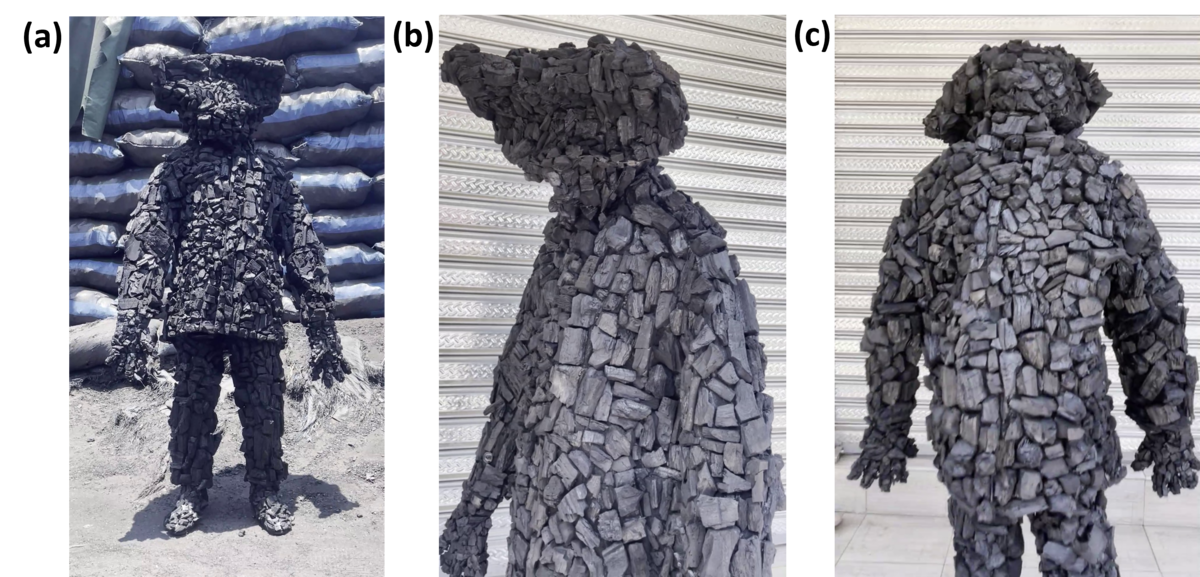
Figure 1.
Artist wearing the
detoxification of the mind fashion design concept made of charcoal, (a) the appearance of the design concept with background from the charcoal market, (b) a close-up shot of the upper body with the charcoal pieces carefully arranged, (c) a close-up shot of the back side of the fashion design concept. September 2024. Circle, Accra. (Image Courtesy: Oldy Blaq, 2024)
3.3 | Concept: Breast Cancer Awareness
The photographs (Figure 2) are excerpts from a video of a solo street art exhibition. The design and its exhibition are a breast cancer awareness creation or campaign. The design is composed of several pairs of braziers worn like a double-faced apron, with a few others wrapped around the leg at the ankle area of both legs. The practitioner wore this and strolled through a famous business area in Accra on a regular busy day. Symbolically, the numerous pairs of braziers commemorate a ‘no bra day’; in context, he has ‘seized’ people’s braziers and is still going around ‘seizing’ more. The design has two adjustable wings; left and right representing the left and right female breast accordingly. These wings are individually lifted intermittently as the participant strolls through the public. Dadzi and Adam (2019) reveal that breast cancer is the major cause of cancer death among women and therefore, breast self-examination is an effective strategy to detect breast cancer at an early stage. Women at their reproductive ages are encouraged to practise breast self-exams each month; which involves using outer fingers to exert circles of pressure on the breast and nipple to detect the presence of lumps. This practice (Damtie, et. al., 2024) aids in detecting breast cancer at an early stage for better treatment outcomes, before it spreads. In the context of the study, the lifting of the respective wing is to remind the public to examine the breast periodically as a preventive measure to detect signs or symptoms of breast cancer. The multiplicity of the colours of the braziers is a representation of all skin tones, while the types and quality also represent various social classes. This emphasizes that the campaign or awareness is for all females irrespective of race, age or status.
Though the practitioner exhibited without any verbal communication accompanying the walk, sound bites revealed several comments made by the public in Twi. Some of the comments as loosely translated include: ‘he is a mad person, not a brazier seller’, this was in response to a question one asked whether the practitioner is an actor at work or a brazier seller. Other comments are; ‘there are indeed strange creatures and happenings in Ghana’, ‘this is crazy’, ‘we keep encountering strange things and vice versa’, ‘Ghana has become entertaining’, ‘this is going on tiktok’ among others. Based on the comments, body language and other expressions from the public, the intent of the design was missed by the public. Ironically, the public subjected the practitioner to ridicule, and the design was considered an object of amusement rather than an education on health and artistic expression. This is a result of a lack of exposure or understanding on the part of the audience about the avant-garde phenomenon and the philosophy backing the design.
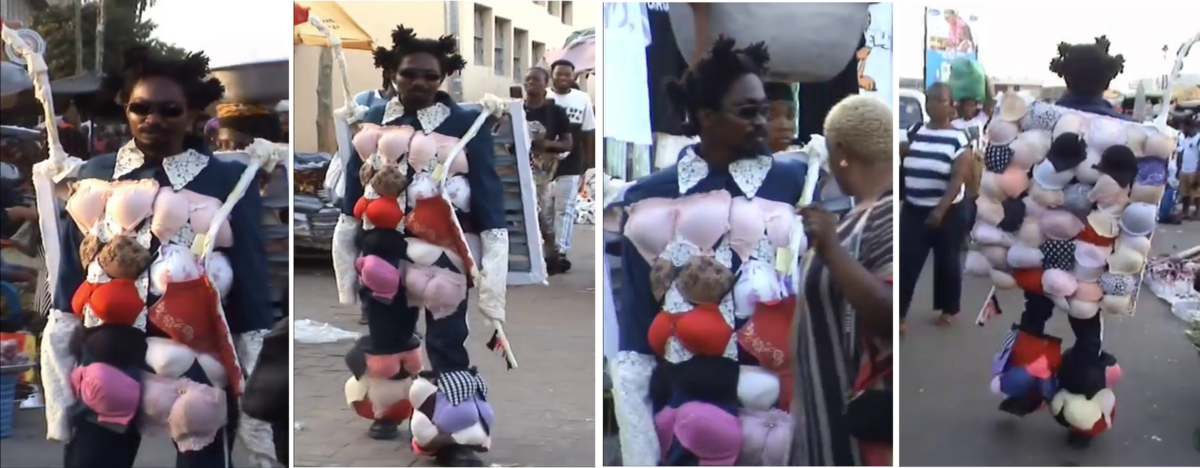
Figure 2. Artist wearing
breast cancer awareness fashion design concept made of braziers. March, 2024. Kantamanto, Accra (Image Courtesy: Oldy Blaq, 2024)
3.4 | Concept: Marriage
The scene (Figure 3) displays a male adult figure in a white bride gown, standing in front of a broken building with some crates of eggs craftily edited vertically before him. Ideologically, the scene speaks about marriage. Marriage as a union in traditional Ghanaian society is considered a very delicate rite of passage or stage in life. Inferably, marriage just like an egg breaks when tightly handled, the same way it can slip off, fall and break when loosely handled. Secondly, it is asserted in the Akan tradition and other African cultures that the man is the head of the family, but it is the woman who manages the home, which is why the scene uses a female gown to highlight the pivotal role of the woman. The figure is seen trying to balance two bags of different sizes and colours; one in the left hand and the other in the right hand. It is a call for some level of balancing; which are the compromises to ensure one does not become over-dominating over the other. The presence of tissues at both the left and right sides recommends both parties to clean up one’s mess and that of the partner when the need arises. How one handles marriage can make or break a home, as suggested by the broken building with empty crates hanging on the walls, behind the human figure.
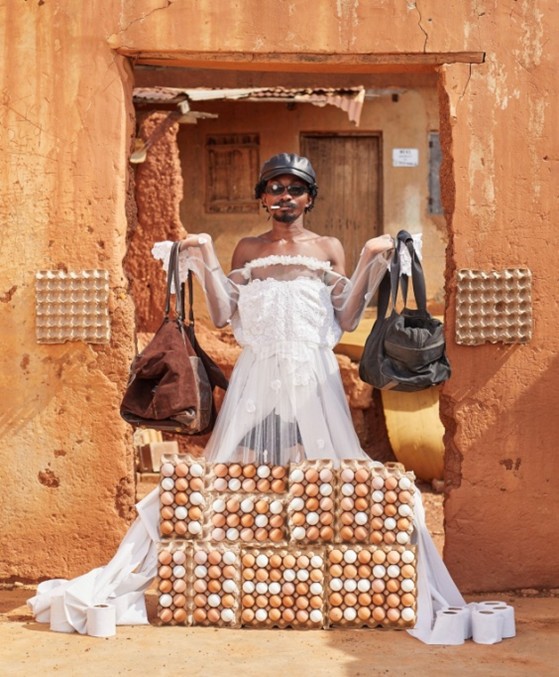
Figure 3. Artist wearing the marriage fashion design concept. April, 2023. Ekumfi Akwakrom, near Mankessim (Image Courtesy: Oldy Blaq, 2024)
3.5 | Concept: Corporate Labourer
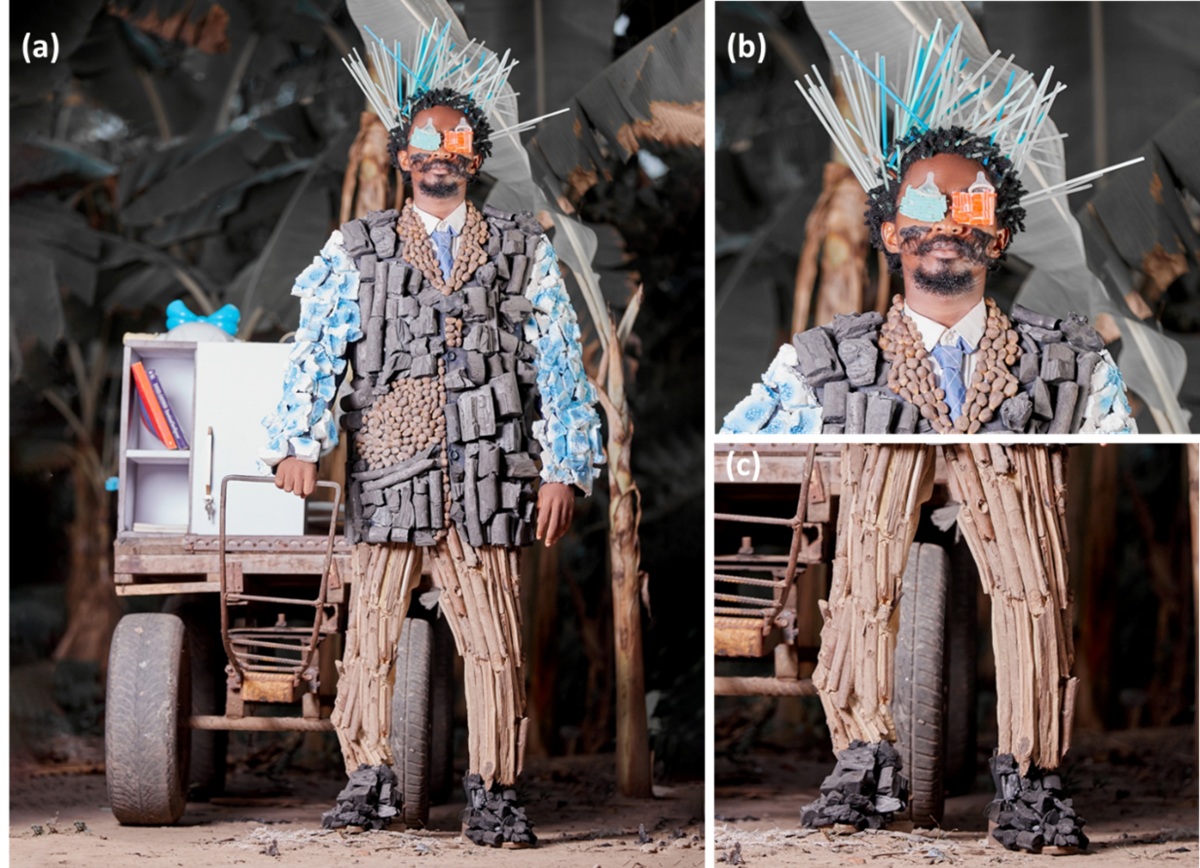
A standing male adult figure holding the steering handle of a wooden hand cart; locally known as a ‘truck’ (Figure 4a). On it is the bookshelf opened slightly revealing two books enclosed in it. The background suggests a plantain garden. The human figure is the emphasis, has plastic straws as hair adornment, condoms on Styrofoam as spectacles, and artificial eyelashes as facial enhancements (Figure 4b). The suit is made of palm kennel, pieces of Styrofoam, charcoal and sticks all stuck-on fabric. The trouser is embellished with pieces of wood and the footwear is also embellished all around with charcoal (Figure 4c). Also, made from fabric is an inner shirt buttoned to the top, with a flying tie fixed. The entire composition is dominated by earth colours thus the browns and ochres citing the colour schemes of palm kennels, woods, and the ‘truck’. It also has a touch of dark green hues which are the leaves of the plantains in the background, and cool colours which are tints of blue being the straws in the hair, hands of the suit, the inner shirt and tie. This creation conceptually represents the working class in corporate institutions or formal sectors. The materials used for the clothing from the hair to the feet are fuel for setting fire or highly combustible materials. This connotes how subscribing to working in corporate institutions is synonymous with setting yourself up to be blazed or consumed by ‘fire’; that is work and societal-related stress and anxieties.
Dwamena (2012) opines that stress has physiological, psychological and behavioural effects on employees’ productivity. He explains that the physiological effects include increased heart rate and blood pressure, headaches, back pain, and heart diseases among others. The psychological effects include poor mental health and other corresponding effects like eating more or less, substance or drug use and abuse, depression, and anxiety among others. All these three major effects contribute to the inability to concentrate, absenteeism and low employee performance which also lead to low productivity. Unfortunately, many of this working class having their energies drained daily are ironically blinded by fun and pleasure as a coping mechanism to unwind or release stress at the end of the day or week. This is also represented by the pieces of straw and condom being the spectacles.
Bhaskar (2012) describes junk foods as any food that has little nutritional value but has high fat, salt or sugar components. The straws in the design further portray how many such entities prioritize junk foods and beverages or snacks as the most convenient meal during working hours. Junk foods cause lots of harm to the health of a human being. It leads to obesity, diabetes, skin cancers and heart disease, therefore the elimination of junk foods is a stride towards fitness and healthy living
(Abonmai et. al., 2022).
3.6 | Concept: Securing my variables
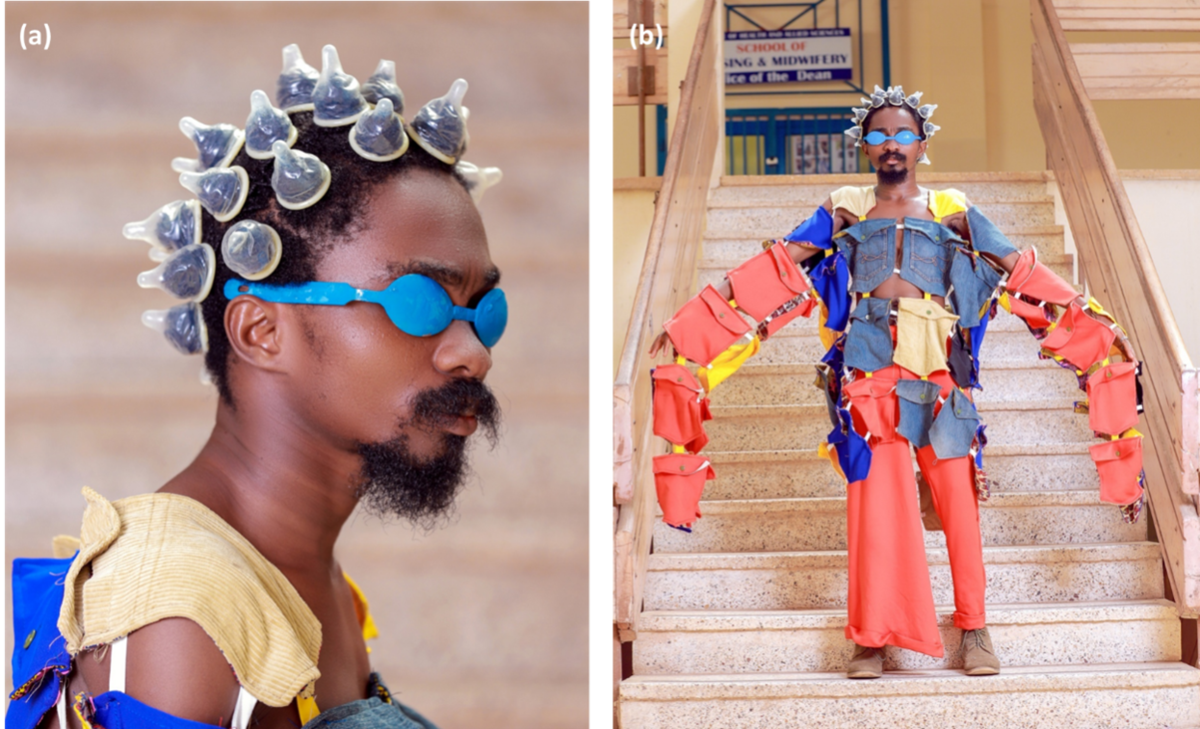
Figure 5 is an outdoor exhibition of an avant-garde fashion design. It is a male model or figure exhibiting clothes made from pockets, a hairstyle covered with condoms, and a spectacle made from plastic spoons. The pockets made from fabrics like denim, satin and corduroy were joined together with strips to make a shirt (Figure 5b). The colour schemes of the clothes are the tints or shades of the three primary colours, with the reds serving as the dominant colour among the three major hues. The shirt is worn over an asymmetric trouser with one leg being buggy and the other leg fitting straight trousers, and above a pair of Brown shoes. Pockets as compartments found in clothes, play the role of safekeeping of valuable items especially when one is moving from one point to another. In the context of the work, his intellectual prowess, creative ideas, capabilities and dreams are secured in those pockets. The number and sizes of the pockets represent the depth and ‘size’ of his creative potential. These valuables he aspires to carry beyond bothers. Contrary to the fashion principle that long sleeves should end around the wrist, the sleeves of his shirt go beyond the length of his arm. This suggests that his creations and vision transcend the ordinary, norms or standards set by society. The condoms capping the ‘
adonko’ hair implies that he is protecting his intellectual properties from being infected by societal influence or standards, as well as taking preventive measures against ‘conceiving’ any idea from societal ‘fertilization’. And so, he is refusing to even ‘see’, not to talk of being attracted; hence the opaque spectacles (Figure 5a).
3.7 | Concept: As symmetric as a Trouser
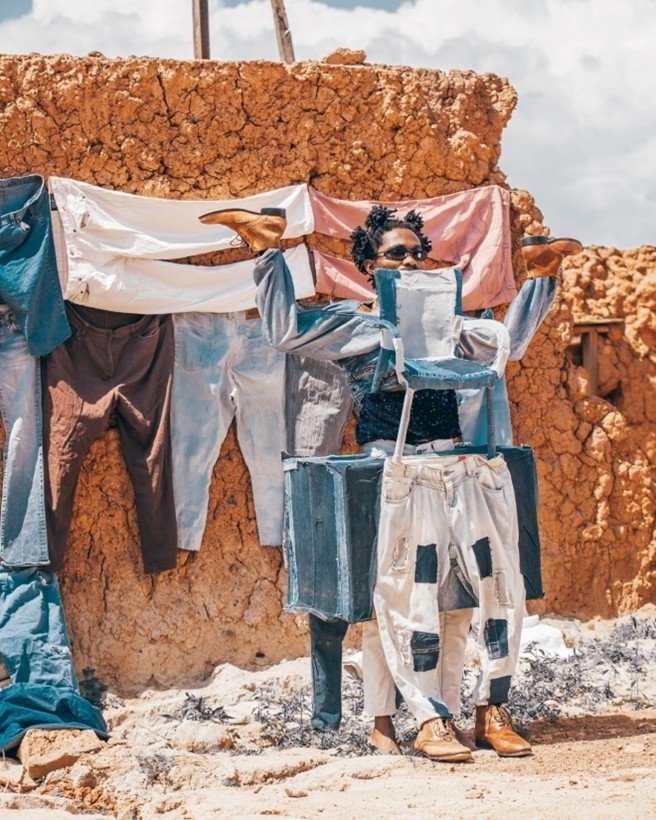
Figure 6 is an assemblage, a design composition of a standing male adult figure with a chair, a suitcase and a pair of shoes around him. Behind him is also about ten (10) hanging pair of trousers. The colours of the garments are dominantly made of cool colours; shades of blue. There are also other colours within the greys, reds and browns creating variety in colour distribution. With the background elements which are the trousers, there is repetition and rhythm in the arrangement, as well as variety by way of the colour schemes and direction of the hanging trousers. There is repetition in the patchwork of the khaki trousers in front of the figure. Looking at the lower left corner of the substrate, the chain of trousers directs the viewer’s eye upward to meet another chain arranged horizontally; this redirects the eye from left towards the right to the head of the standing figure, which finally directs the eye downwards to the shoes, to the ground and back to the left corner in that order. This cyclical arrangement retains the eye within the composition without leaving the substrate. The standing figure being the emphasis, is slightly placed slightly away from the centre to conform to the rule of thirds. However, the arrangements of the trousers vertically on the left side create an asymmetric balance in the composition. Also, looking at the upper part of the standing figure, when the line of symmetry is drawn through the figure from the head to the feet, the composition is symmetrically balanced. This makes the elements on the left side a mirror reflection of those on the right side. Furthermore, when the figure is again split horizontally into two halves right above the suitcase, the visual weight of the upper part is proportional to the lower part, also giving it an asymmetrical balance.
3.8 | Concept: Gate-keeping my Source of Energy
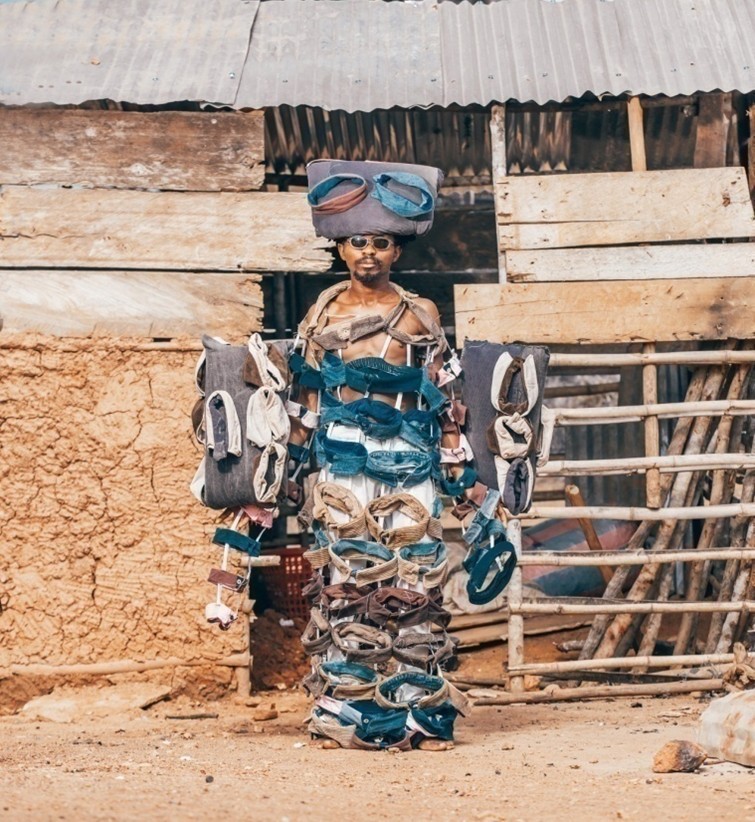
The entire costume in Figure 7 is made up of shirt collars mainly from denim and corduroy. The figure is standing at the entrance of an indigenous Ghanaian kitchen made from mud and wood. The pose of the human figure is symmetrically balanced. In terms of arrangement, there is repetition, rhythm and variety in shape and colour scheme. The colour schemes are mainly earth and cool colours creating harmony. The figure is stationed at the centre of the composition which is against the rule of thirds. This placement which goes against the grain, portrays what avant-garde stands for. The importance of a collar in dress-making is for the protection of the neck against bad weather, beautification and concealing of figure default. The kitchen in the Ghanaian setting is where food is prepared and kept. Conceptually, the figure blocking the entrance of the kitchen with open hands symbolizes his tenacity in protecting his “energies” from being “poisoned” or contaminated or stolen by external forces. These external forces in the context of the design refer to the general perceptions, expectations and standards set by most Ghanaian societies.
3.9 | Concept: As Above, So Below
The fashion design composition is modelled with hair rollers as hair adornment (Figure 8a), a travelling bag hanging on the right shoulder and a dark spectacle. The bare-chested model is seen wearing a grey trouser which seems to have two waists; one above the knee and another around the ankles (Figure 8b). The trouser design gives a perfect depiction of symmetric balance, when the line of symmetry is drawn vertically to split the trousers into two halves, the left side gives a mirror-like reflection of the right. Same way when split horizontally into two halves, the top is also a reflection of the down. This idea is a representation of the ancient Greek mythological saying ‘ as above, so below’. Logically, one may question how convenient and fast someone in such trousers can move or even escape in case of danger. But interestingly in the mind of creatives, there is always a thought-through or an alternative backup plan. This is represented in the composition by the presence of a get-away bus behind him, and he stands right by the gate of the bus (Figure 8c).
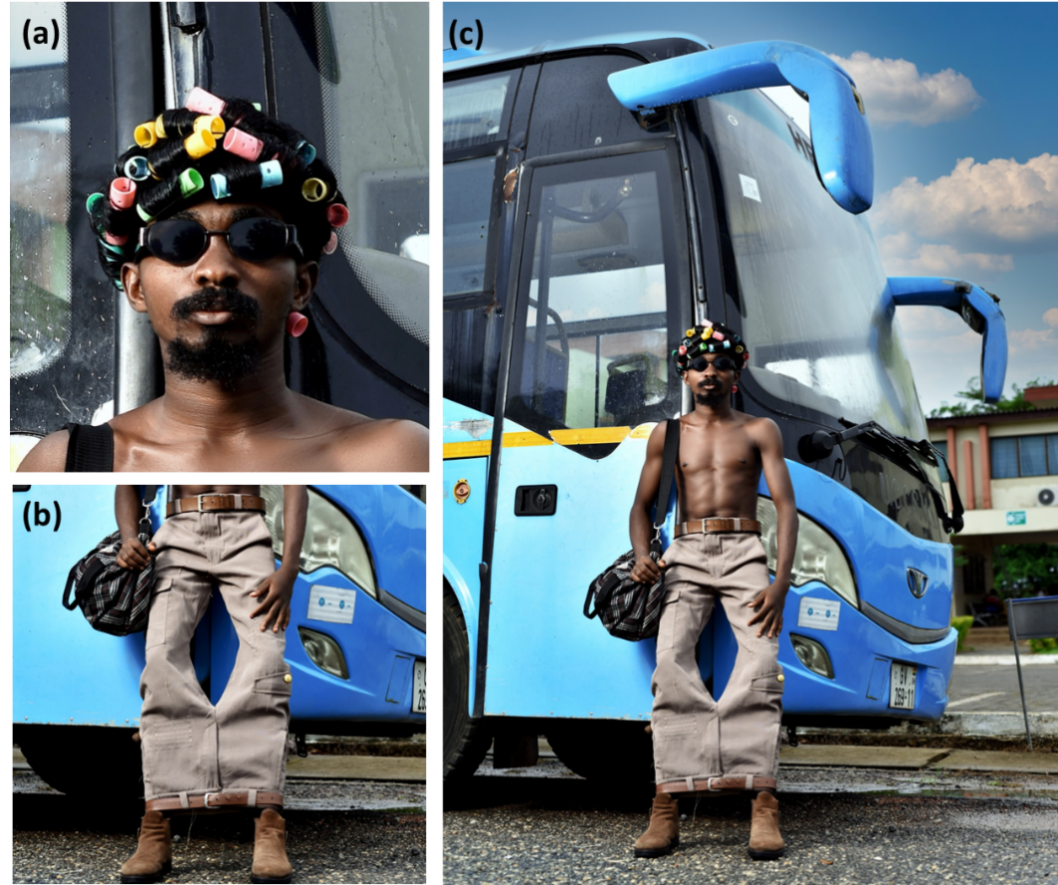
Figure 8. (a) hair rollers used as hair adornment, (b) grey trouser with two waists; one above the knee and another around the ankles, (c) artist wearing the as above, so below fashion design concept. November, 2022. University of Cape Coast, Cape Coast (Image Courtesy: Oldy Blaq, 2024)
3.10 | Concept: Kweku Ananse
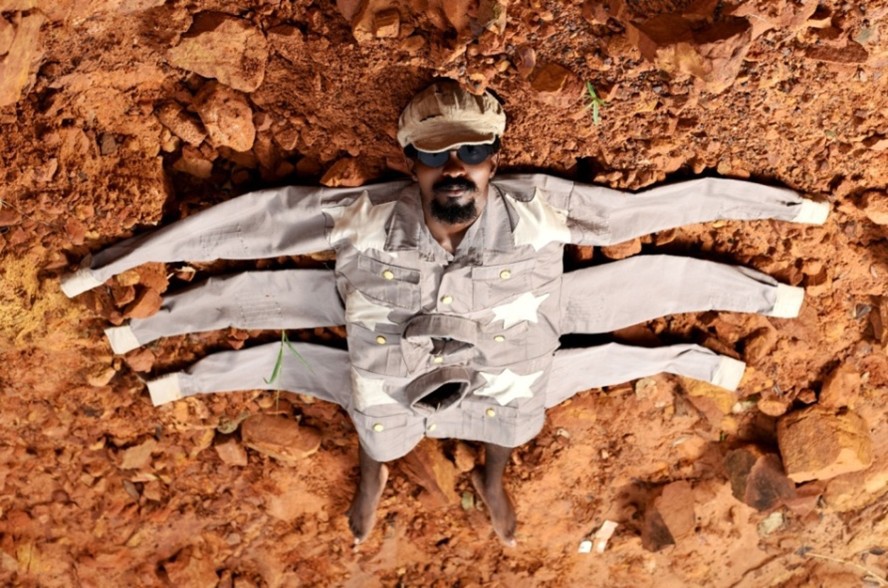
Figure 9 design is inspired by the famous Akan folktale character ‘Kweku Ananse’. Though
Tekpetey (2006) describes this character as a trickster,
Mireku-Gyimah (2018) subtly contends that, despite Kweku Ananse being tagged as a schemer, he is not absolutely a bad character; and that has some good traits or character that also needs to be examined. Focusing on the positive side, Kweku Ananse, despite being portrayed in many tales as cunning, is however noted for being very creative, kind, resourceful and intelligent
(Mireku-Gyimah, 2018). It, therefore, comes as no surprise that the adinkra symbol ‘
ananse ntentan(spider web)’ symbolizes creativity. Synonymously, the ‘Ananse’ in the context of the work is ‘avant-garde arts’ and depicts how people tend to ignore the creative aspect of the field and focus on the perceived negative aspects only. The spider as a creature has multiple limbs as suggestively portrayed in the clothing. The star-shaped embellishment or appliqué on the shirt is a representation of the celebrity status of Kweku Ananse. Ananse remains a ‘star’ regardless of the negative publicity about his brand or identity. Therefore, the message this design tends to communicate is that avant-garde will continue to reign and remain evergreen regardless of the ill perceptions and receptions from most Ghanaians.
3.11 | Concept: Antenna
A standing male figure (Figure 10) with no shirt on has multiple trousers worn in sequence while some small branches of the tree are seen fixed in the ‘afro hair’. The figure is standing on lawns and surrounded by shrubs and other vegetation, with a building seen in the distance away in the background. This art and act are inspired by cosmography. Conceptually, the figure is connecting with natural energies, vibrations or signals. The pieces of tree branches in the head serve as an antenna for reception. So, the body serves as a pole fixed in the ground that connects to the antennas for signals. The hand gestures, where the right forefinger seems to be pointing to the temporal region of the head, suggest he is engulfed in deep thoughts or decoding signals from nature. Colours are categorised into warm and cool colours, and aside from that, individual colours have their symbolism, e.g. yellow is associated with wealth and blue with serenity. The layers of the various trousers account for the mood, aura, vibration or energy the signals extracted from ‘mother earth’ come with at every stage or facet of the transmission.
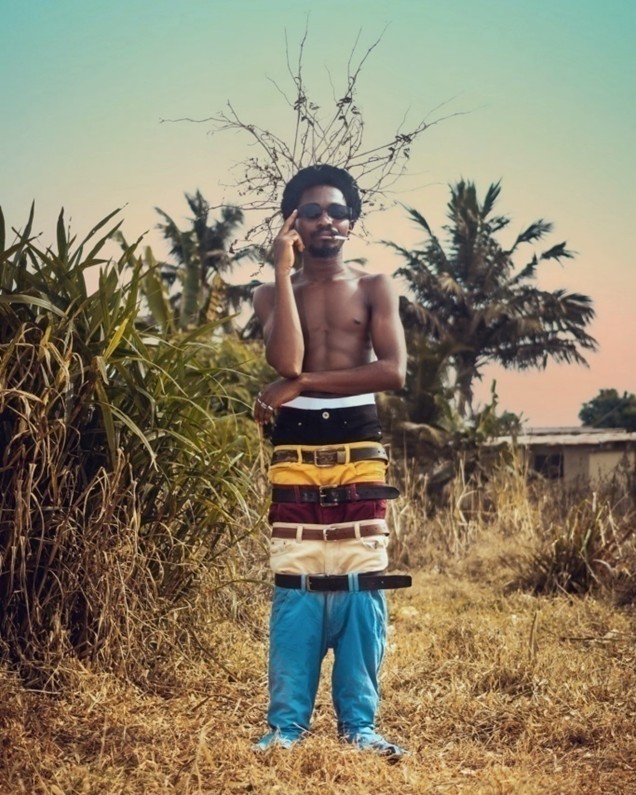
Figure 10. Artist wearing the antenna fashion design concept. March, 2021. Baifikrom, Mankessim (Image Courtesy: Oldy Blaq, 2024)
3.12 | Concept: They Don’t Fit Your Shoes
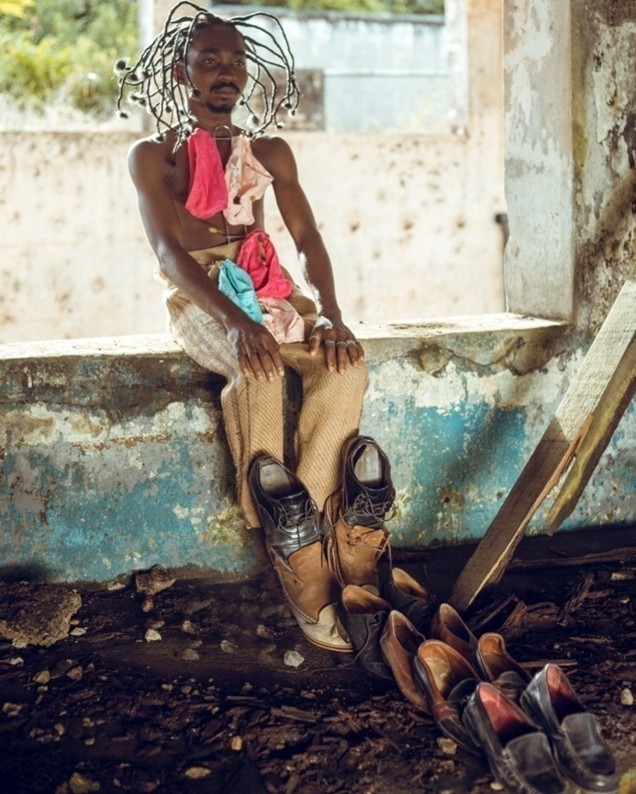
The composition (Figure 11) is a bare-chested male figure in an erect symmetric sitting pose with seven pairs of shoes lined up at his feet; all facing one direction. The figure is wearing an
‘adonko’ hairstyle seated on the ledge of the wall of a dilapidated building. Around the neck to the waist of the figure are five female panties hanging at various levels. The facial expression suggests that the human figure is not in a happy mood. It is a subjective view of the socio-economic life of the average Ghanaian. The countenance suggests that, to understand my plight, “put yourself in my shoes” and “walk a mile in my shoes”. In the context of this composition (Figure 11), the obvious question is ‘which of the shoes?’ This popular saying echoes that he who feels it knows it best and until one experiences the circumstances of another, words might not be able to explain it. Interestingly, one can put himself in another’s shoes but will still not get the expected experience because probably the ‘shoe size did not fit’ so the person could not walk ‘that mile’ to share in the expected experience. This composition is a political statement inspired by the political system of Ghana. The scene opines that people who voted into power to address the concerns of the electorate are exempted from the challenges they are supposed to address. For instance, where, if a health minister as a privilege consistently accesses his/her health care abroad, how will such a person experience the crisis the average citizen goes through in accessing the health facility in his or her constituents? If a minister for roads is exempted from traffic congestion, how will such a person develop empathy and sympathy for the average road user? If the one that imposes taxes on citizens is constitutionally exempted from paying taxes, how will the person understand fully the plight of those who bear the heat of his/her decisions? These are just a few scenarios to explain how electorates are challenged by many ‘shoes’ (problems) but their leaders do not fit into any of them, creating a disconnection between the political elites and the reality on the ground. The seven shoes of varied shapes and colours represent the different experiences each day of the week presents. The panties illustrate how ‘exposed’ or ‘bare’ citizens are, with their dignity disregarded by those who are supposed to protect it.
3.13 | Concept: The White Outside, Darkens Your Inside
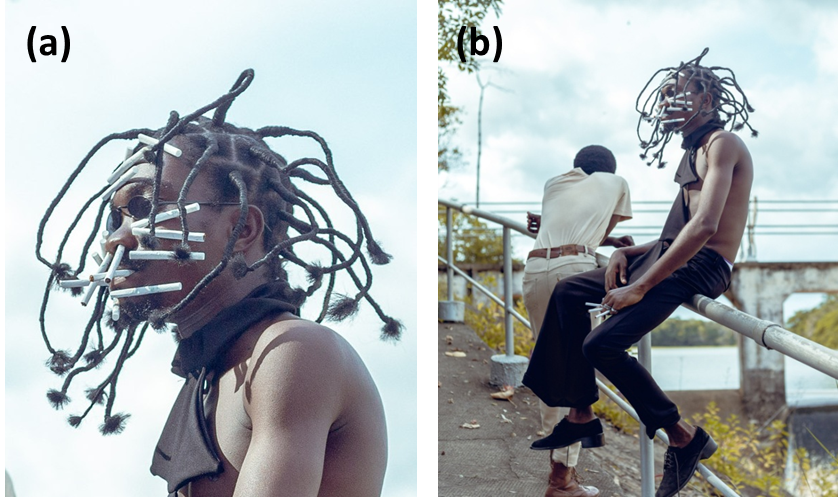
Figure 12 is an outdoor composition of two male adult figures all resting on the rails of a bridge. One figure in front is clad in dark colours, while the other behind is in tints of ochre and brown shoes. These colour schemes portray strong colour harmony; that is the use same or analogous hues for each figure. Taking the front figure for instance, the hair which is in a dark shade harmonizes with the outfit which starts from the neck and connects with the black trousers and further downwards to the dark shoes. However, there is the introduction of a white or lighter hue in the hair, the waist and the left hand. This systematic display of the white breaks the monotony of the black colour at the upper, middle and lower parts of the figure. It further creates contrast in those areas to ease boredom. The front figure, which is the emphasis, is positioned slightly away from the centre toward the right to conform to the rule of thirds. However, the introduction of a second figure on the left side creates an asymmetric balance by way of composition. The second figure is facing away from the viewer’s eye. This deliberate pose is to conceal details and to prevent the second figure from competing with the main figure for attention. The legs of the emphasis’s trousers are one bigger than the other, suggesting an old fashion trend and a contemporary fashion trend respectively. The right leg of the trouser suggests the past time and the left leg suggests the present time. So, the use of both depicts the merging or connection of the vintage and the contemporary to emphasize how relevant old trends still are in contemporary times. The sitting figure has several sticks of cigarettes held within the fingers, in the hair, lips and nostrils. This is a caution against its usage rather than its promotion as studies have stated its harmful effect on the respiratory system and general health of smokers.
Hobbs (2023) outlines lung cancer, chronic respiratory problems, heart diseases, dental problems, hearing loss and vision loss as some of the effects of cigarette smoking on the human body. So, in codification, cigarette sticks which appear in white cylindrical wraps, blacken your ‘inside’, hence the interplay of dark/black and white hues. The phrase ‘darkens your inside’ is about the dark/black-looking nature of a chronic smoker’s lungs
(Hobbs, 2023) amidst other health complications stated. The dark clothing serving as a chain (Figure 12a) from the neck down to the waist region is a representation of the long chain of effects on the entire upper to mid region of the internal organs of the body.
3.13 | Concept: Woes of the Non-Conformist
In Figure 13, the model is seen clad in reds and standing in a bucket of the same hue in an open space, which suggests a public setting in a community. The figure is seen wearing undergarments such as a singlet and boxers rather than over his clothes instead of beneath it; a clear depiction of non-conformism. By the side of the standing figure is a pre-adolescent girl with a smile who seems to be running around or away from the standing figure. The facial expression of the girl can be likened to ridicule, while the environment suggests that the practitioner is ignored or not getting any attention from the community. Contextually, the standing figure represents avant-garde as an art and culture. This composition, dominated by the reds, communicates the dangers and cautions a practitioner faces or must abide by concerning the practice of avant-garde arts and lifestyle in Ghana. The bucket in which the figure stands illustrates how the Ghanaian society ‘boxes’ such practitioners, heckles and shuns company with such practitioners due to the stigma, ridicule and crime symbolism and tagging associated with the art.
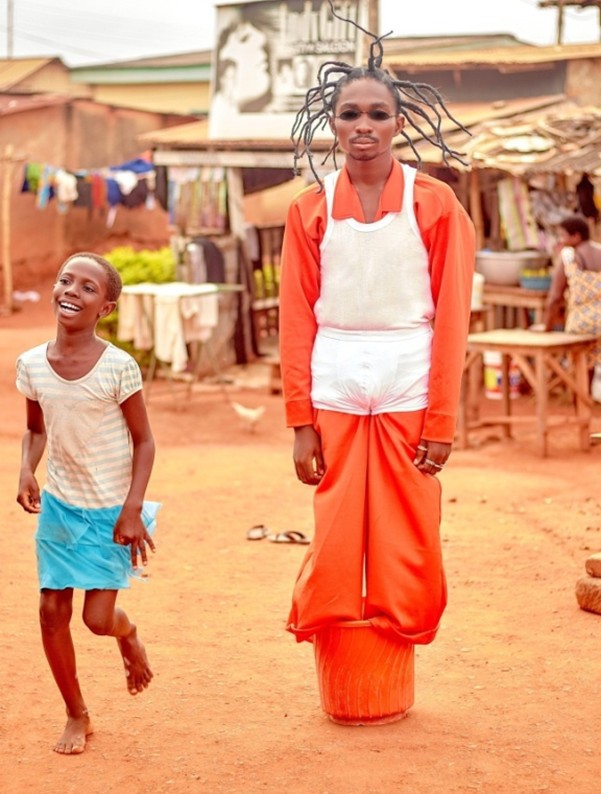
Figure 13. Artist wearing the woes of the non-conformist fashion design concept, with the wearing of undergarments such as a singlet and boxers over his clothes. October 2019. Akotokyir, Cape Coast (Image Courtesy: Oldy Blaq, 2024)
4 | IMPLICATION OF FINDINGS
The conservative nature of most Ghanaian cultures coupled with the ill-reception towards avant-garde fashion inhibits creativity and exploration in the field of fashion in Ghana. The crime tagging of non-conventional appearance by way of hairstyling or grooming can lead to wrong targeting and victimization; or at worse, mob justice such as maiming or lynching of innocent people. These situations and implications demoralize other budding practitioners from practising avant-garde as an art and culture in Ghana. Through this study, the public has been enlightened on the role these designs play in addressing social issues. It echoes some challenges faced in the everyday life of the average Ghanaian, as well as creating awareness of pertinent issues and suggesting ways to mitigate them. Among the social issues addressed with the designs include land pollution, healthy living, tolerance, and patriotism, among others.
In the field of art practice, these designs have become a source of inspiration, reference or design template for other avant-garde designers. It has explored a wide range of both conventional and non-conventional materials, techniques in composing such materials and possible ways of manipulating such materials as well as their potential symbolism. It has also added to the catalogue of avant-garde designs in the Ghanaian Fashion and Textile industry. This adds to the presence of Ghanaian avant-garde designs in the global fashion community. Finally, the void of not having these masterpieces of avant-garde designs captured in any scholarly work has been filled with this study.
5 | CONCLUSION AND FUTURE STUDIES
It is evidenced in the findings and analysis made on the design samples that avant-garde designs hold deeper meanings; in that, there is a philosophical or symbolic interpretation that accompanies the designs. Some of the concepts behind the designs address social issues. Also, the design and production processes ride on creativity and innovation, contrary to common assertions by many Ghanaians that it is meaningless and is of no aesthetic and social value. In as much as avant-garde is autonomous and unlimited by way of exploration and production, it still makes use of some design principles and elements. The design samples revealed the use of design principles such as variety, repetition, rhythm, and harmony among others. Also, elements such as lines, colour, and shapes served as the basis of the designs. Inferring from interactions with participants, it confirmed the association of certain hairstyles such as deadlocks with crime and prejudice. His hairstyling and over-grown moustache coupled with regular wearing of opaque or dark spectacles, has subjected him to several crime profiling and interrogations by officers of the Ghana police service and other vigilant Ghanaian citizens. Data gathered by way of comments from the public upon witnessing the participant exhibit his creations are indications that a large number of the Ghanaian populace are ignorant of the avant-garde phenomenon and hence liken it to insanity and waste of material resources. Drawing inferences from the experiences, avant-garde practitioners in Ghana are rather subjected to ridicule and stigma. These aforementioned perceptions and receptions from Ghanaian society impede the growth of the Ghanaian fashion industry and demotivation to creativity and innovation. The conservative nature of some Ghanaian cultures demoralizes the practice of avant-garde arts and culture in Ghana.
Further studies can be conducted by sampling other avant-garde designs and conducting a semiotic visual analysis on them. This will urge the public to appreciate the concepts behind the designs and by extension, avant-garde fashion. Otherwise, such designs without any art appreciation or semiotic analysis might be seen as just art for art’s sake with no philosophical underpinnings. Another area of study could be sensitizing the public on avant-garde culture to curb or mitigate the association of non-conventional art or appearance with crime or madness.
ETHICS APPROVAL STATEMENT
The Ethics committee at University of Education, Winneba approved the set of questions before data collection started. Respondent was told about the purpose of the study; hence his consent was taken before he proceeded to answer the interview questions. Also, the confidentiality and anonymity of respondents was assured.
DATA AVAILABILITY STATEMENT
Data sharing in this article is applicable upon reasonable request from researchers.
CONFLICT OF INTEREST STATEMENT
The authors declare no conflict of interest.
DECLARATION OF GENERATIVE AI AND AI-ASSISTED TECHNOLOGIES IN THE WRITING PROCESS
During the preparation of this work, the author(s) did not use any AI software in the writing process and for editing the content for publication.
ORCID
Noble Nkrumah-Abraham
-
 https://orcid.org/0009-0002-2092-2849
Genevieve Adjei-Appoh
-
https://orcid.org/0009-0004-1338-8590
Francis Kwasi Selormey Amenakpor
-
https://orcid.org/0009-0005-1277-2360
REFERENCES
- Abdollahi, M., & Hosseini, A. (2014). Charcoal. In P. Wexler (Ed.), Encyclopedia of Toxicology (Third Edition) (pp. 779-781). Academic Press. https://doi.org/10.1016/B978-0-12-386454-3.00685-0
- Abonmai, K.A., Rachna., Dular, S.K., & Bhardwaj, S. (2022). Junk food and its impact on health. Bulletin of Environment, Pharmacology and Life Sciences, Spl Issue (4), 598-601 https://www.researchgate.net/publication/378292334_junk_food_and_its_impact_on_Health
- Adjei-Appoh G, Acquaye R, & Ampadu J. (2022). The concept of avant-garde as a creative fashion design trajectory in Sekondi Takoradi – Ghana. Textile & Leather Review. 5:120-131. https://doi.org/10.31881/TLR.2021.35
- Akanmori, H. (2015). The SAGE encyclopedia of African cultural heritage in North America: Hairstyles, traditional African. SAGE Publications, Inc. http://dx.doi.org/10.4135/9781483346373.n29
- Bhaskar, R. (2012). Junk food: Impact on health. Journal of Drug Delivery and Therapeutics. 2(3). https://doi.org/10.22270/jddt.v2i3.132
- Botchway, D. N. Y. M. (2018). The hairs of your head are all numbered: Symbolisms of hair and dreadlocks in the Boboshanti Order of Rastafari. Africology: The Journal of Pan African Studies. Vol. 12 Issue 8, p20-38. 19p.
- Bourdieu, P. (1984). Distinction: A social critique of the judgement of taste. Nice, R (translator). Havard University Press, Cambridge, Massachusetts, USA. Available at: https://books.google.com/books/about/distinction.html?id=nVaS6gS9Jz4C (accessed on May 20, 2024)
- Boodh, A., & Foerster, C. (2014). Avant-garde fashion for the masses. Stockholm school of Economics. https://www.scribd.com/document/622733410/2163
- Chen, J. (2021). Rule of thumb: Definition and financial examples. Available at: https://www.investopedia.com/terms/r/rule-of-thumb.asp (accessed on May 20, 2024)
- Creswell, J. W. (2014). Research design: Qualitative, quantitative, and mixed methods approaches. 4th ed. Knight, V., Young J., Koscielak, K., Bauhaus, B., Markanich, M.(Eds). SAGE Publications, Inc. London EC1Y 1SP, United Kingdom
- Dadzi R, & Adam A. (2019) Assessment of knowledge and practice of breast self-examination among reproductive age women in Akatsi South district of Volta region of Ghana. PLoS ONE 14(12): e0226925. https://doi.org/10.1371/journal.pone.0226925
- Damtie, Z., Cherie, N. & Agidew, M. M. (2024). Breast cancer preventive practices and associated factors among reproductive age women in Wadila District, North East Ethiopia: community based cross-sectional study. BMC Cancer 24, 843. https://doi.org/10.1186/s12885-024-12613-y
- Dictionary.com (2024). Definition of Avant-garde. In Dictionary.com, Available at: https://www.dictionary.com/browse/Avant%20garde (accessed on September 9, 2024)
- Dwamena, M. A. (2012). Stress and its effects on employees productivity-a case study of Ghana Ports and Habours Authority, Takoradi. (Master’s thesis). Kwame Nkrumah University of Science and Technology. Available at: