



1 | INTRODUCTION
Climate change remains one of the most pressing global challenges to sustainable development, with significant long-term effects on ecosystems, weather patterns, and human health. The fashion and textile industry, historically a major contributor to environmental degradation, is now undergoing a shift toward sustainable practices aimed at reducing its ecological footprint (Meo, 2024; White, 2024). This shift is largely driven by the urgent need to find alternative materials and processes that balance environmental responsibility with design and performance (Palanisamy et al., 2024). India, as the world’s largest producer of arecanut, generates substantial agricultural waste in the form of arecanut husks. Traditionally, this waste is incinerated or discarded, leading to both environmental and public health issues such as respiratory illnesses and mosquito breeding (Sunny & Rajan, 2021; Hebbar et al., 2024). Yet, these husks are rich in cellulose, lignin, and polyphenol components that hold potential for conversion into valuable textile fibres (Akbar et al., 2024; Poornima et al., 2022). Despite this, little scientific work has explored their direct use in mainstream textile applications, especially in terms of industrially viable yarns and fabrics. A growing body of research has focused on the use of agro-waste fibres such as banana, jute, and flax in textiles, but arecanut remains underexplored (Khan et al., 2024; Sunny & Rajan, 2024; Cristobal, 2024). Compared to other agro-waste fibres, arecanut offers a naturally golden hue, high mechanical strength, and water availability for retting in its cultivation regions, making it a promising candidate for circular textile design. However, the absence of scalable studies on its yarn-making capability, fabric usability, and integration into fashion and home textiles creates a critical research gap. There is currently no documented study demonstrating the integration of arecanut husk fibres into high-quality textile yarns and fabrics, nor is there a framework for their application in sustainable product design for both fashion and interior use. The objectives of the study include:- To develop arecanut-based yarns through water retting and blending with cotton.
- To design and produce woven fabrics incorporating arecanut yarns for use in home furnishings and fashion.
- To assess the visual, structural, and usability potential of arecanut-based textiles through trend-driven product applications.
- To establish a sustainable design framework using arecanut agricultural waste as an input for circular textile design.
In this study, arecanut fibres were extracted using a water retting method and blended with cotton to develop yarns of different counts. These were then converted into fabrics using both powerloom and handloom techniques, with applications envisioned in upholstery, curtains, scarves, and traditional garments. The design process was informed by international trend forecasting platforms and localised through the concept of “Memory of Malabar,” celebrating Kerala’s arecanut farming heritage. By demonstrating a sustainable and scalable method for converting arecanut waste into high-value textile materials, this study contributes to circular economy strategies, promotes rural livelihood enhancement, and advances innovation in eco-friendly textile production. Furthermore, it adds to the academic discourse in sustainable fashion, upcycling, and biomaterials by offering a novel material solution grounded in local resources and global sustainability principles (Das et al., 2021; Praveena et al., 2022; Pulikkalparambil et al., 2023).
2 | MATERIALS AND METHOD
2.1 | Fibre Extraction
Arecanut husks were sourced from a single farm in Balal, Kasargod district, Kerala, India, to maintain consistency in fibre quality. Harvested between August and January, the dry husks were subjected to stagnant water retting for two days, a sustainable and regionally feasible method. Approximately 250 grams of dry arecanut husks were immersed in 4 litres of ambient temperature water (27°C ± 1°C) for 48 hours. Fibres were manually plucked, washed three times, and sun-dried for 4–6 days. To evaluate the suitability of areca nut fibres for textile applications, a series of physical and mechanical tests was conducted under controlled environmental conditions (21 ± 1 °C, 65 ± 2% RH). Weight measurements were recorded at each processing stage—from dry husk to retted husk, extracted fibres, and final dried fibre mass. Fibre length parameters such as maximum length, effective length, and short fibre percentage were measured using a double-comb sorter system. Optical assessment of fibre diameter was carried out using the Olympus XS205 Microscope with Image Pro+ software at the SITRA physical testing lab. Fibre fineness was determined using the cut-and-weigh method in line with ASTM standards, and cellulose content was analysed through in-house chemical testing procedures. Moisture regain was calculated using the standard regain formula to assess the fibre’s behaviour in varying humidity conditions. Mechanical properties such as breaking strength (Fmax) and elongation at break were evaluated using Zwick/Roell tensile testing equipment, with samples processed through the stagnant water retting method.
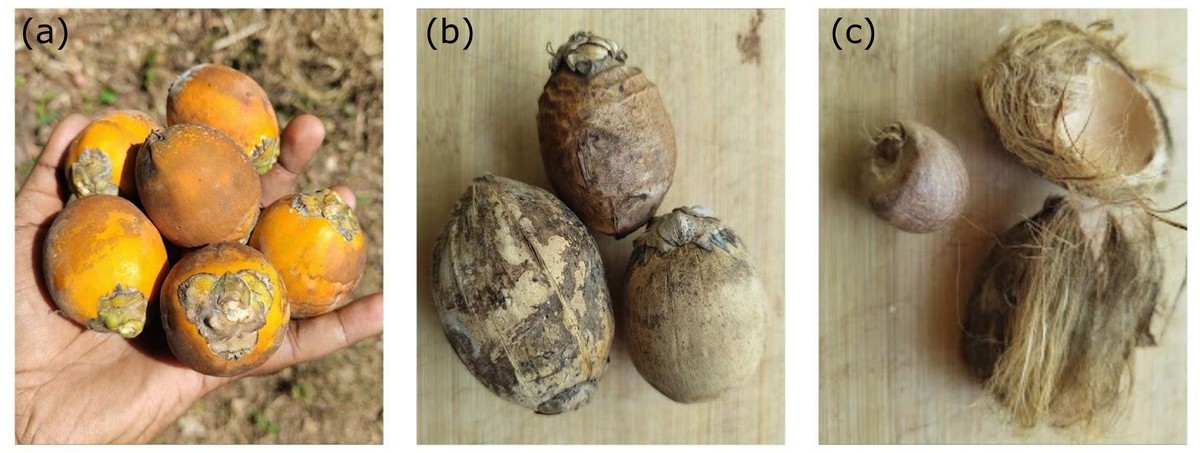
Figure 1. (a) Fully ripened arecanut fruit, (b) Dry arecanut fruit, (c) Dry arecanut husk after nut removal
2.2 | Yarn Production
To enhance spinnability, arecanut fibres were blended with cotton (Sankar-6 variety) in a 75:25 ratio. In this study, the goal was to optimise the material for actual textile applications, particularly in home furnishing and fashion.
Two yarn counts were produced: 5s count (Ne 5/1), this coarser yarn was designed for upholstery fabric, which would utilise a blend of arecanut and cotton for both the warp and the weft. The finer yarn known as 10s count (Ne 10/1) was created to be used as a fancy yarn in fashion items and curtain textiles. A carding machine was used to open the mixed fibres into slivers. The KCT Tifac core plant then used rotor-spinning equipment to generate the yarn. To guarantee the best quality, the rotor machine's settings were modified for every number of yarns:
For 5s count yarn:
- Rotor speed: 32,000 RPM
- Open roller speed: 13,000 RPM
- Feed hank: 4.5 Ne
- Twist: 32 TPI
For 10s count yarn:
- Rotor speed: 32,000 RPM
- Open roller speed: 13,000 RPM
- Feed hank: 0.31 Ne
- Twist: 32 TPI
The resulting yarns (Refer to Figure 2b) were tested for various properties, including strength, elongation, and evenness, to ensure their suitability for the intended applications.
2.2.1| Areca-Cotton Yarn Testing
Yarn properties were measured using standard industry instruments. All values represent an average of five test repetitions under controlled conditions (21°C ± 1°C, 65% ± 2% RH). The Uster Tester 5 800 was used to measure yarn unevenness, neps, thin/thick places, and hairiness. The Uster Tenso Rapid 4 tested mechanical properties, including breaking force, elongation, tenacity, and work done.
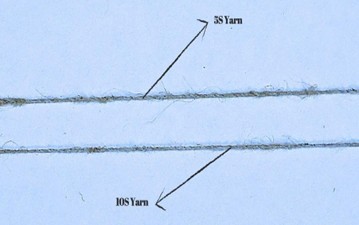
Figure 2. A close-up image of the arecanut-cotton blended yarns (both 5s and 10s counts)
A close-up image of the arecanut-cotton blended yarns (both 5s and 10s counts) has been included (Figure 2) to provide a clearer visual of the yarn twist, surface texture, and blending uniformity. The colour variation observed, from brown to a lighter cream hue, is attributed to pigment loss during the water retting process, which naturally softens the fibre and improves visual appeal. While the yarns exhibited relatively high unevenness (U%) and hairiness values compared to conventional cotton yarns, these are characteristic of minimally processed natural fibres. No chemical softening or surface treatment was applied in this study, as the focus was on evaluating unbleached, raw fibre behaviour. In future work, pre-treatment methods such as enzymatic softening or alkali scouring will be considered to enhance flexibility, reduce surface fuzz, and improve yarn uniformity.
2.2.2| Linen Yarn Details and Properties
Commercially sourced linen yarns were incorporated as warp and weft materials in selected handloom fabrics, particularly for curtain fabrics and scarves. Two counts of linen yarn were used: 60 Lea (finer yarn) and 25 Lea (coarser yarn). These yarns were selected based on their compatibility with arecanut-cotton blends, both in visual aesthetics and mechanical synergy. Table 1 below provides the basic properties of the linen yarns used, as per manufacturer specifications (Kalliasseri Weavers Co-operative Society - Kannur) and in-house confirmation testing:
Table 1. Basic properties of the linen yarns
Linen fibres provide strength, crisp texture, and high moisture absorption, enhancing the drape, breathability, and tactile experience of scarves and curtains. The combination of coarse and fine linen yarns allowed for both lightweight and medium-weight fabrics, improving the aesthetic and functional outcomes of the final products.
2.3 | Fabric Production
Both power looms and handlooms were used to create fabric samples for use in fashion and home furnishings.
2.3.1| Power Loom Fabrics (10 S Count Yarn): Upholstery Fabric for Furnishing
The 10s count arecanut-cotton blended yarn was used on a power loom to create upholstery fabric for furnishing in both the warp and weft directions. Twenty picks per inch (PPI) were set in the weft direction and twenty ends per inch (EPI) in the warp direction on the loom. This design highlighted the inherent qualities of the arecanut fibres while producing a strong fabric appropriate for upholstery purposes. This application was especially well-suited for the coarser 10s yarn, which offered the strength and durability needed for furnishing fabrics (see Figure 3c).
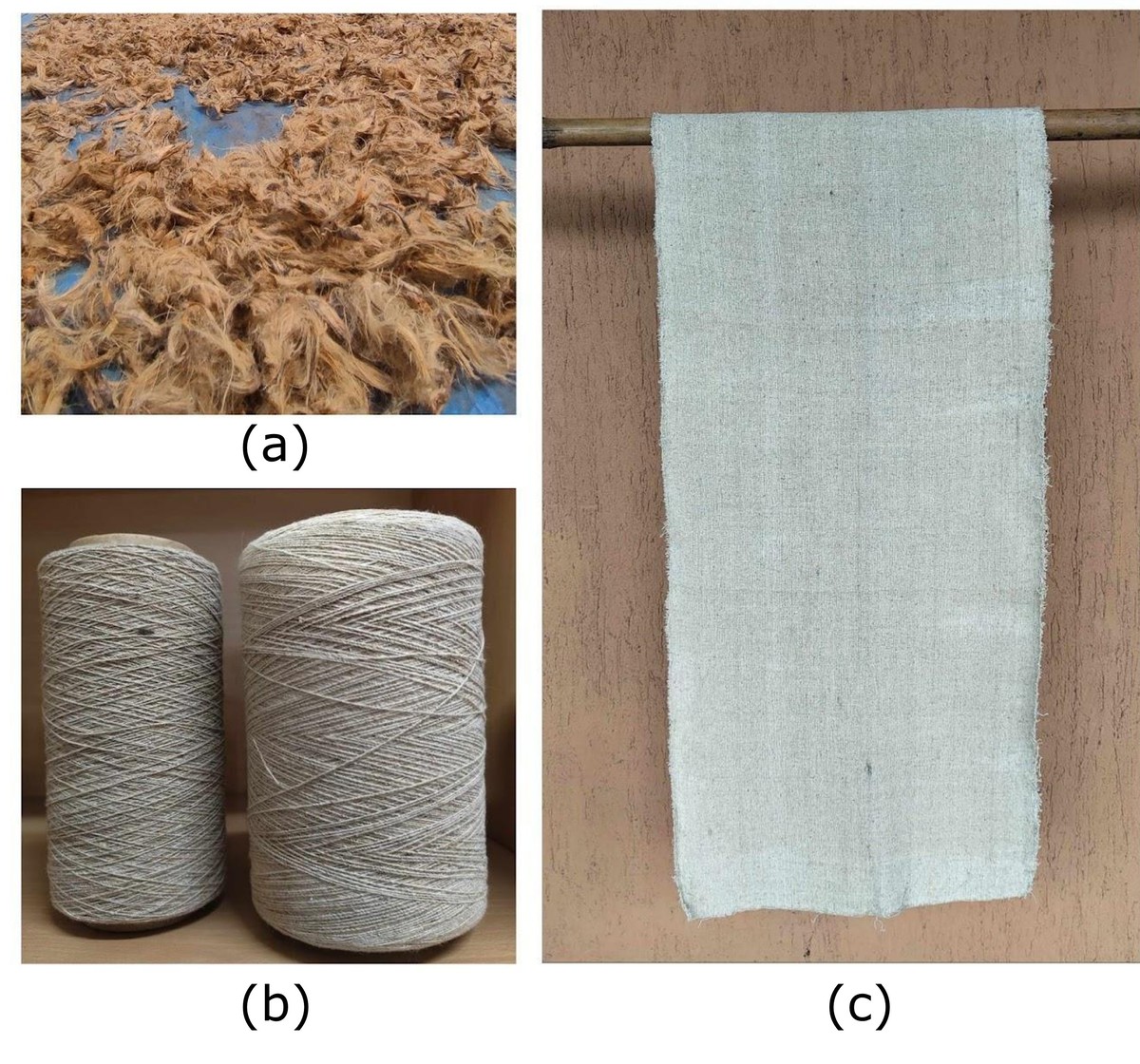
Figure 3. (a) Dry arecanut fibre after water retting, (b) arecanut 10s and 5s yarn, (c) Power loom fabrics (warp and weft arecanut cotton blessed 10s yarn)
2.3.2| Handloom Fabrics (10 S Count Yarn): Curtain Fabrics and Fashion Products
More delicate and complex motifs could be created through handloom weaving using the 10s count arecanut-cotton blended yarn. This finer yarn worked especially well for:
Curtain fabrics: Cotton or linen yarn served as the warp, while a 10s count yarn served as a decorative yarn in the weft direction. The result was an eye-catching pattern that highlighted the uniqueness of the arecanut fibers.
Scarves: The 10s count provided a more fluid hand feel to gorgeous handwoven fabric that showed off the texture and drape of the blended yarn, perfect for fashion accessories.
Traditional clothing: The thinner 10s yarn was in a few traditional Kerala garments, which act as unique pieces, adding to visible interest and a connection to local, sustainable textiles.
Using the handloom technique, which enabled the exploration of various weave structures and yarn combinations, has resulted in the creation of unique textile designs that demonstrate the feasibility of arecanut fibres in fashion and home décor products. The design flexibility and unique patterns, capturing the unique characteristics of the arecanut-cotton blended yarn, switched on due to the use of the finer 10s yarn in the handloom weaving technique. This technique allows the processing of 5s yarn for power loom applications and 10s yarn for handloom applications, which made it plausible to explore the full potential of arecanut fibre for various textile applications ranging from sensitive fashion to upholstery textiles.
3 | DESIGN DEVELOPMENT USING UNBLEACHED ARECANUT
The conceptual framework began with the selection of key trends from WGSN’s (Worth Global Style Network) Spring/Summer 2025 forecast, which informed the development of the theme “Use of Arecanut Agricultural Waste as a High-Value Textile Material in the Circular Textile Design Collection.” Several forecasted trends aligned closely with the project’s sustainable and innovation-driven objectives. Notably, the use of arecanut fibres positioned as a regenerative, agro-waste material- resonates strongly with the “New Naturals” trend, which promotes minimalistic casual wear influenced by a strong craft ethos. This trend direction also places emphasis on surface texture, particularly through slubs and micro-mélange effects, qualities that are inherently present in unbleached arecanut yarns (WGSN, 2023).
The design direction draws inspiration from several contemporary trends that collectively reinforce the use of arecanut fibre as an eco-friendly and innovative textile medium. The “Zero-Waste Craft” trend reflects a circular design approach focused on the reuse of waste and surplus materials, aligning directly with the upcycling of arecanut farm biowaste. The “Summer Splash” trend, characterised by stripe work in neutrals and mid-tones, offers a suitable aesthetic context for incorporating unbleached arecanut yarn as a fancy yarn in woven fabric compositions. The “Retro Quaint” trend, which celebrates traditional motifs such as gingham and windowpane checks, informs the development of experimental textures and patterning using arecanut yarn. “Community-led Narratives” emphasises collaboration with artisans and the use of hyper-local materials, which aligns with the project's focus on utilising region-specific agricultural waste. The “Natural Fibres” trend validates the selection of arecanut yarn, particularly for its undyed, raw aesthetic, an inherent quality of the unbleached fibre. Additionally, the “FUN-ctional Basics” trend advocates for the use of recycled and natural fibres in multifunctional, utilitarian designs, supporting the project's goal of transforming waste into high-value textile materials. These trends collectively justify the use of arecanut yarn as both an environmentally responsible and aesthetically relevant design material. They serve as a framework for developing fabrics that respond to the rising demand for sustainable products while embracing current design sensibilities centred on natural textures, geometric structures, and functional beauty. Anchored in this comprehensive trend analysis, the personal theme Memory of Malabar was developed to guide the creation of the fabric collection.
↓
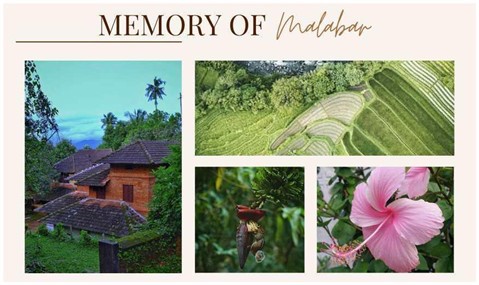
Figure 4.
Inspiration board “Memory of Malabar”
Growing up in a house surrounded by arecanut farms, where Malabar forms the immediate environment, the theme 'Memory of Malabar' emerges as a deeply personal interpretation rooted in childhood experiences. The concept draws inspiration from the region’s rich cultural heritage, lush green landscapes, and distinctive architecture along the Malabar coast. The colour palette is informed by the natural surroundings such as the green-grey tones of arecanut palms, the warm browns of the soil, the vibrant hues of local textiles, and the weathered patinas of traditional buildings. This thematic approach aligns with the contemporary design trends of “New Naturals” and “Community-led Narratives” identified through research. The theme integrates local storytelling and artisanal processes into the design language, while the earthy, natural colour palette supports a craft-based, simplified aesthetic suited for home décor. Architectural elements from Malabar, known for their unique geometric compositions and intricate detailing, serve as a key inspiration for the structural layout of the weave and surface embellishments. This dimension of the theme resonates with the “Retro Quaint” trend, offering a framework to reinterpret traditional patterns in a modern context (refer to Figure 5).
↓
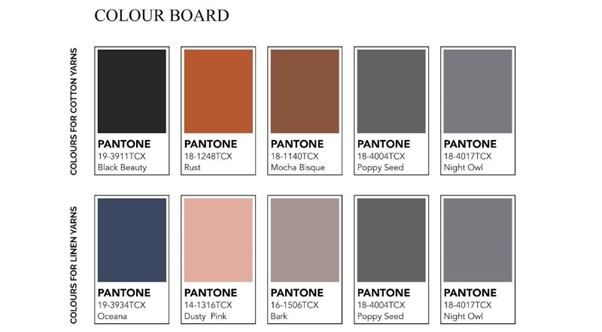
Figure 5.
Colour board “Memory of Malabar”
By incorporating unbleached arecanut yarn as a fancy yarn, the design process upcycles agricultural waste in a purposeful and sustainable manner, embedding the essence of Malabar into the textile. The theme aims to create textiles that are both sustainable and innovative, while also rich in cultural significance. Memory of Malabar becomes a medium through which the beauty, heritage, and identity of the region are reinterpreted into contemporary, eco-conscious designs. This design philosophy bridges traditional narratives and modern design sensibilities, offering a unique and meaningful contribution to textile development.
4 | RESULTS AND DISCUSSION
4.1 | Fibre Properties
Characteristics of the extracted arecanut fibres were as follows:
- Average diameter: 0.0313 mm
- Fibre length: 32 - 65 mm
- Fibre fineness: 10.61 deniers
- Cellulose content: 65.17%
- Mean breaking strength: 179.5 gf
- Mean breaking elongation at fmax: 14.6%
Cotton Fibre Properties:
- Fibre length uniformity ratio: 49.58%
- Fibre length: 27.27 mm
- Fibre maturity: 82.53%
- Fibre fineness: 4.52 ug/in
- Trash content: 0.19%
Based on available literature, banana fibres show a fineness of 10–20 denier and a tensile strength of 300–400 MPa, while jute typically shows 20–30 denier and 400–800 MPa strength. Arecanut fibres, in contrast, exhibited a fineness of 10.61 denier and breaking strength of 179.5 gf, suggesting moderate strength but finer texture. These properties suggest suitability for niche product applications such as decorative textiles and eco-fashion accessories, though further surface analysis (e.g., SEM) would help confirm their performance in dyeability and blending.
4.2 | Properties of Arec Cotton Yarn
All yarn tests were conducted at Thiyagarajar Mills (P) Ltd., Kappalur, Madurai, Tamil Nadu, India, under standard atmospheric conditions for textile testing, with a temperature range of 24.9–25 °C and relative humidity between 60.1% and 68.6%. The physical properties presented in Table 1 were measured using the USTER® Tester 5 – S800 R, following the Uster Statistics Standard Table CS OH for short staple yarns. Mechanical properties shown in Table 2 were evaluated using the USTER® TensoRapid 4, operated at a testing speed of 5000 mm/min, with a clamping length of 500 mm and a pre-tension of 30%. Each mechanical test was performed on 100 individual yarn samples, ensuring data reliability and consistency.
4.2.1| Physical Properties
The 5s yarn exhibits slightly higher unevenness, CVm%, and hairiness compared to the 10s yarn, reflecting its coarser nature. However, the 10s yarn shows a higher nep count, indicating a potentially smoother surface in finer fabrics (refer to Table 2).
Table 2. Physical Properties of Arecanut–Cotton Blended Yarns (from USTER® Tester 5)
Note: Values are from USTER® Tester 5 single test runs.
4.2.2| Mechanical Properties
Because of its exceptional breaking work, elongation, and breaking force, the 5s yarn is better suited for demanding uses like upholstery. The 10s yarn, on the other hand, has greater tenacity despite being weaker, which makes it perfect for lighter, more delicate garments (refer to Table 3). Values are expressed as mean ± standard deviation (SD), with CV% shown below each row.
Table 3. Mechanical Properties of Arecanut–Cotton Blended Yarns (from USTER® TensoRapid 4)
Note: Based on 100 single yarn tests using USTER® TensoRapid 4.
The arecanut-cotton blended yarns (5s and 10s counts, 75:25 ratio) demonstrated practical and mechanical properties suitable for diverse textile applications. The 5s yarn, with higher breaking force (775.1 gf) and elongation (18.64%), showed better performance for upholstery and heavier fabrics, while the 10s yarn, with greater tenacity (7.37 rkm), was more suited for lightweight fashion items and scarves. These findings indicate the material’s adaptability across product categories and parallel the behaviour of other agro-based fibres such as banana and jute, where similar variability in fineness and tenacity is leveraged for category-specific applications
(Cristobal, 2024).
4.2.3| Statistical Analysis
To determine whether the observed differences between the 5s and 10s arecanut–cotton blended yarns were statistically significant, a one-way ANOVA was conducted for each mechanical property using Microsoft Excel (Office 365). The results revealed significant differences in breaking force (F(1,198) = 84.92, p < 0.001), elongation (F(1,198) = 54.31, p < 0.001), tenacity (F(1,198) = 6.74, p = 0.01), and breaking work (F(1,198) = 95.08, p < 0.001) between the two yarn counts. These statistical findings support the practical distinctions noted earlier and validate the suitability of the yarns for different end-use applications.
4.3 | Home Furnishings (Textile Design Collection)
Based on the theme of "Memory of Malabar", the trends were identified, and home furnishing designs were created on a handloom. Across curtain fabrics, these designs highlight the versatility of arecanut yarn in a spectrum of useful applications.
4.3.1| Power Loom Fabrics (5 S Count Yarn): Upholstery Fabric for Furnishing
For upholstery fabric, designs with arecanut yarn in both warp and weft in a 5s count blend of 75% arecanut and 25% cotton. For each fabric created, they were photographed and then imported into Adobe Photoshop for additional development. In order to understand how the unique arecanut texture would look in real-world applications, and made digital mockups of the fabric on furniture and sofa sets. This methodology highlights the unique texture and organic hue of arecanut fibre, crafting a fabric that epitomises sustainable ethos and contemporary design trends. This digital visualisation process gave the ability to iterate on the designs to create a final product that was not only eco-friendly, but also attractive and appropriate for currently available home furnishings (refer to Figure 6).
↓
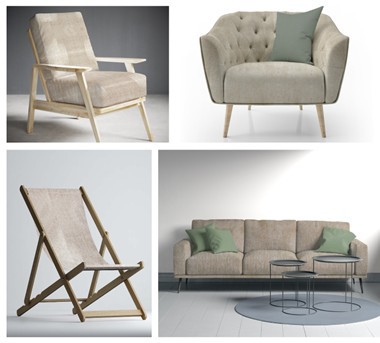
Figure 6.
Digital mockups of the arecanut upholstery Fabric on furniture and sofa sets.
4.3.2| Handloom Fabrics (10 S Count Yarn): Curtain Fabrics and Fashion Products
The design portfolio was expanded to include curtain fabrics and other home textile products. Arecanut yarn was incorporated as a fancy yarn to provide visual depth and texture to the fabrics.
Table 4. Summary of Developed Fabric Samples with Yarn Parameters and Intended Application
4.3.2.1| Curtain Fabric