



1 | INTRODUCTION
Àdìrẹ elékọ is a type of resist-dyed cloth that is similar to batik. Starch from cassava flour is used as a resist agent instead of wax (Akinwumi, 2015). A starched pattern is applied to one side of the cloth to create a “right” and a “wrong” side. The starch can be applied through a stencil or painted freehand. The popular colour used in the design of Àdìrẹ elékọ is indigo/navy blue. The fabric is known for its vibrant colours and intricate patterns. Àdìrẹ elékọ fabric is highly valued for its cultural, historical, and economic significance in Nigeria, especially within Yoruba communities. It traditionally plays an important role in ceremonies such as funerals and weddings. The designs and motifs featured on Àdìrẹ elékọ are more than ornamental; they hold symbolic meanings that express Yoruba beliefs and heritage (Chloe, 2023). These patterns also serve as indicators of social identity and status during socio-cultural events (Diyaolu, 2010; Owoeye, 2014; Diyaolu et al., 2023). Other indigenous textiles in Nigeria include aso-oke, a kwete, u kara, and a’nger among others (Seidu et al., 2022). Àdìrẹ elékọ production provides employment opportunities for many artisans, particularly women. This craft supports local economies by creating jobs in dyeing, weaving, and marketing. The sale of Àdìrẹ elékọ textiles, both locally and internationally, generates income for artisans and their families (Saheed, 2013). This income is vital for their economic stability and growth. Àdìrẹ elékọ fabrics also attract tourists and cultural enthusiasts, contributing to the tourism industry. Visitors are often interested in purchasing the indigenous textiles as souvenirs, which further boosts the local economy.
The motivation for this study emanated from the recent influx of imitated adire fabric in the Nigerian market. Mass-produced, cheap, imported and imitated Àdìrẹ elékọ textiles have littered the Nigerian markets and gained the attention of all and sundry (Olatunji & Adiji, 2023; Omisakin et al., 2024; Adeoti & Kalilu, 2024). The imitated and original Àdìrẹ elékọ are similar in concept and motif but different in appearance, texture, lustre and market price. There have been reports of reduced usage and patronage of indigenous Àdìrẹ elékọ, raising the issue of its cultural sustainability. Rice (2020) explores the impact of Chinese players in the Nigerian textile firms. The author argued that the growth of the aso-ebi practice paved the way for an influx of cheap printed cloth, which dominated the fashion industries in the 1980s and 1990s. Aso-ebi is a uniform dress for social events among the Yoruba, where participants appear in similar attire. The cultural aspect of Àdìrẹ elékọ with its traditional motif is being replaced by imitated motifs, thereby influencing consumers to prefer imported fabrics over local ones. Competition with imports has resulted in the shutdown of many local and mechanised textile factories, leading to reduced demand and job losses. Akinwumi (2015) observed that in the near future, Àdìrẹ elékọ fabric might not be seen in the market again.
Cultural sustainability emphasises preserving clothing heritage within modern contexts. This theory highlights the importance of supporting indigenous industries amidst globalisation. Strengthening the market for authentic
Àdìrẹ elékọ ensures the promotion of culture, heritage and economic stability for local artisans and fabric traders.
Nwabueze (2023) submitted that indigenous knowledge in handcrafted textiles contributes to economic development within communities. The need for technology alternatives through digital transformation in the
Àdìrẹ elékọ industry is also important.
Omotosho
et al. (2015)
observed low levels of technological innovation in the
Àdìrẹ industry. The integration of digital tools, modern dyeing techniques, water/energy saving practices and electronic commerce could help rebrand the industry to withstand competition. These advancements not only modernise production processes but also differentiate
Àdìrẹ elékọ products in the market, fostering competitiveness against imported textiles. Existing studies on
Àdìrẹ elékọ often focus on historical and artistic perspectives, but few provide a means of distinguishing authentic from imitated fabrics. A study on the quality assessment of Nigerian fabrics
(Diyaolu, 2018) focused only on machine prints and excluded handcrafted textiles. There is minimal governmental or institutional regulation to protect authentic
Àdìrẹ elékọ artisans from economic losses due to counterfeits. There is insufficient discourse on how counterfeits threaten traditional knowledge and intergenerational skill transfer. While other studies documented imitated and original
Àdìrẹ elékọ designs, the technology options were not provided. The study examined the trends in the production of
Àdìrẹ elékọ, identified the distinguishing characteristics of indigenous and imitated designs, and explored technological options for cultural sustainability. Given the constraints of resources, geographical coverage, and time, this research serves as a foundational study to guide further investigations.
2 | METHODOLOGY
2.1 | Study Design
The study adopts a qualitative research design, which offers an effective way to observe the production techniques in
Àdìrẹ elékọ and identify pertinent challenges surrounding the craft. It allows individuals to have practical experiences and captures their emotions and motivations.
2.2 | Study Area
Itoku, a town in Abeokuta, Ogun State, Nigeria, is the study location (Figures 1a and 1b). Itoku was selected because of its notable activities in the production and sales of indigenous textiles/resist-dyed fabrics, especially Àdìrẹ elékọ. It is a renowned centre for indigenous textiles. While Àdìrẹ elékọ craft is also practised in Oyo and Osogbo, Itoku is noted for wider market and more patronage.
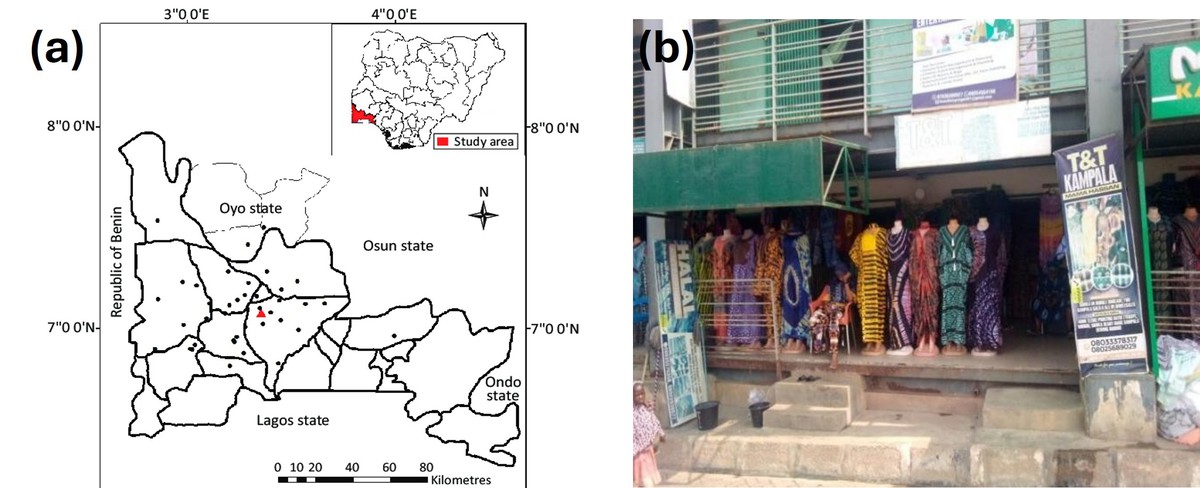
Figure 1.
(a) Location of Ogun State, the centre of
Adire eleko production in the Nigerian map
(Ajayi
et al., 2017),
(b) Shops for Indigenous and Imitated
Àdìrẹ
elékọ Fabrics at Itoku Market (Image by Author, 2025)
2.3 | Population
The population included
artisans and merchants who are actively involved in the
Àdìrẹ elékọ production and sales. However, the entire population was unknown during the period of the study.
2.4 | Sample Size
The study is made up of twenty-five participants (11 artisans and 14 merchants) who are actively involved in the
Àdìrẹ elékọbusiness. The sample size of twenty-five complies with the 5 to 25 participants required for qualitative inquiry
(Creswell & Poth, 2016).
2.5 | Sampling Technique
The non-probability purposive sampling method
(Showkat & Parveen, 2017) was employed to select participants who could offer relevant and diverse insights into the subject of the study
(Osei & Bosro, 2024). The advantage of this method is that it allowed access to artisans and merchants who had relevant information.
2.6 | Data Collection
Data were collected using semi-structured interviews to gather in-depth and flexible responses from participants
(Adams, 2015). This was developed to ensure consistency while allowing flexibility for participants to share their perspectives. Information on the recent trend in the
Àdìrẹ elékọ production, differences between the indigenous and imitated fabrics, technology options and sustainable practices in production were elicited. Respondents also provided information on strategies for preserving the cultural and economic significance of
Àdìrẹ elékọ. Participant observation was used to document the trend in production, including the dyeing, sun drying and finishing of
Àdìrẹ elékọ. A digital camera was used to take photographs, permitted by the artisans/merchants.
2.7 | Data Analysis
Thematic analysis was applied to interpret the data, following
Braun and Clarke’s (2006) six-phase framework. The process began with data familiarisation, where all interview transcripts were read repeatedly to identify emerging ideas. A coding framework was then developed, informed by the study’s objectives and insights obtained during familiarisation. Data segments were systematically coded across the dataset to capture meaningful units of information. Similar codes were grouped to create preliminary themes, which reflected major patterns in the experiences of artisans and merchants. These themes were critically reviewed and refined, ensuring clarity and coherence before finalising the definitions of each theme. The final themes formed the structure of the analytical narrative. Selected direct quotes from participants were incorporated to illustrate key insights and strengthen interpretive validity
(Osei & Bosro, 2024). Grok3ai was used in the extraction of codes. Grok3ai is a free AI assistant designed by xAI to enhance objectivity and trend analysis
(xAI, 2025). Answerthis.io was employed in the description of the framework for
Àdìrẹ elékọ sustainability.
2.8 | Ethical Considerations
Ethical Considerations were observed during the data collection. Informed consent, voluntary participation and confidentiality assurance were included. There were measures to ensure reliability and consistency, including colleague validation.
2.9 | Demographic Characteristics of Artisans and Merchants
The majority of artisans (45%) are between 51-60 years old, suggesting that Àdìrẹ elékọ production is dominated by older individuals who play a crucial role in preserving traditional crafts due to their extensive experience and knowledge (Adewale et al., 2014). In contrast, merchants are more evenly distributed across age groups, in the 30-40 and 41-50 age brackets. The gender distribution indicates that females dominate both artisans (64%) and merchants (57%), establishing the significant role of women in traditional African crafts and cultural production. The data shows that artisans have substantial experience in Àdìrẹ elékọ, with 45% having been involved for 21-30 years. This extensive experience is likely to contribute to the quality and authenticity of Àdìrẹ elékọ based on accumulated skills and insights gained over time (Olaopa & Ayodele, 2022). While 27% of artisans have no formal education, a significant proportion (36%) have primary education. Merchants also exhibit a range of experience, with 43% having been involved for over 30 years. This long-standing engagement with Àdìrẹ elékọ suggests a deep appreciation for the cultural significance of the craft. About 57% of the merchants have a tertiary education.
3 | RESULTS AND DISCUSSION
3.2 | Trends in the Production of Àdìrẹ elékọ
3.2.1 | Material used in Production
The main materials used in the production of Àdìrẹ elékọ at Itoku include, but are not limited to, local/imported cotton, natural indigo dye, cassava/corn/wheat starch resist, mesh/net, engraved plates, dye bath/pot, heat source and stirring stick. It begins with the selection of fabrics and the design. The design comes in different shapes and forms. African motifs (designs with lines, shapes, symbols, usually abstract and stylised) are prominent. Starch from cassava flour (lafun), corn flour (eko) or wheat flour is used as a resist agent. Potash alum or caustic soda is added to prevent the starch from dissolving in the dye. Most of the artisans mentioned
‘‘we still use lafun, oolu (mallet used in the finishing process) and original brocade (like cotton fabrics)’’
.
3.2.2 | Production Process
Today, the use of net or lace/net materials is prevalent in transferring the design to the fabric before dyeing. Eicher (1976) also documented the stencilling and freehand methods of creating patterns and observed that freehand is more laborious than stencilling. Stencilling involves engraving the motif on metal plates, which serve as a repeat pattern for mass production. ‘‘Immediately after starching, we prepare the dye and bury the fabrics inside’’, recounted an artisan. The dye is prepared using elu plant. The prepared fabric is dipped in the dye bath using water at room temperature (Figure 2a). Some of the dyers mentioned that they could leave the fabric in the dye overnight for the best absorption. Others engage in repeated dyeing by dipping the designed fabric in the dye, exposing it to the air for oxidation, and then dyeing it again. The value and intensity of the hue depend on the number of times the fabric is dyed (Eicher, 1976). Figure 2b shows a freshly dyed fabric.
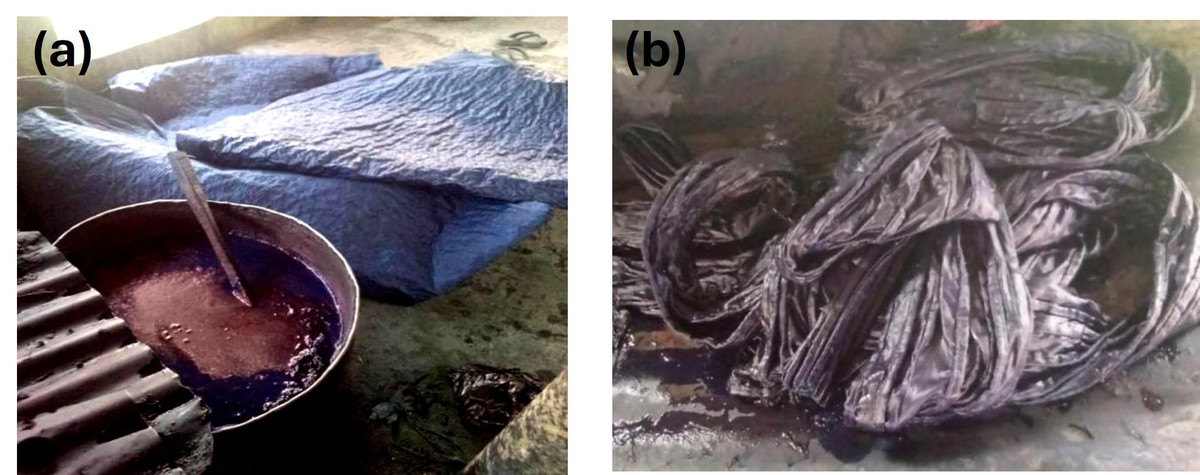
Figure 2. (a) Dye bath at Mama Elewedu’s shop in Itoku market and (b) A freshly dyed
Àdìrẹ elékọ fabric left to drain before drying (Image by Author, 2025)
The dyed fabric is then dried in the sun (Figure 3a), after which the cassava paste is removed. The final design appears in Figure 3b. There are a variety of design names like eye n’joka (birds feeding on corn), ole o r’owo ya (no money for the lazy man), omo lere (children are our heritage) , olokun (mermaid) , sun bebe. etc (Akinwumi, 2015). Finishing is accomplished by beating the fabric with a wooden mallet to give a lustrous effect.
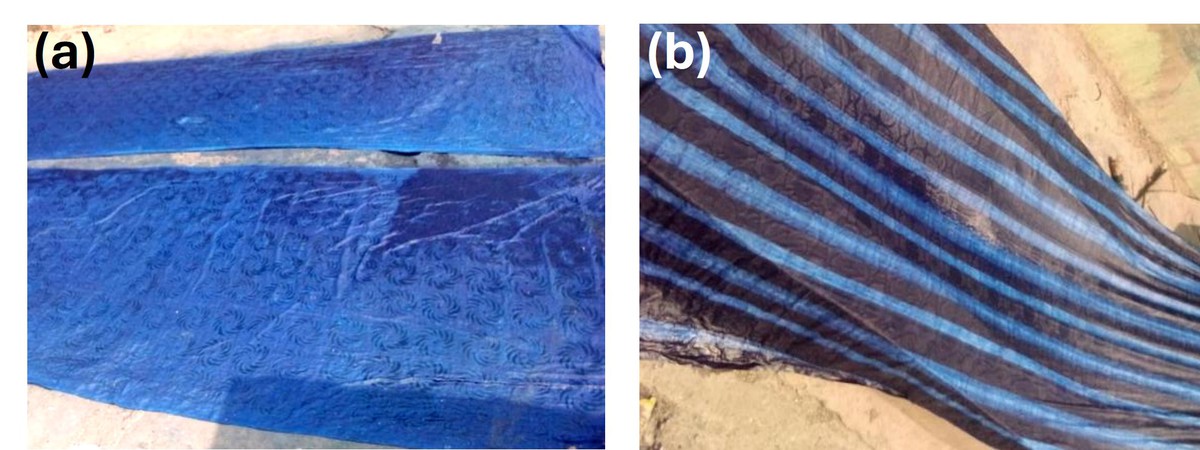
Figure 3. (a) Drying a designed fabric in the sun and (b) A ready-made Àdìrẹ elékọ (Image by Author, 2025)
Respondents agreed that the traditional techniques used to create
Àdìrẹ elékọ are time-consuming and labour-intensive, requiring great skill and patience.
Eicher (1976) and
Akinwumi (2015) reported that the methods above could be cumbersome. This necessitates the technology alternatives to
Àdìrẹ elékọ production. The cultivation of local
elu plant, where the indigo dye is sourced has declined and not flourishing as before.
3.3 | The State of Original Dyes for Àdìrẹ elékọ
3.3.1 | Scarcity of Dyes
The availability and cost of quality dye are fundamental elements in production. The scarcity arises from escalating prices and dwindling supplies, impacting production capacity and economic viability. One of the artisans remarked, "
The price of dye keeps increasing, and sometimes we can't even find the original ones" echoing the economic and logistical barriers in the sustainability of
Àdìrẹ elékọ production. This issue not only drives up production costs but also forces artisans to explore alternative dyes, which may compromise the authenticity and cultural integrity. This emphasises the urgency of preserving natural dye sources through sustainable agricultural practices and government-backed conservation efforts
(Renne, 1995). The use of natural indigo dye has become increasingly scarce, leading to the use of synthetic dyes in most cases. While synthetic dyes offer a wider range of colours, they lack the depth and richness of natural indigo. "We now use some ready-made dyes because they are preferable, even though they are not like the traditional ones," was a remark by an artisan.
3.3.2 | Rising Costs of Dye
Another artisan commented that
‘‘there are quality dyes, only that they are very costly’’. The increasing cost of dye is a primary concern, driven by global market fluctuations and local supply chain disruptions. The reliance on imported or scarce natural indigo plants, such as
Indigofera tinctoria, has led to price volatility, placing financial strain on artisans who operate on tight margins. Economic support mechanisms, such as subsidies or local cultivation initiatives, to stabilise costs and sustain the craft. However, it was observed that natural dyes are limited in colour and supply. Whereas, synthetic dyes have a range of shades, brighter and readily obtainable from dye manufacturers. There are different synthetic dyes used today for the dyeing process. One artisan explained,
"We have to increase prices because everything we use is getting more expensive", indicating a challenge that could deter buyers if not balanced with quality assurance and market education.
3.3.3 | Impact on Production Capacity
The scarcity directly reduces production capacity, as artisans cannot meet demand during peak seasons or fulfil large orders. This bottleneck threatens their livelihoods and market competitiveness, necessitating innovative solutions like dye stockpiling or alternative sourcing strategies. Scholarly work suggests that such challenges could be mitigated through community-based resource management
(Areo & Kalilu, 2013a).
‘‘Sometimes we experience low production and cannot meet up with demands due to a lack of raw materials,’’ an artisan narrated.
3.4 | Impact of imitated Àdìrẹ elékọ
3.4.1 | Consumer Preference for Authenticity
Contrary to initial assumptions, the majority of merchants indicated that imitations have not substantially diminished the demand for genuine
Àdìrẹ elékọ. The authenticity, unique dyeing techniques, and cultural heritage embedded in the original product continue to attract discerning buyers who are familiar with the traditional production process. A respondent confidently asserted,
"People who know real
Àdìrẹ elékọ
will always buy it, no matter how many fake ones are in the market", reflecting a strong consumer preference for authenticity over the cheaper, mass-produced alternatives.
3.4.2 | Growing Market impact of imitations
"Fake adire material have flooded our market, you can see them all around", recounted a merchant. There is a growing impact of imitated adire on the market. Areo & Kalilu (2013b) called for market segmentation between authentic and imitation buyers. While the overall impact seems minimal, imitations pose challenges by creating confusion among less-informed consumers and potentially diluting the brand value of Àdìrẹ elékọ.
Table 1 . Characteristic of Indigenous and Imitated Àdìrẹ elékọ
Source: Author, 2025
Table 1 shows the comparison of the physical appearance qualities between indigenous and imitated
Àdìrẹ elékọ as documented from artisans/merchants’ perspectives. The majority of the merchants remarked that
‘‘the imitated Àdìrẹ is relatively cheaper than our product, so people prefer the cheap ones’’.
‘‘These differences are part of the reasons why people prefer the imitated design to the indigenous ones’’. The cheap price might have led to its popularity, especially among low-income earners. The traditional method of producing
Àdìrẹ elékọ, involving hand-dyeing with natural indigo, results in unique, culturally rich fabrics with a soft texture and high absorbency (Figures 4a and 4b). However, the use of natural materials contributes to higher costs and a limited colour variation.
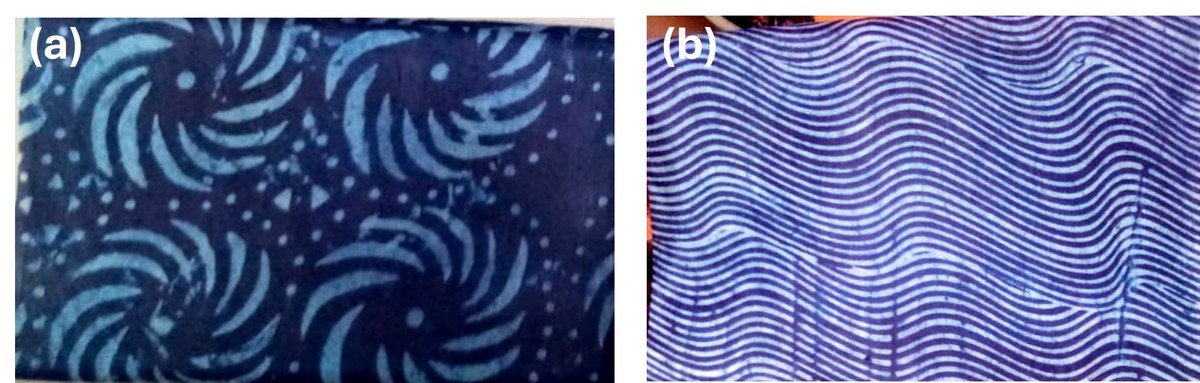
Figure 4. (a) Adire Eleko Octopus Design and (b) Adire Eleko Spiral Design (Image by Author, 2025)
The imitated
Àdìrẹ elékọ, produced with synthetic materials and dyes, are more lustrous in appearance and vibrant in colours (Figures 5a and 5b). They are mass-produced with consistent patterns and ease of maintenance. Synthetic fabrics are less breathable and absorbent, leading to discomfort in warmer climates
(Gorji, 2022). One of the merchants recounted
‘‘Nylon is not good for the body, I cannot wear it’’. Recent developments in
Àdìrẹ elékọ designs have imbibed the use of synthetic dyes of different shades and colours.
↓
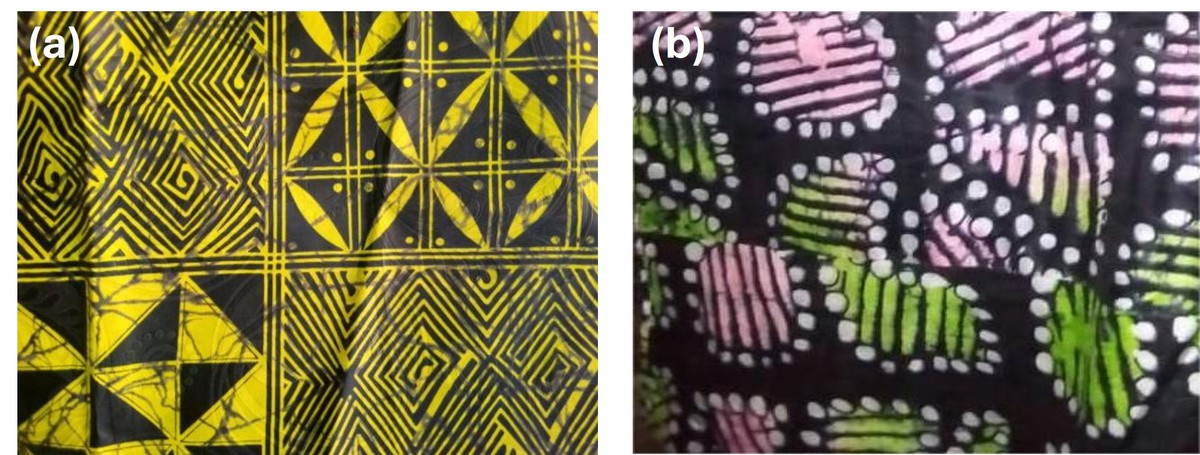
Figure 5. (a) Imitated
Ewe-ege (Cassava leaf) Design and (b) Imitated
Igbin (Snail) Design (Image by Author, 2025)
Efforts should therefore focus on educating consumers about the cultural value of indigenous
Àdìrẹ elékọ, supporting local artisans, and exploring innovative ways to modernise the traditional dyeing techniques without compromising authenticity. The rich heritage of
Àdìrẹ elékọ can be preserved and appreciated by future generations.
Adade (2023) also observed that in Ghana, western fabrics are taking over and influencing the local culture.
3.5 | Government Policy and Imports
Government policies and the influx of imported textiles on the
Àdìrẹ elékọ industry are negatively affecting the economic and competitive advantage of local artisans. Merchants reported that the government is benefiting from imported textiles through tax revenues and this is challenging domestic production. This reliance on import duties as a significant revenue source discourages protective measures for local industries, increasing the difficulties faced by artisans. One artisan noted,
"Government is not stopping imports because they collect tax from it, but it affects our business". This highlights the tension between fiscal policy and the survival of indigenous crafts and underscores the urgent need for policy interventions to support local production and enhance the competitiveness of
Àdìrẹ elékọ in the market. The lack of protective policies reflects a broader neglect of indigenous industries, necessitating advocacy for trade regulations that prioritise local crafts. There is a need for collaboration with policymakers to develop supportive frameworks on trade impacts for African textiles
(Eicher, 1976). The economic pressure from imports threatens artisans’ livelihoods, reducing their market share and income. Economic diversification strategies, such as export promotion, will bolster the
Àdìrẹ elékọ industry.
3.6 | Seasonal Effects on Production
Environmental factors, particularly rainfall, impact the production of
Àdìrẹ elékọ. The drying process, a crucial step in dyeing, is severely affected during rainy seasons, slowing production and delaying order fulfilment. Artisans highlighted this seasonal challenge, with one stating,
"During the rainy season, we struggle to dry the fabrics, and it takes longer to finish orders". This environmental dependency underscores the need for adaptive strategies, such as indoor drying facilities, to maintain consistent production levels throughout the year.
3.7 | Technology Options for Àdìrẹ elékọ
3.7.1 | Sourcing for Design
Dyers have not adopted the use of Computer-Aided Design (CAD) with digital tools like Adobe Illustrator, CorelDRAW and Photoshop. These tools enable designers to create a lot of intricate patterns for
Àdìrẹ elékọ. The patterns will be produced with greater precision and attract better patronage. Similar technology is in practice among the artisans visited in the study area, where instead of manually drawing patterns with cassava paste, artisans now use silk screens and stencils for faster, more consistent/uniform designs. Screen printing allows rapid, uniform application of designs.
Areo and Kalilu (2013a) explored the transition from traditional hand-drawn resist-dyeing to stencil-based methods and machine printing.
Rice (2015) reported technology adoption in
adire oniko, which was made by first photographing a real
oniko cloth and digitally manipulating its image.
Braide (2016) analysed contemporary trends in
Adire design, including digital printing, hybrid resist-dyeing techniques, and the commercialisation of traditional motifs.
3.7.2 | Dyeing Techniques
Traditional
Àdìrẹ elékọ used locally sourced indigo, but innovations have introduced faster-drying and more colourfast dye alternatives with natural dye revitalisation. Experiments with plant-based dyes (e.g., onion skins, kola nuts) can enhance sustainability. Eco-friendly synthetic dyes can be adopted. Also, direct digital printing can be incorporated to support the traditional hand-drawn resist techniques. Young entrepreneurs are already engaging the use of computer-aided design and modern printing technology in sustaining their crafts
(Oladipo, 2013;
Saheed, 2013). Machine-print on white cotton can resemble contemporary textile production. The automation and efficiency in
Àdìrẹ elékọ can be achieved with laser engraving on fabric to create detailed resist patterns before dyeing. Combining adire patterns with heat transfer processes allows for vibrant, long-lasting designs. Mercerisation with other fabric finishes could be adopted. Artisans could benefit from adopting indoor drying technologies or covered drying areas to overcome seasonal challenges. This can support adapting traditional crafts to environmental changes.
3.7.3 |Marketing
Social media platforms (Instagram, TikTok, and Facebook) and e-commerce sites (Etsy, Jumia and Shopify) have expanded the reach of
Àdìrẹ elékọ, enabling global sales.
Owoeye (2014) strongly supported the use of digital platforms to market indigenous designs. There is a possibility of Augmented Reality (AR) tools which help customers visualise
Àdìrẹ elékọ designs before purchase. For a sustainable option, the use of biodegradable resist materials to replace synthetic alternatives and water-saving dyeing techniques can reduce negative environmental impact
(Orisadare et al., 2025). Traditional market presence relies heavily on physical shop locations, yet many artisans lack the resources to secure prime spots or establish a digital footprint. An artisan noted, "
"If you don’t have a shop in a good location or sell online, it’s hard to get buyers", emphasising the critical need for digital marketing support to expand reach and improve sales opportunities in a competitive landscape. Modern consumers favour faster delivery and variety, driving adaptation. This sub-theme suggests market research to balance demand with tradition
(Areo & Kalilu, 2013b).
3.8 | Framework for the Sustainability of Àdìrẹ elékọ Fabric
The framework for the sustainability of Àdìrẹ elékọ fabric (Figure 6) is a comprehensive model designed to ensure the cultural, economic, and environmental viability of this traditional Yoruba textile. At its core lies the Cultural and Technological Sustainability of Àdìrẹ Elékọ Fabric, which radiates outward through five interlinked domains: Raw Materials, Production Technology, Market Dynamics, Economic Viability, and Policy/Institutional Support. These domains are interconnected, addressing the multifaceted challenges.
↓
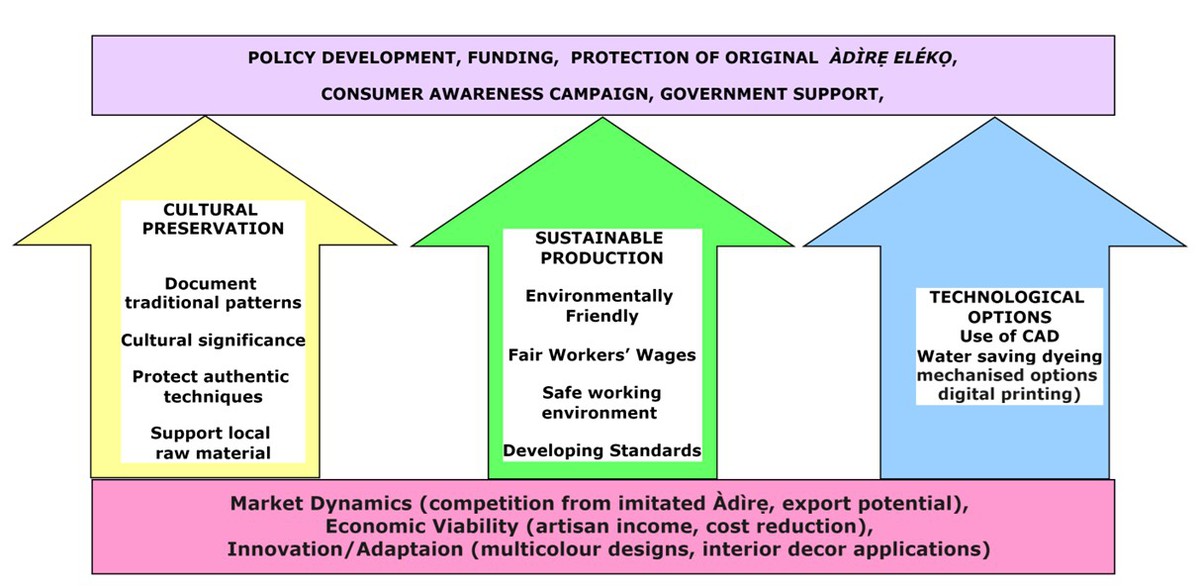
Figure 6. A framework for Cultural Sustainability and Technology Integration in
Àdìrẹ elékọ (Image by Author, 2025)
3.8.1 | Consumer Awareness Campaigns
Consumer awareness campaigns are pivotal in promoting the cultural and environmental value of authentic
Àdìrẹ elékọ, driving demand for traditional patterns that embody Yoruba heritage. These campaigns educate consumers about the significance of supporting indigenous products, countering the appeal of cheaper, mass-produced imitations. Leveraging on social media platforms (Instagram, TikTok), billboards, and fashion albums, campaigns can use compelling messages like “use local fabrics, promote our culture” to foster patronage. Awareness campaigns in Nigeria’s fashion industry can shift consumer preferences toward culturally significant textiles like
Àdìrẹ elékọ, enhancing their market share. Similarly,
Osei and Bosro (2024) highlight the success of digital campaigns in Ghana, where social media platforms have increased demand for sustainable fashion, suggesting a viable model for Àdìrẹ elékọ. These campaigns not only boost economic viability but also reinforce cultural identity, ensuring that traditional patterns, such as “eye n’joka” (birds feeding on corn) or “olokun” (mermaid), remain valued. By educating younger generations, who may be less inclined to embrace traditional attire, campaigns can bridge generational gaps in cultural appreciation.
3.8.2 | Government Support
Government support is critical to
Àdìrẹ elékọ’s success, encompassing policy development, funding for research and development, setting standards, and promoting local raw material sourcing. Such interventions foster sustainable production methods that align with environmental goals and cultural heritage protection. Governments can also restrict the influx of imitated textiles through trade regulations, preserving the uniqueness of
Àdìrẹ elékọ. In the context of Nigeria’s participation in the World Trade Organisation, protective measures, such as tariffs or import quotas, could prioritise local textile industries, mitigating the economic advantage of imported fabrics. It is argued that Nigeria’s reliance on import duties for revenue undermines local textile industries, necessitating policies that prioritise domestic production. Similarly,
Adeoti and Kalilu (2024) advocate for government-backed initiatives to protect Yoruba textiles through certification and intellectual property rights. Funding for research into sustainable dyes and production techniques, could also address challenges like the scarcity of natural indigo, supporting artisans’ economic stability. These efforts align with global calls for policy frameworks that balance economic growth with cultural preservation, as discussed by
Nwabueze (2023).
3.8.3 | Cultural Preservation
Cultural preservation focuses on safeguarding the authenticity and heritage of Àdìrẹ elékọ. This involves documenting traditional patterns and techniques, protecting their cultural significance, and promoting indigenous methods that convey Yoruba identity. The fabric’s motifs, such as “omo lere” (children are our heritage), carry symbolic meanings tied to Yoruba traditions, making their preservation essential for cultural continuity. The framework addresses the challenge of declining interest among Nigerian youths, who are increasingly drawn to Western or imitated fabrics, by promoting cultural education and pride. Documenting traditional
Àdìrẹ techniques is crucial for inter-generational skill transfer, preventing the loss of cultural heritage
(Olatunji & Adiji, 2023).
Seidu et al. (2022) support that African textiles like
Àdìrẹ elékọ are vital for maintaining cultural identity in museums and communities. Furthermore,
Diyaolu
et al. (2023)
note that cultural festivals like
Ojude-Oba, where
Àdìrẹ is prominently featured, reinforce its role in Yoruba identity, underscoring the need for preservation efforts.
3.8.4 | Sustainable Production
The framework prioritises environmentally friendly production methods to ensure
Àdìrẹ elékọ’s long-term viability without depleting resources or harming ecosystems. Key strategies include adopting water-saving dyeing techniques, using biodegradable resist materials (e.g., cassava starch), and exploring plant-based dyes (e.g., from kola nuts or onion skins). These practices reduce the environmental footprint of production, addressing challenges like water-intensive dyeing and the scarcity of natural indigo. Sustainable production also enhances economic viability by lowering costs and appealing to eco-conscious consumers.
Jain
et al. (2025)
highlight the global shift toward eco-friendly textiles, noting that water-saving techniques and natural dyes can reduce environmental impact while maintaining cultural authenticity. In the Nigerian context, it is advocated that natural dye sources such as Indigofera tinctoria be revitalised through sustainable agricultural practices, aligning with the framework’s goals.
Omisakin
et al. (2024)
further emphasise that sustainable production can counter the environmental drawbacks of synthetic dyes used in imitated Àdìrẹ, enhancing the craft’s competitiveness. These insights underscore the framework’s potential to balance tradition with environmental responsibility.
3.8.5 | Technological Innovation
Technological innovation is a cornerstone of the framework, integrating tools like computer-aided design (CAD) software (e.g., Adobe Illustrator, CorelDRAW) and advanced dyeing techniques to enhance efficiency while respecting traditional craftsmanship. CAD enables artisans to create precise, intricate patterns, improving production speed and consistency. Innovations like screen printing, laser engraving, and digital printing can complement hand-drawn resist techniques, while indoor drying technologies address seasonal challenges like rainfall. These advancements reduce environmental impact, maintain quality, and make Àdìrẹ elékọ competitive against machine-produced imitations.
Osei and Bosro (2024) demonstrate that digital tools have transformed Ghanaian fashion, suggesting a model for Àdìrẹ elékọ to enhance marketability through CAD and e-commerce. It must be noted that adopting modern printing techniques in Nigeria’s textile industry can improve efficiency without compromising cultural authenticity. Additionally,
Glover
et al. (2024)
highlight the role of technology in addressing labour-intensive processes in African textiles, supporting the framework’s emphasis on automation and digital design. These innovations ensure that
Àdìrẹ elékọ remains relevant in a globalised market.
3.8.6 | Policy Development
The advocates for policies that protect original Àdìrẹ elékọ designs, support local material sourcing, regulate production processes, and restrict imitations. Effective policy implementation is crucial to counter the influx of imported textiles and ensure economic viability for artisans. Standards for certifying authentic
Àdìrẹ elékọ can enhance its global recognition as a premium cultural textile. However, the framework notes Nigeria’s challenge of poor policy implementation, which hinders progress toward these goals. Recent studies emphasise the need for robust policy frameworks in Nigeria’s textile industry.
Nwabueze (2023) argues that intellectual property policies are essential for protecting indigenous knowledge in Nigerian textiles, preventing imitation and ensuring economic benefits for artisans.
Adeoti and Kalilu (2024) propose certification systems to distinguish authentic Yoruba textiles, aligning with the framework’s call for standards.
Ibrahim (2024) further suggests that trade policies restricting imported textiles can bolster local industries, supporting the framework’s advocacy for import controls. These policies, if effectively implemented, can mobilise stakeholders toward sustainable cultural and economic goals.
4 | IMPLICATIONS OF FINDINGS
5 | LIMITATIONS AND FUTURE RESEARCH
The study is limited to
Àdìrẹ elékọ artisans and merchants. There was a level of reluctance to attend to interviews, probably due to the busy activities of respondents. Also, the information about the fabrics is limited to physical characteristics because the perception tends to be dictated by physical appearance, cost and texture. This limits the study’s ability to explore other factors, such as cultural or symbolic meanings, in greater depth.
6 | CONCLUSION AND FUTURE STUDIES
The study establishes that Àdìrẹ elékọ production remains largely manual, with little technological innovation compared to imitated textiles, which are machine-produced. This contributes to the time-consuming and labour-intensive nature of the traditional process. There is also a growing consumer preference for imitated Àdìrẹ elékọ due to its lower cost, vibrant colours, and ease of maintenance, posing a threat to the demand for indigenous fabrics. Artisans face significant challenges due to the increasing cost and limited availability of quality dyes, particularly natural indigo, which impacts production capacity and economic viability. The study advocates for adopting technology options such as digital design tools. Policy interventions are also needed to enhance the economic value of authentic Àdìrẹ elékọ. Proper branding and certification can improve its global recognition as a premium cultural textile.